Russian Foreign Minister Sergey Lavrov has explicitly rejected the possibility of stopping the war in Ukraine along the present line of contact and said Moscow intends to intensify its methods against infrastructure and support sustaining the Ukrainian war effort.
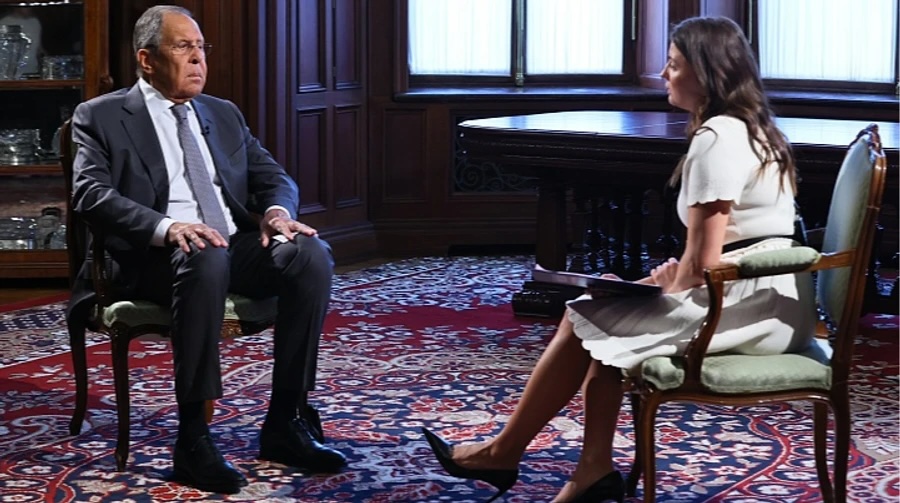
In an interview broadcast by Russian state television on 14 August, Lavrov said Russia would make its methods “much tougher” in order to destroy what he described as everything supplied by the West that supports Kyiv’s military machine.
“And we are already doing this, and they are already beginning to moan,” he said, according to the published transcript.
The statement matters because Lavrov linked the threat of intensified military action directly with Moscow’s rejection of an immediate ceasefire.
He said fighting should stop only when a “long-term, reliable and sustainable settlement” had been reached, explicitly dismissing the alternative of halting operations first and negotiating the political settlement afterwards.
“If we were suddenly to stop now at the line of contact,” Lavrov argued, Russia would effectively allow the achievements of previous generations who defeated Nazi Germany to be reversed. He also invoked Russia’s “thousand-year history” to justify continuing the war.
The historical rhetoric is characteristic of the Kremlin’s presentation of the conflict, but the operational message is more concrete: Moscow does not currently accept a ceasefire based on the military positions held by the two sides.
The same position is now being applied to the maritime theatre.
Russian Foreign Ministry spokeswoman Maria Zakharova on Friday rejected proposals for a moratorium on military operations in the Black Sea, saying there were no grounds for “half-measures” that would provide Ukraine with a temporary respite.
The proposal had been raised by Turkish Foreign Minister Hakan Fidan as Ankara sought to reduce attacks affecting Black Sea shipping. Zakharova said Moscow had not received a formal Turkish proposal but nevertheless made clear that Russia did not see the conditions for such an arrangement.
She also dismissed a return to the 2022-23 Black Sea Grain Initiative, which had allowed agricultural exports to continue through the maritime corridor before Russia withdrew from the agreement.
Ukraine, meanwhile, has transmitted a proposal through a third party under which the two countries would halt attacks against civilian targets in the Black Sea. Moscow has not acknowledged receiving that proposal.
The simultaneous rejection of a front-line freeze and a maritime moratorium is important. These are limited measures that would not themselves resolve territorial or political questions. Both could theoretically reduce military activity while broader negotiations continued.
Moscow is signalling that it does not currently favour that sequencing.
The latest remarks are not an isolated departure from previous Russian negotiating positions.
In a 29 July interview published by the Russian Foreign Ministry, Lavrov similarly argued that freezing the conflict along the contact line would leave the Ukrainian state and military intact and allow Western countries to continue supporting Kyiv.
Russia continues to insist that an agreement must first address what it calls the “root causes” of the conflict. In practice, Moscow’s stated negotiating requirements have included Ukrainian neutrality, restrictions on its military and acceptance of Russian territorial claims.
Ukraine rejects those conditions and maintains that any settlement must preserve its sovereignty and provide credible security guarantees.
The gap is therefore not merely about where a ceasefire line should be drawn. The two sides continue to disagree about what must happen before the guns stop.
Lavrov’s comments are also notable because they follow an unusually public appeal from Kazakh President Kassym-Jomart Tokayev, one of the leaders with regular access to Vladimir Putin.
During televised talks with Putin in Omsk on 25 July, Tokayev suggested that the war should be frozen and negotiations resumed.
He proposed returning to what he called an “Istanbul Formula 2.0”, followed by negotiations under guarantees from major powers. Tokayev also said the nature of the conflict was not entirely clear to Kazakhstan and described the continued deaths of young Russians and Ukrainians as tragic.
The intervention was particularly striking because Kazakhstan remains one of Russia’s most important regional partners and shares extensive economic and security ties with Moscow.
It did not produce an apparent change in Russian policy.
Lavrov’s latest statement instead reinforces the Kremlin’s existing position that simply freezing the battlefield would be unacceptable.
The United States has continued attempts to identify a negotiating formula.
After meeting Lavrov in Manila in July, US Secretary of State Marco Rubio said Washington remained prepared to play a role in ending the war but acknowledged that new proposals and “new ideas” would be required to overcome the differences between Moscow and Kyiv.
US envoys Steve Witkoff and Jared Kushner have previously been involved in direct negotiations with Russian and Ukrainian representatives, and Washington has kept the possibility of further contacts open.
Lavrov himself said that Witkoff and Kushner would be received if they returned to Moscow. The qualification was more important: Russia would judge any new mission by what the Americans brought with them.
For Western defence planners, Moscow’s public position therefore argues against assuming that diplomatic contacts will shortly produce an operational pause.
Russia is rejecting a freeze on land, rejecting a limited Black Sea ceasefire and simultaneously threatening tougher action against the Western-supported Ukrainian military system.
Diplomacy has not disappeared. But the signals coming from Moscow on 14 August point towards continued military escalation being used alongside negotiations, rather than a ceasefire being used to create the conditions for them.