

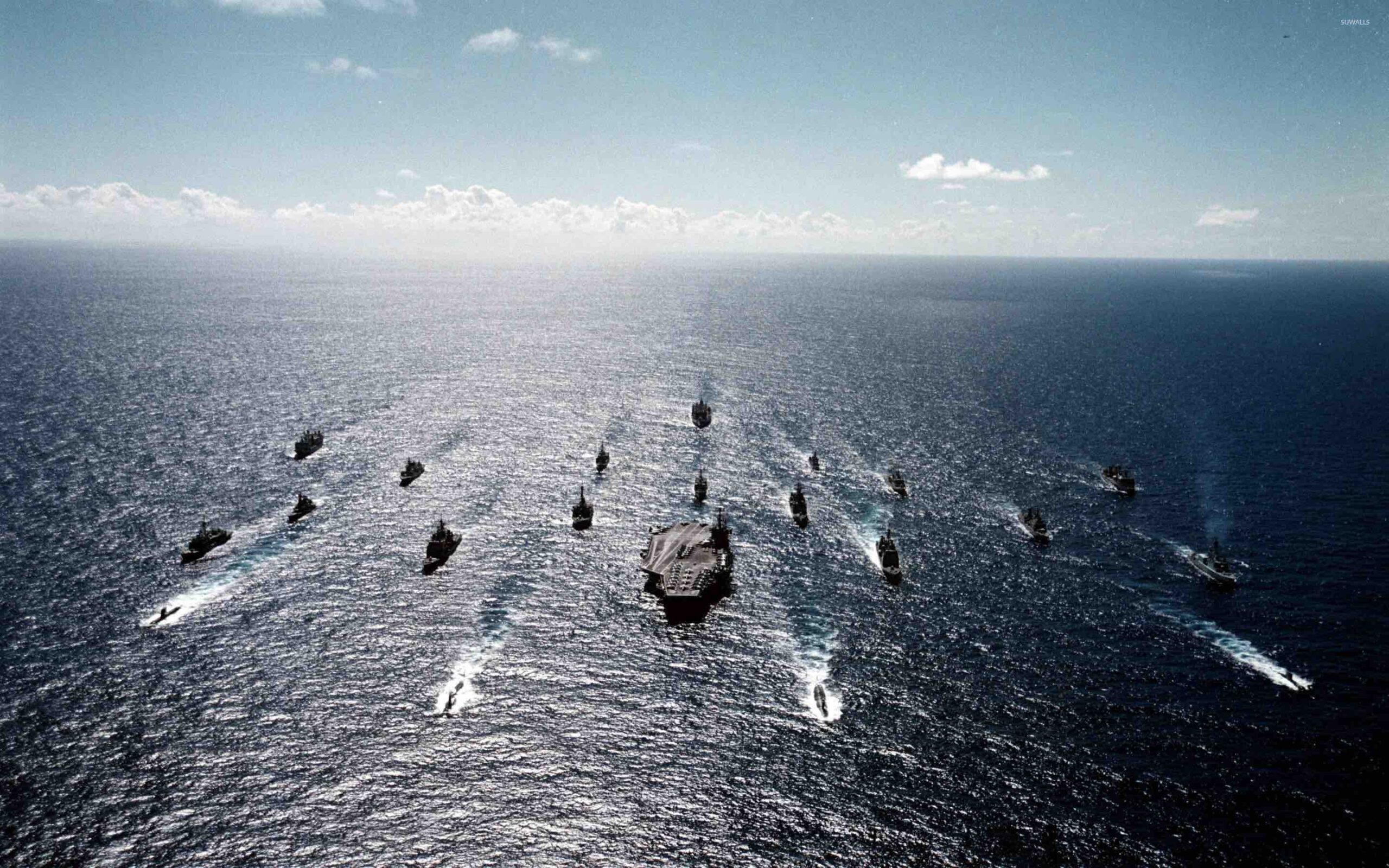
Fincantieri and Hanwha Ocean shares rose as investors assessed which allied groups could use a temporary policy allowing up to two US Navy vessels to be built in qualifying parent-country yards. The measure exposes the depth of America's shipbuilding-capacity problem.
Hanwha Ocean gained 5.6 per cent and Fincantieri rose 3.2 per cent as markets identified the companies as potential beneficiaries, according to Reuters.
The reaction followed a White House memorandum dated 13th August. The measure is not a general opening of American naval procurement. Eligibility depends on substantial investment in US shipyards and workforce commitments, and the overseas construction allowance is capped at two vessels for rapid delivery.
The policy’s importance lies in why it was judged necessary: US yards cannot deliver every vessel the Navy wants at the required speed.
Fincantieri and Hanwha are unusually well placed because both combine large overseas construction capacity with investments inside the United States.
Fincantieri operates American shipbuilding facilities through its US business, while Hanwha acquired Philly Shipyard. That gives each group a potential argument that work in a parent-country yard would reinforce rather than bypass its American industrial commitment.
The precise qualification decision will matter more than the initial share-price move. The US government must determine which companies meet the investment and workforce conditions, what vessel types are suitable and how security requirements will be applied.
Building abroad also does not mean every component, combat system or weapon would be foreign. The Navy could require US equipment, data controls, certification and integration even where the hull is assembled in an allied yard.
The White House’s earlier order on restoring American maritime dominance acknowledged that US commercial shipbuilding had weakened and called for investment in yards, supply chains and the maritime workforce.
The new memorandum goes further by accepting that allied production may be needed for near-term naval delivery. That is a significant departure from the political preference for domestic construction.
US shipbuilding programmes have faced delays, rising costs, workforce shortages and constrained supplier capacity. Adding money does not instantly create skilled welders, dry docks, design maturity or production experience.
An overseas-yard route can buy time. It cannot substitute indefinitely for domestic capacity, especially if the strategic objective is a fleet that can be built, repaired and replenished during a prolonged conflict.
Fincantieri brings experience across naval and commercial shipbuilding and an existing US footprint. Defence Matters recently reported on the company’s €600 million move into underwater technology and seabed defence, illustrating its effort to combine platforms with sensors and autonomous systems.
Hanwha Ocean has the scale and production tempo associated with South Korea’s highly competitive shipbuilding sector. Its ownership of an American yard provides the domestic link Washington’s conditions appear designed to reward.
The two companies are not guaranteed contracts and may not compete for the same vessel. Their share-price gains show investor expectations, not procurement decisions.
Other allied groups may also qualify. The policy will become strategically meaningful only when the Navy specifies requirements, acquisition authority, industrial-security conditions and delivery schedules.
Foreign-yard construction can shorten hull-production time if a design is mature and capacity is available. Integration can still introduce delay.
US Navy standards, communications, weapons, cyber protection and classified systems may require work in secure American facilities. Differences in design rules, supply chains and quality assurance can add complexity even when the builder has relevant experience.
There is also a sustainment question. A vessel delivered quickly must be supported for decades. Spares, technical data, repairs and upgrades need a durable arrangement that remains viable during political or military tension.
The government will therefore need to avoid treating initial delivery as the only measure of success. A fast overseas build that creates a difficult maintenance dependency may move risk rather than remove it.
The waiver creates an unavoidable tension. It can provide the Navy with ships sooner and deepen industrial ties with allies. It can also draw work towards already efficient overseas yards when Washington wants to rebuild employment and capability at home.
The investment condition attempts to manage that tension by favouring companies that put capital and workers into the United States. Whether two overseas-built vessels strengthen the domestic base will depend on technology transfer, supplier participation, training and follow-on work.
For Fincantieri and Hanwha, the opportunity is commercially significant but bounded. For the US Navy, it is a test of whether allied capacity can relieve immediate pressure without becoming a permanent substitute for American production.
The market has priced the opening. The harder defence question is whether the waiver produces deployable ships faster while leaving the United States better able to build the next ones itself.



Trump’s VA Gamble: Less Bureaucracy, More Service