Ukraine carried out a large-scale series of long-range strikes across Russia overnight on 15–16 August, setting fire to one of the country’s largest Wildberries logistics centres and hitting a factory that Kyiv says produces solid rocket fuel for Russian missile systems.
The attacks formed part of an increasingly broad Ukrainian campaign against military-industrial, energy and logistics infrastructure inside Russia. Moscow’s Defence Ministry claimed that its forces intercepted 822 Ukrainian drones during the night across numerous Russian regions, occupied Crimea and the Black and Azov seas. The figure has not been independently verified.
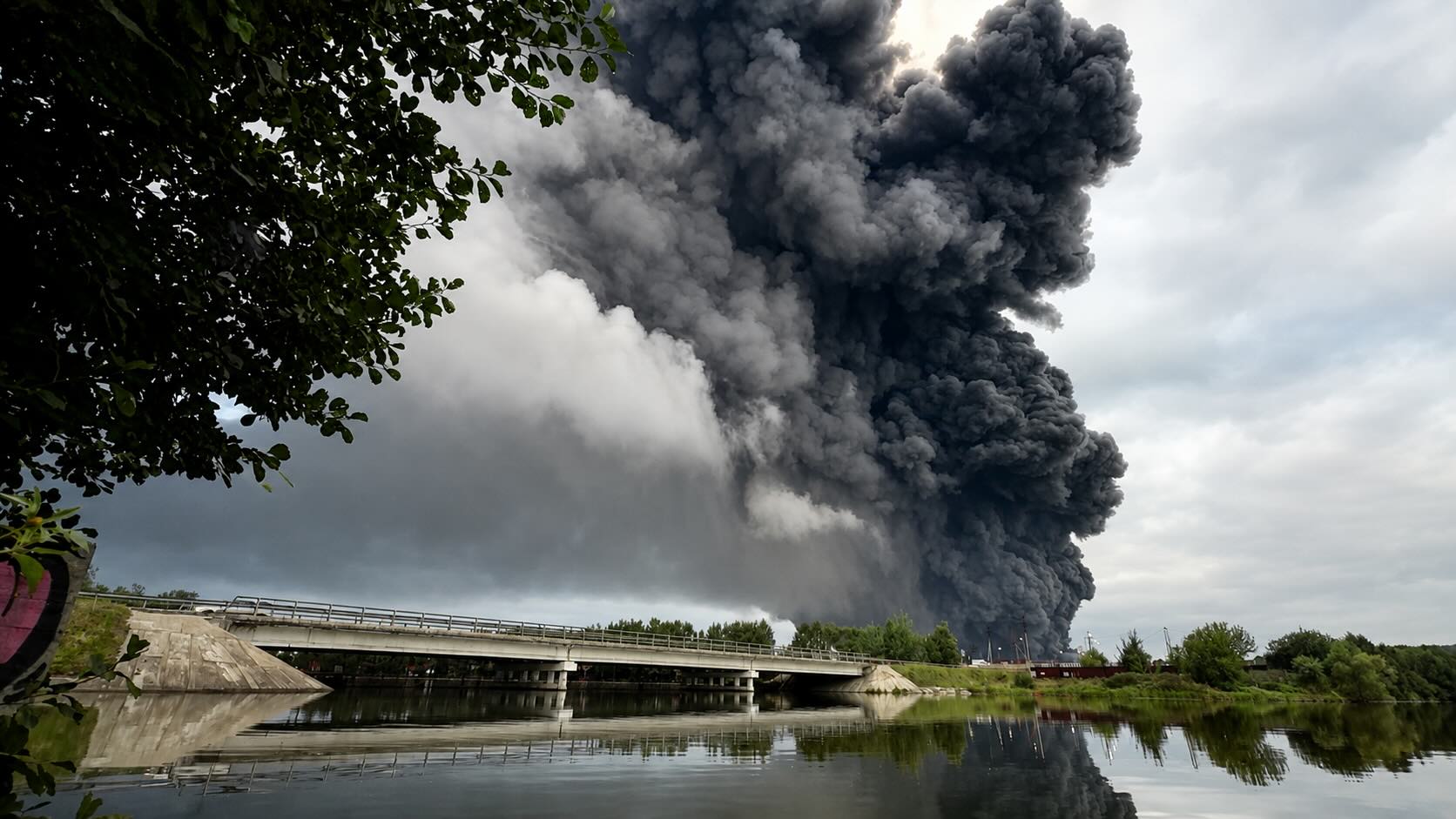
One of the most visible strikes was against the Wildberries logistics complex at Koledino, near Podolsk in Moscow region, about 45km south of the Russian capital.
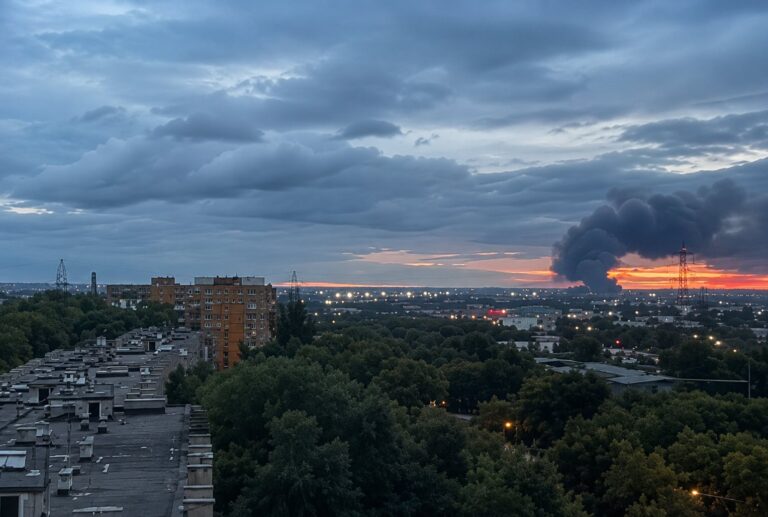
Footage from the area showed a large column of smoke rising above the complex after the attack. Ukraine’s Defence Ministry said the Koledino facility was Wildberries’ largest logistics centre, covering about 250,000 square metres. Other published estimates have placed its area at more than 229,000 square metres.
The ministry also claimed that seven of Wildberries’ ten largest logistics centres had now been taken out of operation during the Ukrainian campaign. That assessment has not been independently confirmed.
Moscow region Governor Andrei Vorobyov said employees at the Koledino site had been moved into shelters before the fire and that there were no casualties among warehouse staff. Wildberries confirmed that a fire had broken out and that emergency services were working at the site.
Elsewhere in Moscow region, a warehouse containing medical products was set ablaze in Domodedovo. Open-source analysis identified the building as part of the Severnoye Domodedovo production and logistics complex. Damage was also reported at other locations around the capital region.
Russian authorities said an 83-year-old man was killed after a drone struck a private property in the Ramenskoye district. Several other people were injured in Moscow region.
Wildberries, Russia’s largest online retailer, has been repeatedly targeted by Ukrainian long-range drones since July.
Kyiv argues that the company’s logistics network forms part of the infrastructure supporting the Russian war effort. The Kremlin has rejected claims that Wildberries warehouses handle military supplies.
The retailer’s marketplace carries military and dual-use products, including body armour and components that can be used in drones. However, there is no independently verified evidence that military equipment was stored at the Koledino warehouse when it was struck.
The company is also an important component of Russia’s civilian economy. Before the latest series of attacks, open-source analysis cited in July estimated that strikes had already affected about 10 per cent of Wildberries’ logistics capacity. Subsequent attacks have hit additional sites across Russia.
A second confirmed Ukrainian target overnight was the Kombinat Kamensky plant in Kamensk-Shakhtinsky, Rostov region.
Ukraine’s General Staff said a fire was recorded at the facility following the strike. It described the plant as an important element of Russia’s military-industrial complex producing solid rocket propellant.
According to the General Staff, its products are used in ammunition for the Uragan, Smerch and Tornado-S multiple-launch rocket systems, as well as other missile systems and air-launched weapons.
Russian authorities did not immediately provide a detailed assessment of damage to the factory. Rostov regional authorities said more than 150 drones and missiles were intercepted during attacks across the region and reported five deaths and one injury.
The Kamensky strike followed other Ukrainian attacks on Russia’s petrochemical and fuel-processing sector. The General Staff said on Sunday that previous strikes had forced the ZapSibNeftekhim petrochemical complex in Tobolsk to halt operations and had damaged several processing units at the Orsknefteorgsintez refinery in Orenburg region.
The wider Ukrainian operation extended into Russian-occupied areas of Ukraine.
In a separate General Staff statement, Kyiv said its forces struck a concentration of a Russian missile unit near Rezervne in occupied Crimea, a railway bridge near Svitlodolynske in occupied Zaporizhzhia region, and Russian logistics and ammunition depots at Karlivka in occupied Donetsk region.
The bridge was being used to move Russian personnel and military supplies, according to the Ukrainian military.
The attacks of 16 August therefore combined strikes on conventional military targets with attacks against industrial and logistics infrastructure deep inside Russia. The scale of the Moscow-region operation, together with the strike on the Kamensky rocket-fuel plant, illustrates the growing reach of Ukraine’s domestically produced long-range strike systems and their expanding role in attempts to disrupt Russia’s capacity to sustain the war.