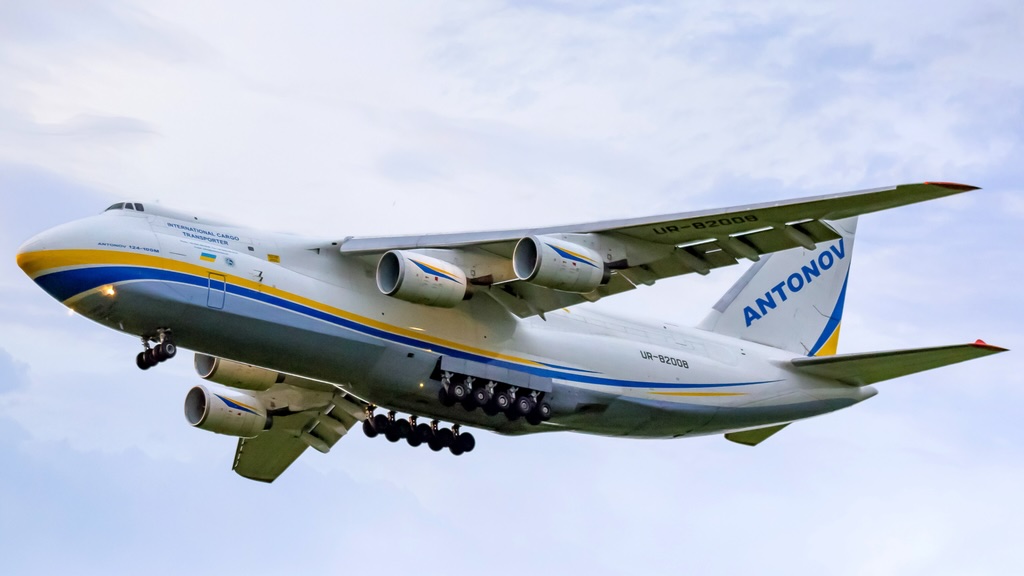
Airbus and Boeing have chartered Antonov An-124 aircraft to move large aerostructures rapidly, offering a visible sign that aerospace supply chains remain strained enough for manufacturers to use exceptionally expensive air transport to protect assembly schedules.
The use of heavy-lift aircraft is unusual because large aerostructures are normally moved through carefully planned sea, road or specialised logistics networks. The An-124 is one of the few cargo aircraft large enough for such loads, and aerospace production problems have remained a recurring issue for major manufacturers. Chartering An-124s suggests that delays in one part of the chain risk disrupting final assembly or delivery commitments. In aerospace, a missing fuselage section, wing component or engine structure can slow an entire production line.
The problem matters for defence as well as civil aviation. Many suppliers serve both commercial and military programmes. A bottleneck in advanced materials, machining, castings, avionics, landing gear or aerostructures can affect airliners, tankers, transports, patrol aircraft and military derivatives. Civil production stress can therefore spill into defence readiness and procurement schedules.
Defence Matters has covered rising demand for missiles, aircraft and air defence. The An-124 airlifts show the logistics side of the same problem: demand can rise faster than the industrial system’s ability to move parts reliably. Production capacity is not only factories. It is also transport, certification, skilled labour, quality control and supplier resilience.
The An-124 is one of the few aircraft capable of carrying very large industrial cargo. Its use is expensive, capacity is limited and availability can be politically sensitive because the aircraft type is associated with Ukrainian Antonov design heritage and a small global fleet. Turning to such aircraft is not a routine logistics choice; it is a sign that the cost of delay is even higher.
For Airbus and Boeing, the immediate pressure is delivery schedules. Airlines are waiting for aircraft to replace ageing fleets, expand capacity and improve fuel efficiency. Delays can trigger compensation, disrupt airline planning and reduce cash flow for manufacturers. If emergency airlifts protect delivery slots, they may be commercially rational despite the cost.
The deeper issue is that aerospace supply chains have not fully normalised. Pandemic disruption, labour shortages, inflation, quality problems and geopolitical shocks have left suppliers with less slack. Some smaller suppliers cannot easily increase output after years of financial pressure. Larger manufacturers may have ambitious production targets, but those targets depend on hundreds of firms delivering on time.
Defence programmes face a similar constraint. Governments can announce higher spending, but production depends on the same industrial base. If aircraft manufacturers need emergency logistics for civil structures, defence planners should assume that surge capacity is limited unless supply-chain investment catches up.
There is also a resilience lesson. Just-in-time logistics and lean inventories can work when systems are stable. They become risky when transport, suppliers and certification processes are stressed. Heavy-lift airlifts solve an immediate problem, but they are not a sustainable substitute for robust supply chains.
The emergency flights therefore provide a useful diagnostic. Aerospace demand is strong, but the production system is still brittle. Until suppliers, logistics networks and skilled labour pools recover fully, aircraft output will remain vulnerable to disruptions that can be measured not only in delayed parts, but in chartered giant cargo aircraft.