

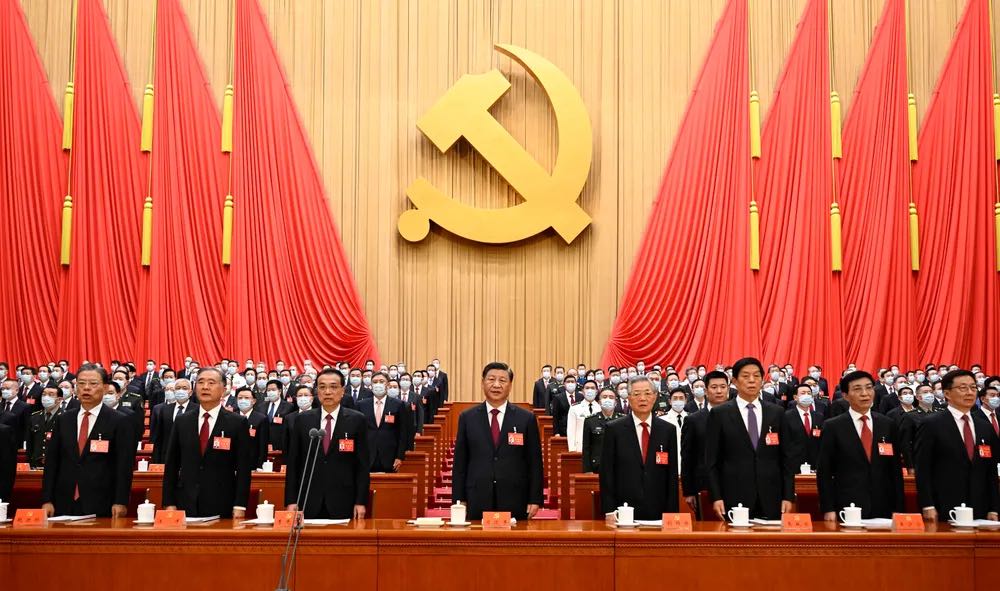
Even allowing for the usual fog of intelligence, such claims raise an unsettling question: is China merely observing this war, or quietly shaping it?
If that threshold were crossed in earnest, it would mark a decisive and dangerous shift in China’s posture—not only in the Middle East, but in its long contest with the United States.
Thus far, China has trodden a careful line. It has provided Iran with components, dual-use materials, and technological assistance—enough to sustain Tehran’s war effort without openly inviting retaliation. This calibrated ambiguity has allowed Beijing to deny involvement while quietly influencing events.
But the alleged consideration of direct missile transfers suggests that some within the Chinese leadership may be prepared to abandon that restraint. Supplying man-portable air defence systems—particularly those capable of threatening American aircraft—would transform China from a shadowy enabler into an active participant in the conflict.
It is worth stressing that the intelligence remains inconclusive, and Beijing has denied the claims. Yet in geopolitics, intent often matters as much as action. The mere contemplation of such a move reveals a strategic mindset that is becoming harder to ignore.
The most compelling explanation lies in opportunity. The war in Iran has already imposed significant costs on Washington, not least in the depletion of its advanced missile stockpiles and the diversion of strategic attention away from the Indo-Pacific.
From Beijing’s perspective, this is a rare alignment of circumstances: the United States is deeply engaged in a costly regional war, its munitions reserves are strained, and its allies are increasingly uncertain. A prolonged conflict in the Middle East serves to dissipate American power at precisely the moment China seeks to consolidate its own position in Asia.
By quietly sustaining Iran’s capacity to resist, China ensures that the conflict drags on. By potentially escalating its support, it risks tipping the balance further—raising the cost to Washington and complicating any swift resolution.
There is also a more prosaic motive: energy security. China remains heavily dependent on Gulf النفط flows, and Iran occupies a pivotal position astride the Strait of Hormuz. Beijing has long sought to ensure that no hostile power can dominate this chokepoint.
Supporting Iran—albeit cautiously—serves to prevent its collapse and preserves a counterweight to American influence in the Gulf. At the same time, China has sought to cast itself as a diplomatic broker, positioning itself in ceasefire discussions and presenting an image of responsible stewardship.
Yet this dual posture—quietly enabling one side while posturing as peacemaker—has begun to look less like pragmatism and more like calculated duplicity. It is here that the Chinese Communist Party appears to be showing its true colours: not as a neutral arbiter, but as a power willing to fan the flames of war when it suits its strategic ends.
More strategically, however, the issue touches on something deeper: the testing of American resolve. Beijing has long studied how the United States responds to indirect challenges—whether in Ukraine, the South China Sea, or cyberspace. The Iran war provides a live laboratory.
If China were to supply missiles and face little more than rhetorical condemnation or limited sanctions, it would draw an obvious conclusion: that Washington is unwilling or unable to escalate in response. Such a precedent would carry profound implications for Taiwan and the broader Indo-Pacific.
Conversely, a robust American reaction could deter further Chinese adventurism. The stakes, therefore, extend far beyond the Middle East.
It is also plausible that the reports reflect internal debate within the Chinese leadership rather than a settled policy. China’s foreign policy establishment has traditionally favoured caution, prioritising economic stability and avoiding direct military entanglements.
Yet there are signs that a more assertive faction is gaining influence—one that views the current moment as a strategic inflection point. The spectacle of a distracted and overstretched United States may be too tempting to ignore.
If so, the consideration of missile shipments to Iran could represent more than opportunism. It may signal a hardening of intent—a willingness within the Chinese Communist Party to move beyond passive advantage-taking towards active destabilisation.
Should Beijing ultimately authorise such transfers, the implications would be stark. It would signal that China is prepared to intervene—albeit indirectly—in a major regional war involving the United States. It would blur the line between proxy support and direct confrontation.
More than that, it would suggest that at least some within China’s leadership are working actively to bring about an American military setback in a war that has engulfed the Middle East. Not necessarily a decisive defeat, but a grinding, costly entanglement that weakens US credibility and stretches its resources thin.
In that sense, the shipment of missiles would not simply be a tactical decision. It would be a strategic declaration.
The Iran war is often framed as a regional conflict, but it is increasingly clear that it forms part of a wider global contest. The Middle East has become another arena in which great powers test one another’s limits, probe for weaknesses, and seek advantage.
China’s role—still cloaked in ambiguity—illustrates the subtlety of this competition. It is a strategy that combines deniability with impact, restraint with opportunism. But it also reveals something more troubling: a readiness, when the moment appears favourable, to inflame conflict rather than contain it.
If Beijing does cross the line into overt military support, it will no longer be able to hide behind ambiguity. The consequences—diplomatic, economic, and potentially military—would be profound.
For now, the world is left with signals rather than certainties. But those signals point in a troubling direction. In the shadow contest between Washington and Beijing, Iran may prove not a sideshow, but a proving ground—and the Chinese Communist Party, far from acting as a stabilising force, may instead be revealing a far more confrontational and combustible face.

Britain’s Consistent Message on Ukraine Carries Growing Weight at the OSCE