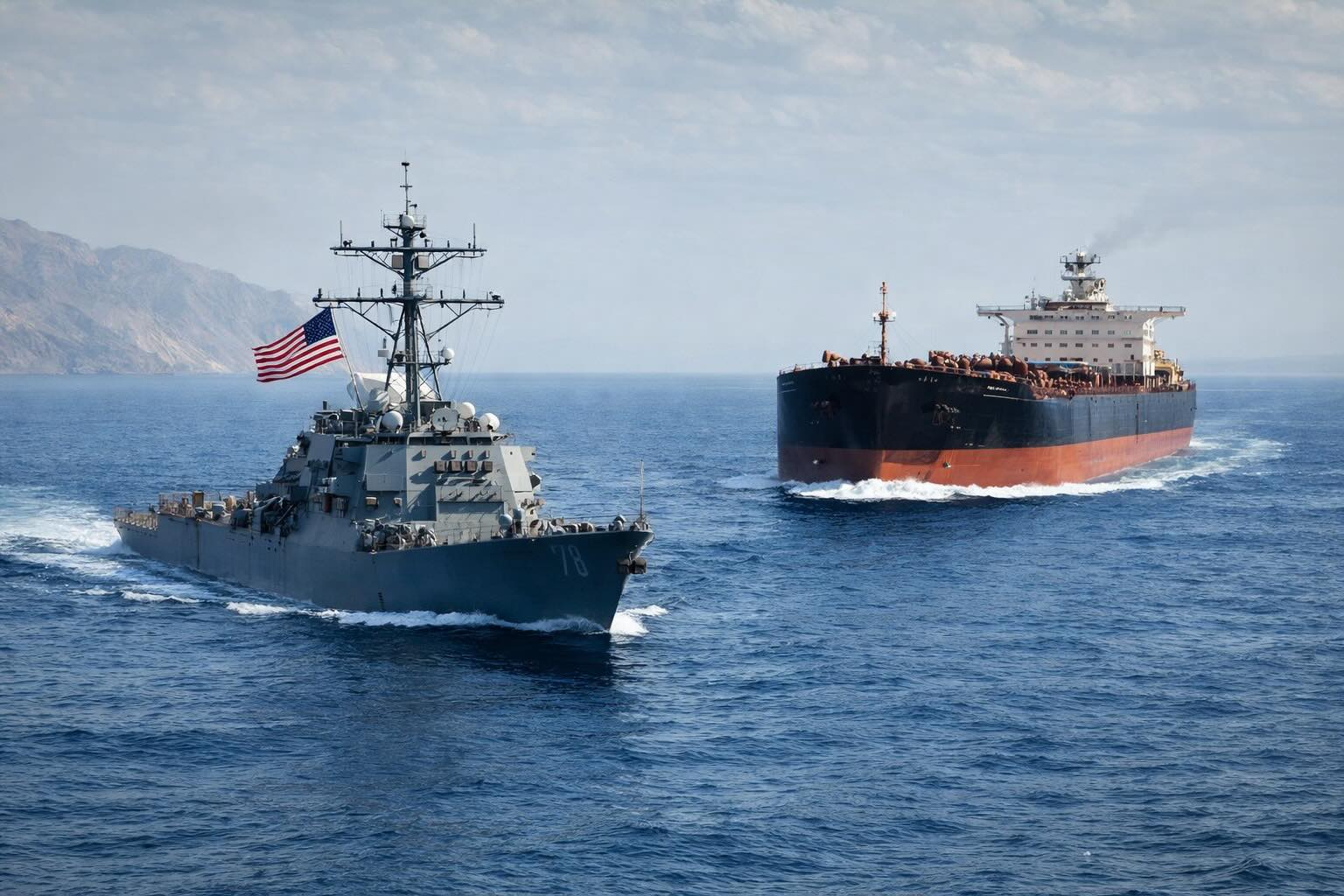
The United States said on 12 April 2026 that its forces would begin a blockade of all maritime traffic entering and exiting Iranian ports at 10 a.m. Eastern Time on 13 April. In an official statement, US Central Command said the measure would apply to vessels of all nations using Iranian ports and coastal areas, including ports on the Arabian Gulf and the Gulf of Oman. It added that US forces would not impede freedom of navigation for vessels transiting the Strait of Hormuz to and from non-Iranian ports.
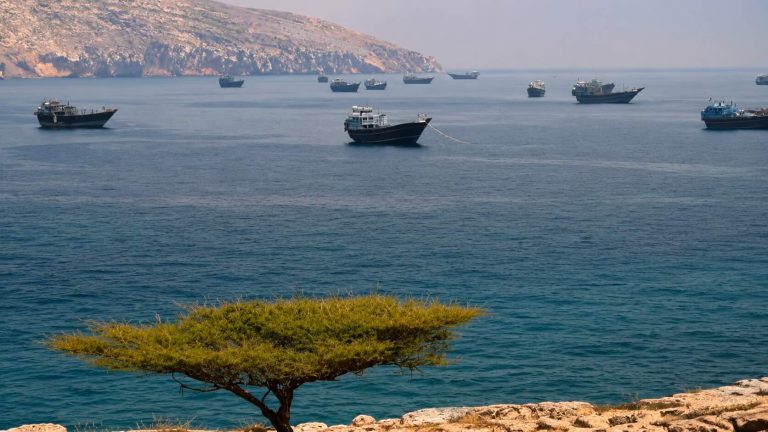
The wording matters. The announced action is not a full closure of the Strait of Hormuz. It is narrower, targeting traffic linked to Iranian ports rather than all shipping through the waterway. That distinction limits the immediate scope of the measure, but it still represents a major escalation in the use of military power against Iranian maritime access. Central Command said further guidance would be issued to commercial mariners through a formal notice before the blockade began, and advised ships operating in the Gulf of Oman and the approaches to Hormuz to monitor official broadcasts and maintain contact with US naval forces on bridge-to-bridge channel 16.
Iranian officials responded by warning that any approach by military vessels could be treated as a ceasefire breach. That leaves the practical enforcement phase as the next critical point. If US naval units attempt to stop, divert or inspect commercial shipping associated with Iranian ports, the risk of miscalculation will rise sharply. Even if the blockade remains limited to Iranian destinations, the enforcement burden will be considerable in one of the world’s most sensitive maritime choke points.
The strategic importance of the area is straightforward. According to the US Energy Information Administration, oil flows through the Strait of Hormuz averaged 20.9 million barrels a day in the first half of 2025, equivalent to about 20 per cent of global petroleum liquids consumption and around one quarter of global seaborne oil trade. Any military action affecting traffic patterns around the strait therefore has consequences well beyond the immediate US-Iran confrontation, particularly for energy-importing economies and marine insurance markets.
For now, the formal US position is that passage to and from non-Iranian ports will continue. That is likely to be important for Gulf Arab exporters whose tankers still depend heavily on the strait. Even so, commercial operators will have to assess not only the legal scope of the blockade, but also the practical risk of sailing in waters where US and Iranian forces may be operating at close range. The official US notice to mariners, once issued, will be central to that calculation.
The announcement also shows that Washington is trying to combine military pressure with a degree of operational restraint. The White House rhetoric over the weekend pointed to a wider confrontation over maritime access and Iranian demands on shipping. Central Command’s statement, by contrast, defined a more limited and specific mission: block access to Iranian ports, but do not obstruct unrelated navigation through Hormuz. Whether that distinction holds in practice will depend on enforcement rules, Iranian responses, and the willingness of commercial shipping to keep moving under heightened risk.
For defence planners and maritime operators, the next 24 hours are likely to be decisive. The blockade order creates an immediate test of US naval credibility, Iranian deterrent messaging and the resilience of Gulf shipping routes. If enforcement begins as stated on 13 April, the first encounters at sea will determine whether this remains a sharply bounded coercive measure or develops into a broader confrontation with direct implications for energy markets, maritime security and the ceasefire framework itself.