Rome's rejection of Mark Rutte's claim about US aircraft using Italian bases for Iran operations exposes how allied basing can become politically explosive when operations move beyond Europe.
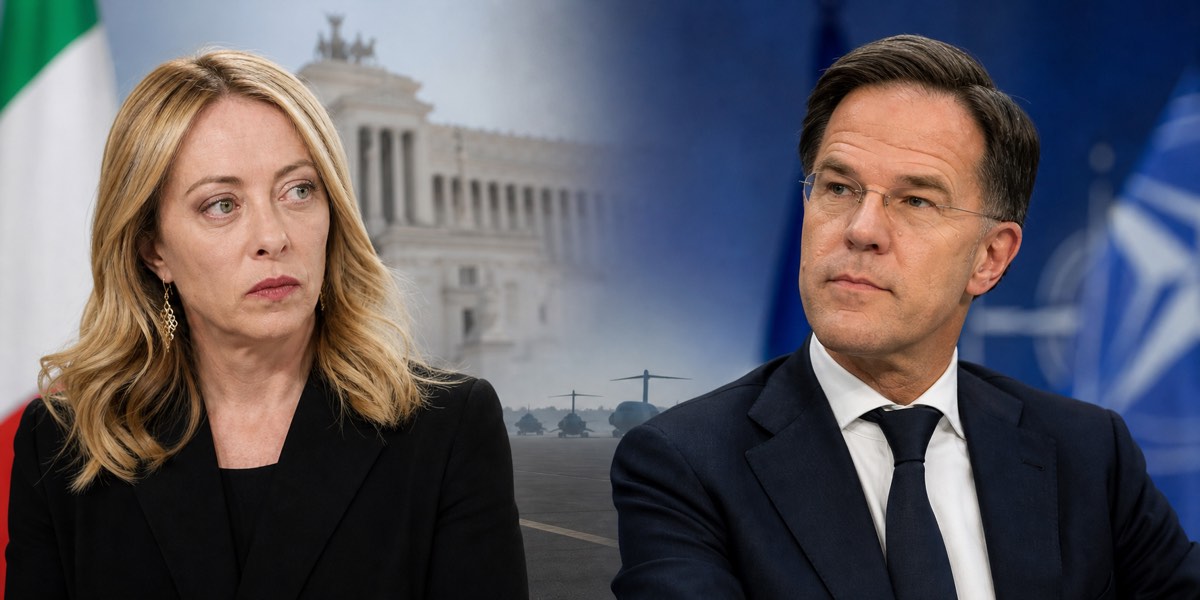
Italy’s rejection of NATO Secretary General Mark Rutte’s comments about US aircraft operating from Italian bases has turned allied basing into a political liability ahead of the July NATO summit.
Italy rejected Rutte’s claim that hundreds of US aircraft flew from American bases in Italy to support operations against Iran. Rome said it had authorised only technical and logistical flights, not combat operations. The distinction matters because it goes to national consent, parliamentary accountability and the domestic politics of hosting US forces.
The Financial Times reported that Rutte had said Italy allowed 500 US planes to use its bases in support of operations against Iran, prompting a strong response from the Italian defence ministry. NATO later sought to soften the interpretation of the remarks.
Italy hosts some of the most important US facilities in Europe, including air and naval infrastructure that can support operations across the Mediterranean, Middle East and Africa. In alliance planning, these bases are part of NATO’s strategic depth. In domestic politics, they are also potential evidence of involvement in conflicts the government may not want to own.
That is why the Rutte dispute is more than a communications problem. It exposes the difference between technical support, logistical transit and operational participation. Those distinctions may sound narrow, but they matter when governments are asked whether their territory helped enable strikes outside Europe.
The Italian government appears determined to draw a line. Technical and logistical flights can be presented as routine support. Combat operations are politically different. They can trigger parliamentary scrutiny, opposition criticism and public debate over whether Italy was drawn into a US-led war.
Allied basing depends on consent. The United States may operate from facilities in Italy under long-standing agreements, but those arrangements exist within Italian sovereignty. When operations become politically sensitive, host governments need to show that they retained control over what was authorised.
That is especially true when NATO allies are divided over a US-led operation. European governments have been cautious about the Iran conflict, partly because of escalation risk and partly because voters do not necessarily see it as a European war.
The Times of India reported that Italy said only technical and logistical support had been authorised, while opposition parties used Rutte’s comments to question whether Prime Minister Giorgia Meloni’s government had misled the public.
The dispute therefore creates a credibility problem. If NATO’s secretary general publicly describes Italian-based activity in a way Rome rejects, the host government is forced to defend both its alliance commitments and its domestic account of events.
The timing is damaging. NATO is preparing for its 7-8 July summit in Ankara, where defence spending, Ukraine support and US force posture in Europe are expected to dominate. European allies are already under pressure from Washington to spend more and do more.
The Italy row adds another issue: how far European territory can be used for US-led operations beyond NATO’s core area without creating domestic political blowback.
For the United States, bases in Italy are part of operational flexibility. For Italy, the same bases can become a political exposure if they appear to connect the country to strikes it did not formally endorse.
This matters beyond Italy. Many European NATO members host US forces, logistics hubs, air-defence assets or command facilities. If Washington uses those networks for operations outside Europe, host governments may face the same question: did they simply provide alliance infrastructure, or did they participate in a conflict?
The answer is not always straightforward. Modern operations rely on refuelling, maintenance, intelligence, communications, air corridors and staging points. A country can be operationally relevant without dropping bombs.
That is precisely why basing politics are becoming harder. The public may not accept a clean distinction between logistics and participation when a base on national territory supports a controversial operation.
For NATO planners, the lesson is clear. Alliance infrastructure is a military asset, but it is also a political vulnerability. If political consent is unclear, operational access becomes fragile.
Rutte’s comments may have been intended to show allied support for the United States. Instead, they exposed the limits of that support. Before Ankara, NATO has been reminded that bases are not just geography. They are politics.