The planned increase takes broadly defined security expenditure above NT$1 trillion for the first time, with air defence, missiles, drones and military modernisation competing for funds.
The figure is approximately $31.4 billion at the exchange rate used in recent reporting. It is about 18.2 per cent higher than the Cabinet’s NT$949.5 billion proposal for 2026. Some published comparisons put the annual increase at 16 per cent because they use a different revised or like-for-like base; the cash total is the more reliable guide until the full budget tables are available.
President Lai Ching-te has described higher defence spending as an investment in peace. The proposed total includes more than the Ministry of National Defense’s core budget, incorporating items such as coastguard expenditure, veterans’ affairs and special programmes. On that broader measure, spending is expected to remain above 3 per cent of gross domestic product.
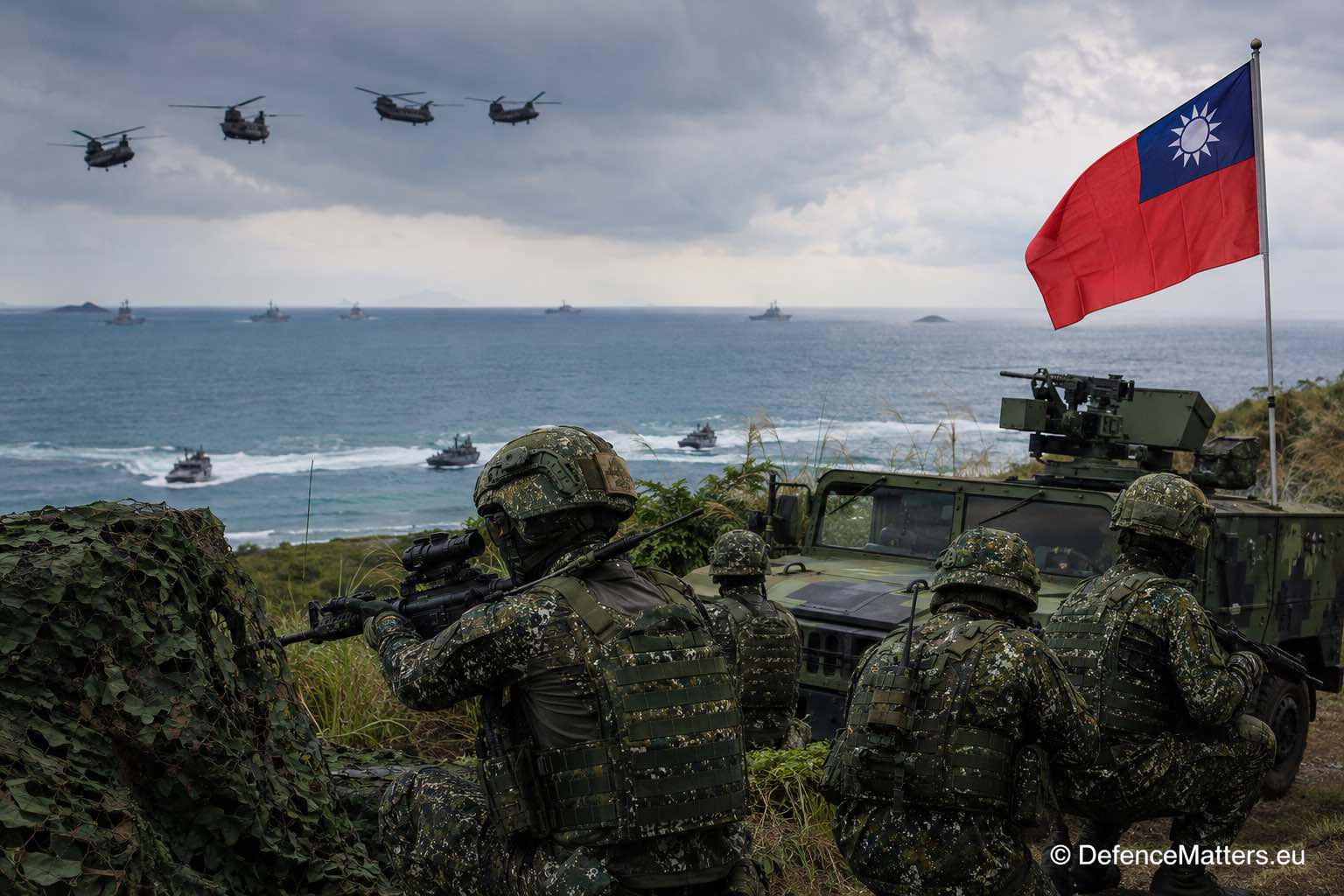
The composition will matter as much as the headline amount. Taiwan must fund personnel, training, maintenance and conventional platforms while expanding the survivable and dispersed systems at the centre of its asymmetric-defence strategy. These include mobile missiles, air and missile defence, uncrewed aircraft and vessels, resilient command networks and stocks of munitions able to endure a blockade or initial assault.
The government’s longer-term plans include a multi-layered “T-Dome” air-defence architecture, artificial intelligence and C5ISR systems, long-range precision fires and a larger domestic defence-industrial base. Taipei has also promoted locally produced submarines and sought additional US weapons.
Drones have become a particular priority after the war in Ukraine demonstrated the value of large numbers of comparatively inexpensive unmanned systems for surveillance, strike, logistics and maritime denial. Washington has also urged Taiwan to prioritise drones as an immediate deterrent. In June, the Cabinet approved draft legislation allowing up to NT$210 billion between August 2026 and December 2031 for coastal-surveillance drones, coastal-attack drones and small uncrewed surface vessels.
That programme is not simply an equipment purchase. Taiwan wants to create a supply chain that does not depend on components from China and can expand production during a crisis. Building such capacity requires multi-year orders, standard designs, secure communications and realistic exercises—not only research prototypes.
The strategic pressure is clear. Beijing claims Taiwan as part of China and has increased military operations around the island. Taipei rejects China’s sovereignty claim and says its future can be decided only by Taiwan’s people. Chinese aircraft and naval activity, coercive exercises and grey-zone operations require Taiwan to maintain forces that can respond without exhausting themselves before a conflict begins.
Washington has urged Taiwan to invest more in its own defence and place greater emphasis on resilient asymmetric capabilities. Higher expenditure addresses part of that demand, but delivery depends on procurement performance, training capacity and the speed at which delayed foreign weapon orders arrive.
Domestic politics could still reshape the proposal. Taiwan’s opposition-controlled legislature delayed the 2026 central budget for months and reduced or restructured elements of the government’s special defence plans, raising concerns over gaps in drones, missiles and air defence. Lawmakers have questioned cost, oversight and the balance between imported weapons and domestic production.
That scrutiny is legitimate: a record allocation should come with clear priorities, competitive procurement and measurable readiness gains. It also creates timing risk. Defence projects often require long lead times, and repeated delays can increase costs or leave units waiting for systems, infrastructure and trained personnel to arrive together.
Personnel remains another constraint. Advanced missiles and drones do not remove the need for operators, maintainers, commanders and protected logistics. Taiwan must improve reserve readiness and retention while introducing new systems quickly enough to change an adversary’s calculations.
The proposed budget is therefore best viewed as capacity that has yet to be converted into combat power. Parliamentary approval, contracting, production, delivery, integration and training all stand between an appropriation and an operational unit.
Even with those caveats, passing NT$1 trillion is politically and strategically significant. It signals that Taiwan expects the security environment to remain dangerous and is prepared to devote a larger share of national resources to deterrence. The decisive test will be whether the 2027 allocation produces forces that are harder to find, harder to disable and able to continue fighting under sustained pressure.