After decades associated with the newspaper, Lederer announced that he would step down at the end of September because his philosophy of leadership and his understanding of the publication’s value and mission had come to differ “in fundamental ways” from the direction being pursued by the Pentagon.
That is not the language of a man who has simply decided that he has had enough.
It is the language of a man who believes the institution to which he has devoted much of his professional life is being taken in a direction with which he cannot agree, and that should concern anyone who believes that a free press has a useful role to play in a democracy.
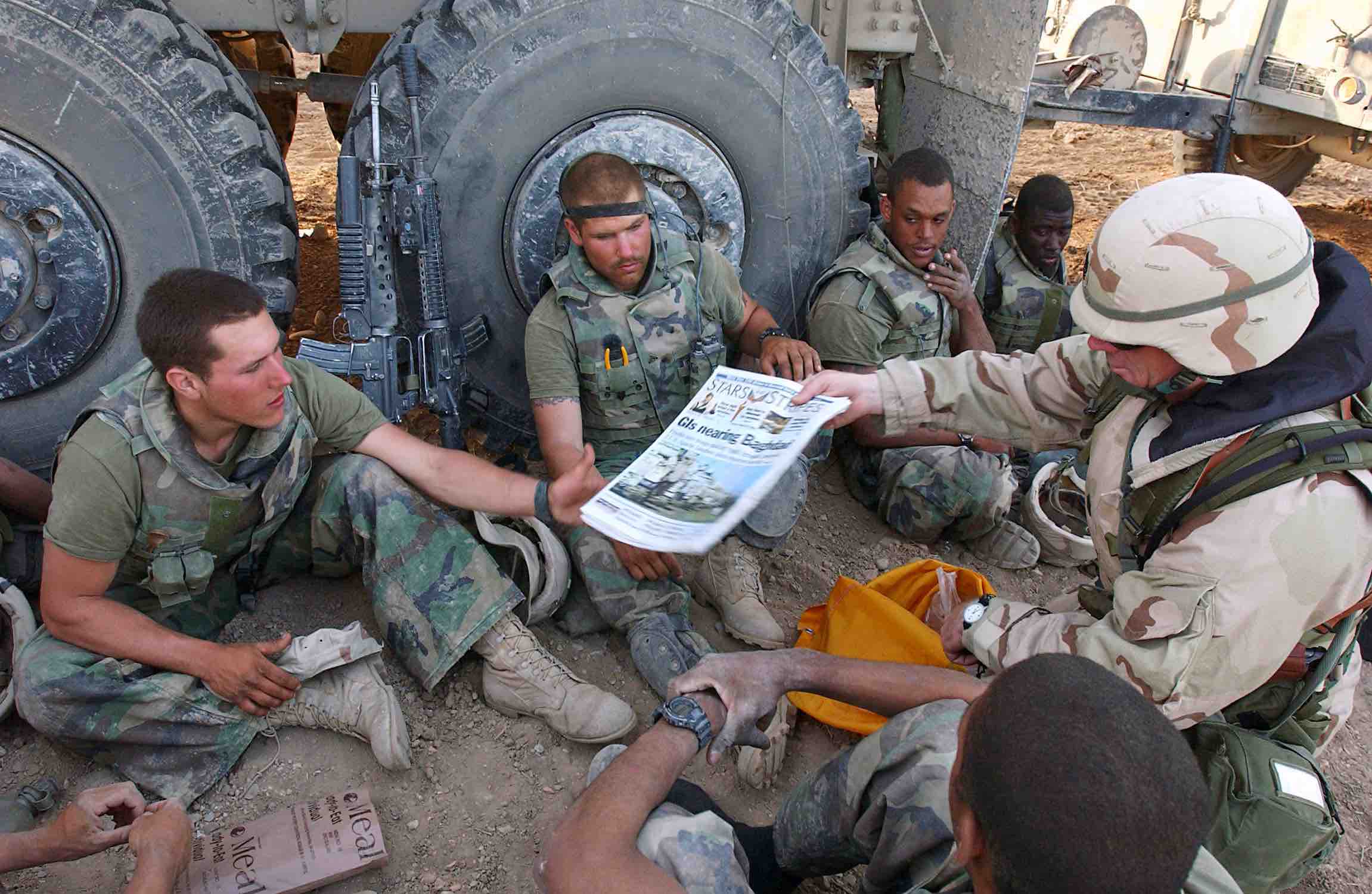
Stars and Stripes is an unusual newspaper. It is partly funded by the US Department of Defense and its employees are Defence Department personnel. Yet it has a remarkable tradition of editorial independence, serving generations of American servicemen and women stationed around the world.
Its readers are not merely interested observers. They are the people whose lives are directly affected by the decisions made inside the Pentagon.
That makes independent reporting particularly important.
The Pentagon’s argument is that Stars and Stripes needs to return to its “original mission”: reporting for warfighters, with an emphasis on weapons, fitness, lethality, survivability and military affairs, rather than what officials describe as “woke distractions”.
There is nothing unreasonable about insisting that a military publication should concentrate on matters relevant to the military.
Indeed, one might reasonably ask why a newspaper intended primarily for American service personnel should devote excessive attention to fashionable political causes or Washington gossip.
But there is a crucial distinction between concentrating on military affairs and concentrating on the military’s preferred version of military affairs.
A newspaper for soldiers should not become a newspaper of the Pentagon. That distinction matters.
Lederer’s retirement comes after a series of developments that have intensified concerns about the newspaper’s independence. The Pentagon dismissed Jacqueline Smith, the Stars and Stripes ombudsman whose role was specifically intended to protect editorial independence. The newspaper has also faced pressure to alter its operations and move away from print towards a predominantly digital model.
Lederer himself objected to the digital transition, arguing that the value of multiple platforms had not been properly recognised and expressing concern that moving away from print could reduce accessibility for troops.
This is an especially important point.
Technology may have transformed journalism, but not every soldier is sitting behind a desk with a broadband connection and unlimited screen time. A newspaper that reaches servicemen and women where they actually are is performing a practical service. Modernisation is not automatically synonymous with improvement.
More troubling still is the question of editorial control.
According to the Associated Press, a new deputy was installed at Stars and Stripes without Lederer’s prior knowledge, while the chairman of the newspaper’s advisory board warned Congress that the development threatened editorial independence. Roughly half of the newspaper’s budget comes from the Pentagon.
That financial relationship inevitably creates tension. The Pentagon can reasonably expect accountability for public money. It can demand that Stars and Stripes serves military readers. It can modernise its administration and insist upon financial discipline.
What it should not be able to do is turn an independent newspaper into a government communications department.
The distinction is not academic. Military organisations have enormous power. They possess weapons, intelligence and the ability to conduct operations that can change the course of history. The public therefore needs journalists who can ask awkward questions about what is happening inside them.
So do the troops themselves. A soldier stationed thousands of miles from home does not need propaganda. He or she needs reliable information.
That sometimes means reporting stories which commanders would rather not see on the front page.
Indeed, some of Stars and Stripes’ recent reporting has examined conditions and mental-health concerns among sailors aboard the USS Abraham Lincoln, matters which have attracted attention precisely because they provide an alternative perspective on the realities of military service.
There is an irony here. A newspaper serving the armed forces should arguably be among the last places where uncomfortable truths are suppressed. Military effectiveness depends upon accurate information. Commanders cannot make good decisions if everyone beneath them is afraid to tell them what is going wrong.
The Pentagon would therefore be wise to reflect carefully on Lederer’s explanation for his departure.
He did not say that he opposed the military. He did not say that Stars and Stripes should cease serving American servicemen and women. He said that his understanding of its mission had fundamentally diverged from that of the department’s leadership. That is a very serious warning.
The Pentagon may ultimately be right about some of the reforms it wants. It may be right that the publication needs modernisation. It may even be right that its editorial priorities have occasionally wandered.
But independence is not a woke distraction, it is the very thing that makes journalism worth having.
If a newspaper serving America’s military can no longer comfortably exercise that independence, the question should not merely be why its publisher is retiring. The question should be why he felt he had to.
Main Image: U.S. Marine Corps photo by 1st sergeant David K. Dismukes