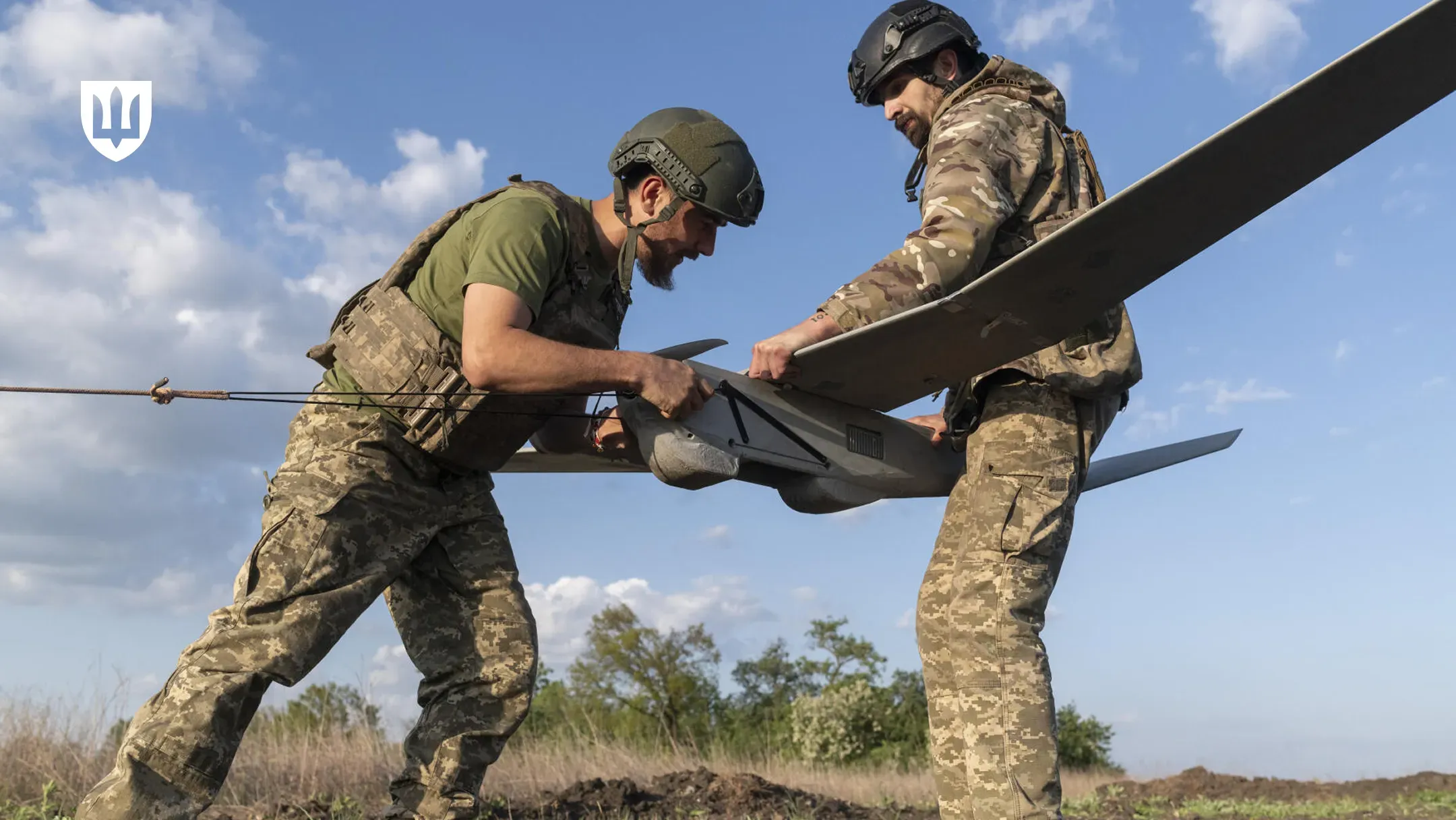
Ukraine has signed three new agreements on unmanned technology with Denmark, Estonia and the Netherlands, expanding its Drone Deal network to nine countries and giving concrete form to Kyiv’s attempt to become a defence-technology partner rather than only a recipient of aid.
The agreements were concluded on 7 July during the NATO summit in Ankara. Ukraine’s presidential office said the framework can cover joint production, localisation, technology transfer, cybersecurity, critical-infrastructure protection and access to foreign markets.
The sequence matters. Defence Matters reported one day earlier that Ukraine was seeking agreements with at least seven NATO countries. The new signatures are therefore a material follow-up: the initiative has moved from an announced objective to bilateral arrangements with three European allies.
President Volodymyr Zelenskyy’s office described the Danish agreement as the ninth Drone Deal. Negotiations with about twenty other countries were said to be at different stages.
The Netherlands said its agreement created a basis for structural cooperation, including joint production and the scaling of innovation. Dutch and Ukrainian officials had already begun work on bilateral drone cooperation, but the Ankara signature places that work inside a broader export and partnership model.
Ukraine’s value is not confined to airframes. It has accumulated experience in detection, targeting, electronic warfare, software updates, distributed manufacturing and the rapid modification of systems after Russian countermeasures appear.
That operational feedback is difficult for NATO manufacturers to reproduce through exercises. A drone that performs well at a demonstration may fail under jamming, poor weather or constant enemy observation. Ukrainian units and companies work inside that adaptation cycle every day.
The strongest agreements will create production capacity inside partner countries while preserving Ukraine’s access to output, investment and components. That model can reduce the vulnerability of factories in Ukraine and connect Ukrainian designs to NATO supply chains.
It can also expose difficult questions. Governments must protect sensitive software and battlefield data, agree export rules and prevent technology leakage. Manufacturers need clarity over intellectual property and who may modify a design. Militaries must ensure that rapidly evolving systems can still communicate securely with allied command networks.
Denmark, Estonia and the Netherlands are well placed to test different parts of the model. Denmark has invested heavily in direct procurement from Ukrainian industry. Estonia brings digital and cyber expertise as well as acute awareness of Russian electronic warfare. The Netherlands has a substantial technology base and experience organising multinational support.
The agreements arrive as NATO asks whether increased spending can produce capability at wartime speed. Traditional acquisition programmes prioritise standardisation, certification and long service lives. Drone warfare rewards frequent iteration, short production runs and direct contact between users and engineers.
Those approaches need not be mutually exclusive, but they require different contracting. A rigid specification fixed for years can leave a system obsolete before large-scale delivery. NATO allies may need modular standards that secure communications and safety while allowing sensors, software and payloads to change rapidly.
Ukraine also benefits strategically. Joint ventures can attract capital, preserve skilled teams and create export revenue, provided frontline requirements remain the first priority. They also embed Ukraine more deeply in European defence supply chains even before decisions on NATO membership.
The three new agreements should therefore be judged by what follows: factories established, systems ordered, personnel exchanged and technologies updated together. Signatures create political momentum. Production and operational integration will determine whether Ukraine’s Drone Deals genuinely reshape European defence.