The Army will buy six Hanwha prototype systems under an initial $100.3 million action, with an option for 12 more. The agreement funds experimentation—not a programme-of-record decision or an immediate replacement of the M777.
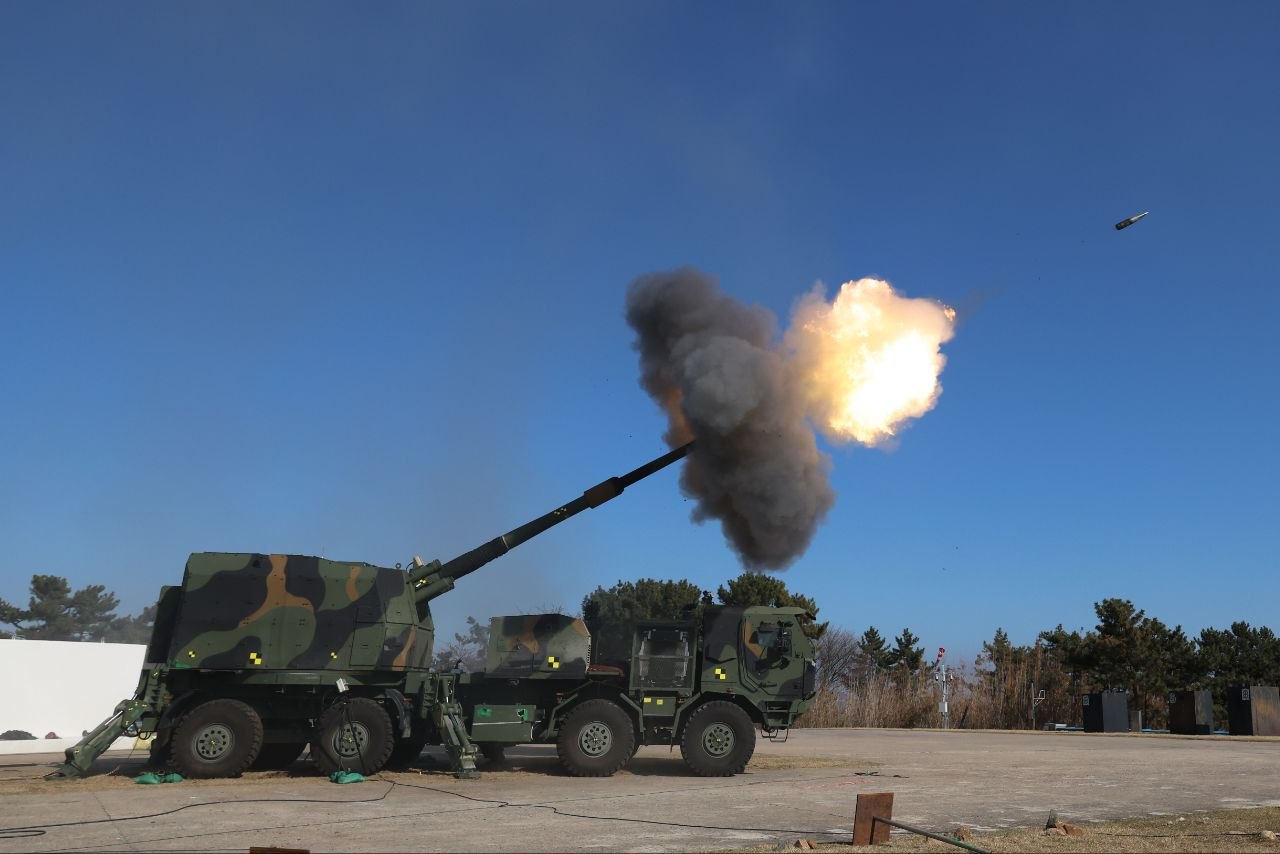
The US Army has selected Hanwha Defence USA to deliver six Mobile Tactical Cannon prototypes under an initial action worth $100.3 million, opening a four-year evaluation that could grow to 18 systems and a cumulative value of $262.9 million.
The Army’s 18 August announcement describes an Other Transaction Agreement under 10 USC 4022 with a firm-fixed-price structure. It includes the first six systems and an option for 12 additional prototypes.
That distinction is central to the programme. The Army has selected a system for prototyping and soldier experimentation; it has not yet approved a production programme, decided on fleet numbers or committed to replacing every M777 towed howitzer.
If the evaluation supports fielding, the Mobile Tactical Cannon could replace M777s in selected formations. The Army says the work will assess performance, reliability and supportability before any future acquisition decision.
The M777 gives light forces a 155mm artillery capability at a relatively low system weight, but a towed gun depends on a separate vehicle and crew actions to enter and leave a firing position. That can increase exposure when an adversary combines drones, counter-battery radar and long-range fires to locate artillery rapidly.
A wheeled self-propelled cannon is intended to compress that sequence. The crew can move, occupy a position, fire and displace without detaching and reattaching a gun. Greater tactical mobility can make dispersed operations easier and reduce the time available for an enemy counter-battery response.
The trade-off is that mobility comes inside a larger and more complex vehicle. Fuel, tyres, automotive maintenance, transportability and recovery all become part of the artillery unit’s support problem. A system that moves quickly on roads may still face limitations on soft ground, narrow routes or damaged bridges.
For that reason, the coming experiments must test more than the cannon’s range and rate of fire. Soldiers will need to examine emplacement and displacement times, ammunition handling, signature management, digital fire-control integration, maintenance burden and the ability to operate with the Army’s existing 155mm ammunition inventory.
Hanwha identifies its offer as the K9 Mobile Howitzer, or K9MH, a wheeled derivative associated with the company’s established K9 artillery family. In its contract announcement, the company said US integration and testing would be conducted in Opelika, Alabama, and that the system would be compatible with Army munitions. Those are company statements that will now be tested through the government programme.
The initial $100,302,961 action is the money attached to the first phase. The $262,903,274 figure is the cumulative face value if the agreement proceeds through its available options; it should not be presented as expenditure already made on 18 operational guns.
Other Transaction Agreements can move prototypes into users’ hands faster than a conventional acquisition process and allow closer iteration with industry. They do not remove the need for operational testing, budget approval or a subsequent production decision.
The Army’s four-year estimated period gives it time to expose the systems to different units and conditions. Soldier feedback will be especially important because automation that appears efficient in a demonstration may create new workload, training or maintenance demands in field use.
The programme also has an industrial dimension. Hanwha says more than 2,500 K9-family systems have been fielded globally. That installed base may reduce some technical and supply risk, but a US configuration will still require domestic integration, security accreditation and a support chain able to meet Army standards.
As Reuters noted in its account of the selection, the award also places a South Korean defence group inside a strategically important American modernisation effort. How much work is performed in the United States, and which components remain dependent on overseas supply, will matter if the prototype advances.
The most consequential question is where a mobile cannon would sit in the force. Replacing a towed howitzer with a self-propelled system changes movement, concealment, resupply and maintenance across the unit; it is not a one-for-one equipment exchange.
Selected formations may gain survivability and responsiveness, while others may continue to value the lower weight and transport options of the M777. The trials therefore need to establish which operational problem the new system solves and in which brigades its advantages exceed its logistical costs.
The award is meaningful because it buys real hardware and multi-year experimentation. It is still a competitive test of a capability concept. The evidence to watch will be delivery of the first six prototypes, the exercise data that support—or undermine—the mobility case, and whether the Army exercises the option for a further 12 before seeking production authority.