

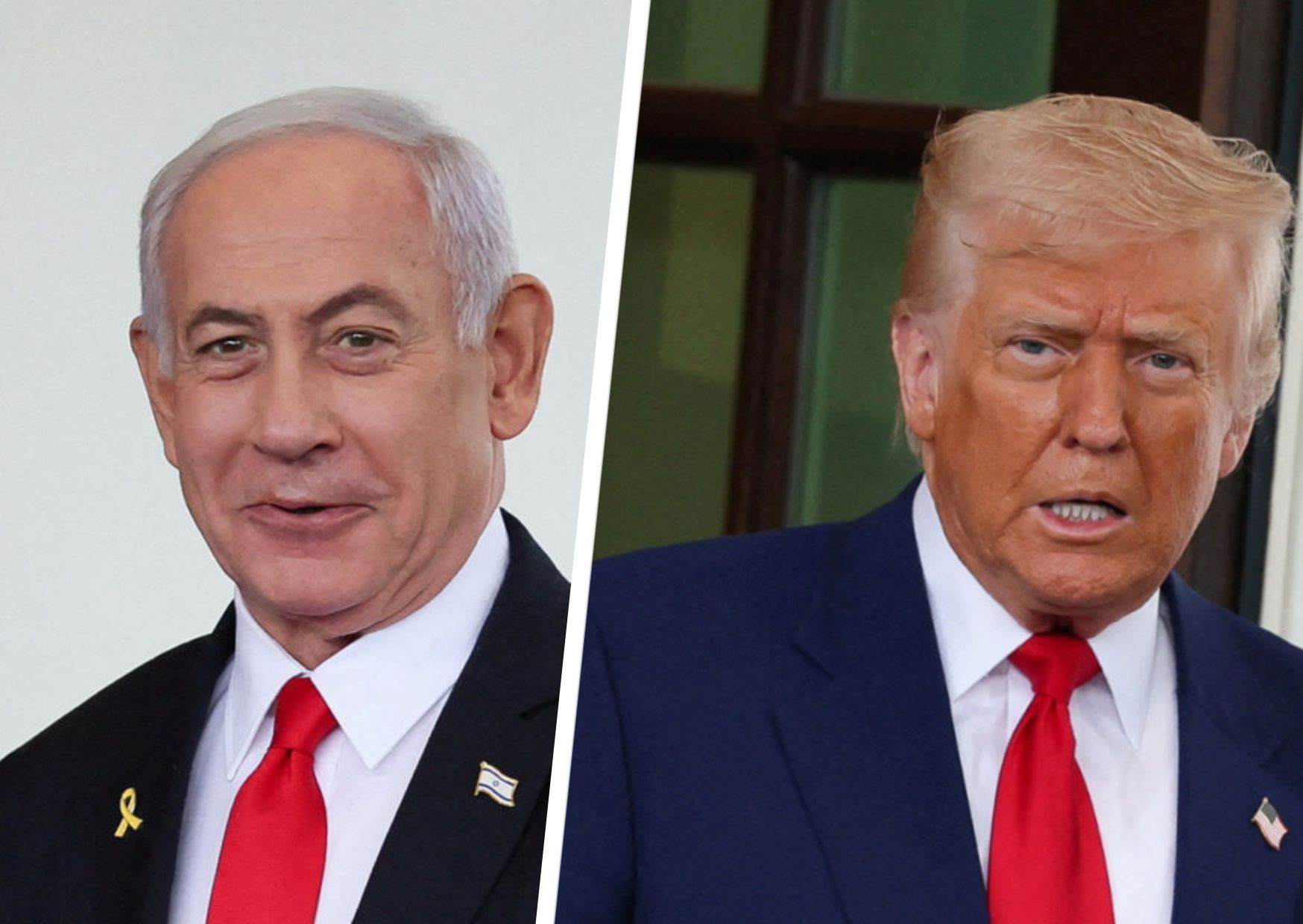
Events in the Middle East have been moving at speed since the latest phase of the Israel-Iran war began on 28 February 2026. From the outset, one contrast has been difficult to ignore: Israel has projected a clear operational sequence, while Washington has appeared less settled on the political end-state it wants to achieve. That gap is now at the centre of the debate over whether military success can be turned into a durable strategic outcome.
Prime Minister Benjamin Netanyahu said on 3 March that the joint US-Israeli campaign against Iran may take “some time” but is not expected to last for years. Israeli officials have also said the operation could continue for weeks, with the stated objective of ensuring that Iran does not retain nuclear capabilities. The impression conveyed by Israeli statements is of a campaign being run to a defined military logic, even if its final political consequences remain uncertain.
In Washington, by contrast, the central criticism has been the absence of a fully articulated “day-after” plan. Reuters reported on 1 March that lawmakers from both US parties said the administration had yet to explain what comes next should the Iranian leadership be weakened further. The criticism was not confined to opponents of the strikes: even among supporters of military action, there was uncertainty over whether the White House had moved beyond the assumption that events inside Iran would simply take their own course.
That issue sits at the heart of a recent argument made by John Bolton in The Telegraph. Writing on 28 February, Bolton described the decision to strike Iran as the most consequential of Donald Trump’s presidency and argued that success would depend not only on bombing campaigns but on inducing senior Iranian military, police and Revolutionary Guard figures to turn against the regime. In other words, his argument was that air power on its own is unlikely to settle the question of power in Tehran.
Recent reporting broadly supports the view that internal Iranian dynamics may prove decisive, but also shows how difficult that route would be. Reuters reported this week that senior US officials remain sceptical that the current military operation will produce regime change in the near term. Intelligence assessments cited by Reuters say there were no defections from the Islamic Revolutionary Guard Corps during the major protests in January, and that such defections would probably be a precondition for any successful uprising.
That matters because Trump’s public message has increasingly leaned on the idea that Iranians themselves should determine the next phase. Trump called on “Iranian patriots” to “take back” their country. Yet there remains deep uncertainty within the administration over whether the opposition has the structure, cohesion or security support needed to turn unrest into a transfer of power. That is the strategic gap Bolton appears to be identifying: military pressure without a coherent political channel inside Iran may damage the regime without producing an alternative to it.
One name repeatedly raised in this context is Reza Pahlavi, the exiled son of Iran’s last shah. In January he urged greater international pressure on Tehran and said he had support from sections of Iran’s army and security apparatus. The opposition, however, remains fragmented and has little organised presence inside Iran. That makes him symbolically important, but not necessarily the answer to the practical problem of transition.
From Washington to Tehran’s streets: Pahlavi’s bid for relevance
This is why the argument over the war is no longer confined to military precision or the scale of Israeli strikes. It now turns on whether the United States and Israel share the same political assumptions. Trump initially presented the campaign in part as a challenge to Iran’s ruling system, but his public justification has also shifted towards the destruction of nuclear and missile capabilities. That may be tactically useful, but it leaves the central question unresolved: is the objective coercion, regime change, or simply the degradation of Iran’s military capacity?
For now, Israel appears to be operating with greater clarity than Washington, at least in public. Whether that clarity extends to a viable post-conflict framework inside Iran is not yet known. But the debate now under way in Washington, Jerusalem and among outside analysts is increasingly focused on the same point: bombing can alter the balance of power, but it does not in itself decide who governs afterwards. If there is no credible bridge between military operations and political transition, the campaign may yet encounter the very uncertainty its planners say they are trying to remove.

Britain’s Consistent Message on Ukraine Carries Growing Weight at the OSCE