On Tuesday, the Prime Minister confirmed that Britain would reinforce its presence in the eastern Mediterranean, dispatching helicopters equipped with counter-drone capabilities and sending the Type 45 destroyer HMS Dragon to the region. The move, Sir Keir Starmer said, was a direct response to the deteriorating security climate across the Middle East.
The incident at RAF Akrotiri — British sovereign territory on the southern coast of Cyprus — caused minimal damage and, mercifully, no casualties. Yet its symbolism was unmistakable. A base that has long functioned as one of Britain’s most strategically valuable overseas assets had been targeted. In a region bristling with proxy conflicts and fraught alliances, even a relatively unsophisticated drone carries geopolitical weight.
The Prime Minister’s response was surpisingly swift. Helicopters — understood to be Wildcat aircraft armed with Martlet lightweight multirole missiles — are to be deployed to enhance short-range air defence and counter-unmanned aerial systems. These agile platforms, designed to detect and neutralise low-flying threats, reflect a sober assessment of modern warfare: the drone, once an insurgent’s weapon of choice, has become a tool of statecraft and intimidation.
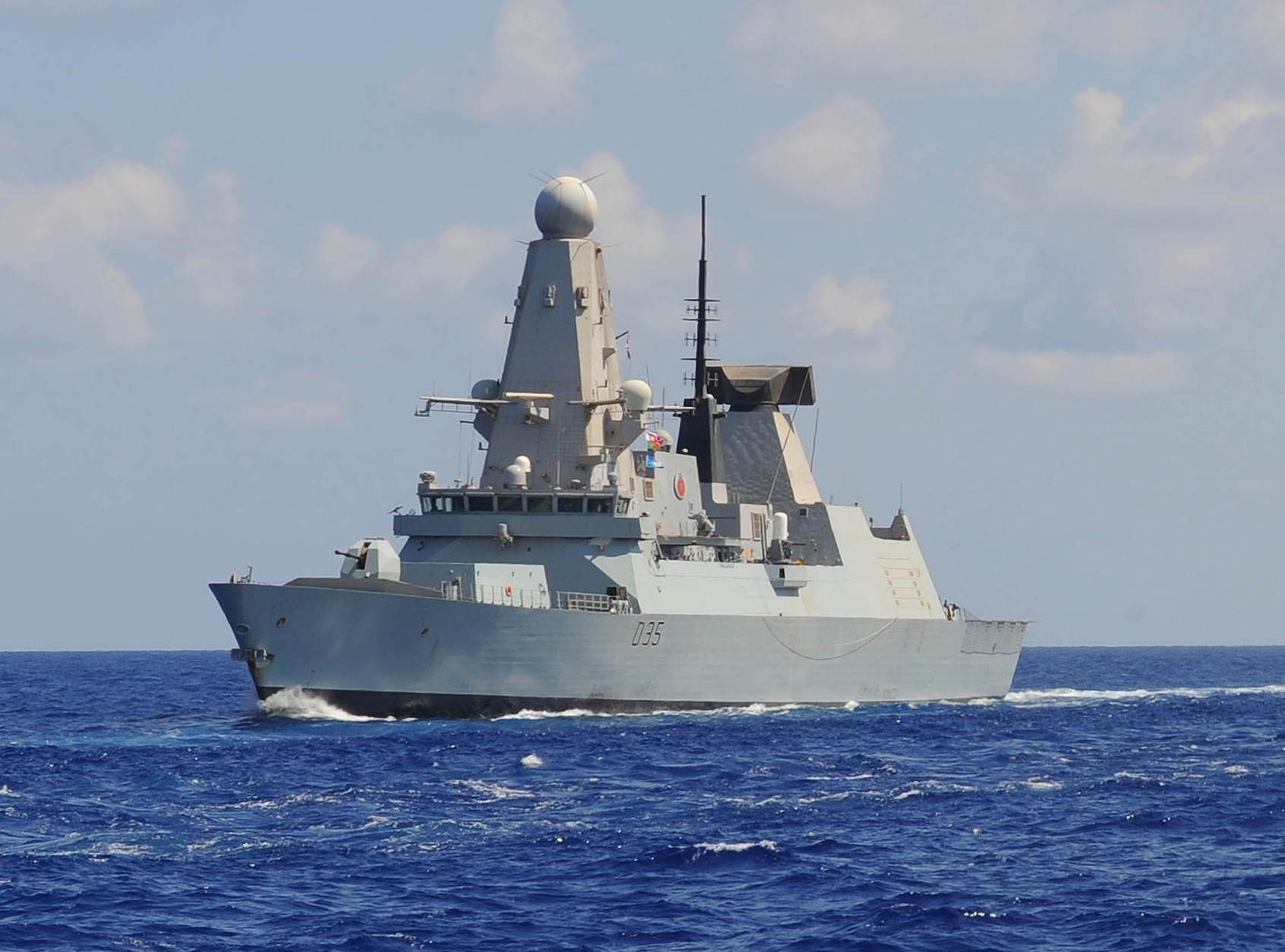
More conspicuous still is the dispatch of HMS Dragon, one of the Royal Navy’s six Type 45 air defence destroyers. Designed primarily to shield carrier strike groups from aerial assault, the vessel bristles with advanced radar and missile systems capable of tracking and intercepting multiple airborne threats simultaneously. Her arrival in the eastern Mediterranean will signal not only a defensive posture but also a reminder of Britain’s enduring military reach.
Sir Keir framed the deployment as a necessary precaution. “We will always take the steps required to protect British personnel,” he said, emphasising that the measures were proportionate and defensive. Yet behind the careful language lies an acknowledgement that RAF Akrotiri — and by extension Britain’s footprint in the region — has entered a more volatile phase.
Akrotiri’s importance cannot be overstated. From its runways have flown reconnaissance missions over Syria and Iraq, intelligence-gathering sorties and logistical support for coalition operations. Its strategic position places it within striking distance of multiple flashpoints, making it both invaluable and exposed. As tensions between regional powers intensify, the base’s role as a forward operating hub inevitably draws scrutiny from hostile actors.
The recent attack, while limited in impact, exposed vulnerabilities inherent in fixed installations facing asymmetric threats. Drones are cheap, adaptable and difficult to detect without dedicated countermeasures. That two additional drones were intercepted by Cypriot authorities en route to the base underscores the seriousness of the episode. It was not an isolated mechanical failure or errant device; it was part of a coordinated attempt to probe defences.
Nicosia’s swift interception highlights the close cooperation between London and the Republic of Cyprus, even though the sovereign base areas operate under distinct jurisdiction. The Cypriot government has a vested interest in preventing its territory from becoming a battleground for external rivalries. For Britain, maintaining robust ties with local authorities is as critical as deploying hardware.
France, too, appears to be recalibrating its posture. Reports suggest Paris is preparing to send additional air defence systems and a frigate to Cyprus, reinforcing the notion that European powers view the eastern Mediterranean as an arena demanding vigilance. Such moves hint at a broader, if understated, alignment among Western nations concerned about the spillover of Middle Eastern instability.
The deployment of HMS Dragon carries operational as well as political implications. Type 45 destroyers were conceived during an era when the principal threat was high-performance aircraft and anti-ship missiles from peer adversaries. In recent years, however, they have had to adapt to a world in which swarms of inexpensive drones and loitering munitions can harry even the most advanced fleets. Their sophisticated SAMPSON radar and Sea Viper missile system remain formidable, but the challenge lies in calibrating high-end capabilities against low-cost threats.
For the Royal Navy, the mission will also test readiness. The Type 45 fleet has faced well-documented engineering difficulties in the past decade, prompting a programme of power improvement refits. Sending one of these vessels into a tense environment signals confidence that those issues are firmly in the rear-view mirror.
Politically, Sir Keir’s decision is a balancing act. Britain must reassure its personnel and allies without appearing to escalate tensions unnecessarily. The language from Downing Street has been measured, avoiding attribution or inflammatory rhetoric. Yet the very act of reinforcing Akrotiri is a tacit admission that the security equation has shifted.
In an age when conflicts blur the line between declared war and shadow confrontation, the eastern Mediterranean has become a theatre of signals as much as shots. A drone skimming across the sea towards a sovereign air base is more than a tactical nuisance; it is a message. Britain’s response — helicopters armed with Martlet missiles and a destroyer built to dominate the skies — is a message in return.
Whether this latest flare-up proves a fleeting episode or the harbinger of sustained pressure on Western assets remains to be seen. What is clear is that the complacency of distance no longer applies. From the Levant to the Aegean, the reach of regional tensions extends to Britain’s doorstep — or at least to its Mediterranean outpost.
For now, RAF Akrotiri stands guarded not only by its perimeter fences and hardened shelters but by the unmistakable silhouette of HMS Dragon cutting through nearby waters. In the calculus of deterrence, presence matters. And Britain has chosen to make hers felt.
Main Image: U.S. Navy photo by Mass Communication Specialist 2nd Class Jacob D. Moore
Shielding the Spear Tip: How Britain Could Defend Its Forward Bases from the Drone Age