Conceived in an era when the greatest fear was the sudden flash of Soviet nuclear bombers crossing the Arctic, the organisation has survived the collapse of the Soviet Union, the rise of terrorism, and now the emergence of hypersonic missiles and space-based threats. More than six decades after its creation, NORAD remains a quiet but indispensable pillar of continental defence.
The command was formally established on May 12th, 1958, at the height of the nuclear standoff between Washington and Moscow. Its creation reflected a simple strategic reality: geography made North America vulnerable to attack over the polar route. Soviet long-range bombers could, in theory, approach Canada and the United States from the Arctic with little warning. Neither country could monitor that vast expanse alone. Cooperation was not merely desirable; it was essential.
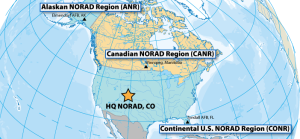
Thus was born a unique military partnership between the United States and Canada. Unlike NATO, which binds multiple nations in a collective security pact, NORAD functions as a truly integrated command.
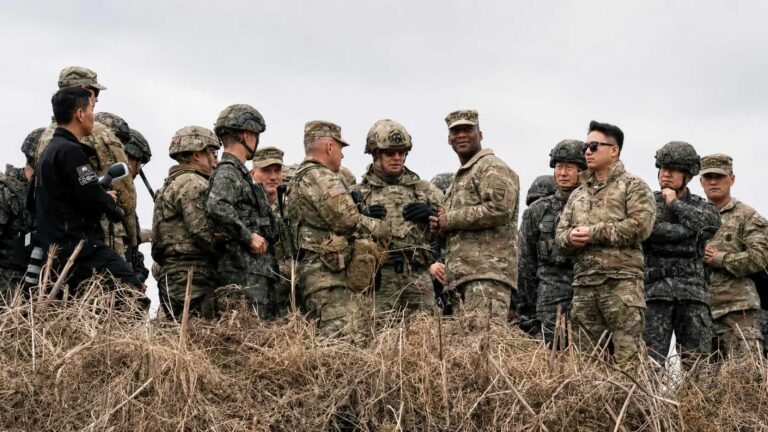
Officers from both countries serve together in the same headquarters, sharing responsibility for defending North American airspace. Even today the command structure reflects that binational character: an American general serves as commander while a Canadian lieutenant-general acts as deputy.
The early years of NORAD were dominated by radar. Vast chains of early-warning installations stretched across the northern wilderness: the Pinetree Line, the Mid-Canada Line, and ultimately the Distant Early Warning Line — the DEW Line — running across the Arctic tundra. These stations scanned the horizon for Soviet bombers, feeding data into command centres that would scramble interceptor aircraft if hostile formations appeared.
To modern eyes the system appears almost quaint, relying on analog technology and human operators staring at glowing screens. Yet it represented a remarkable technological achievement for its time. In the event of an attack, NORAD would have only minutes to detect incoming aircraft, identify them, and direct American and Canadian fighters to intercept. The margin for error was thin; the stakes were existential.
As missile technology advanced during the 1960s, the nature of the threat changed dramatically. Intercontinental ballistic missiles reduced warning times from hours to minutes. Radar networks were supplemented by satellites capable of detecting missile launches through their infrared signatures. NORAD’s mission expanded from merely watching the skies for aircraft to monitoring the global missile environment.
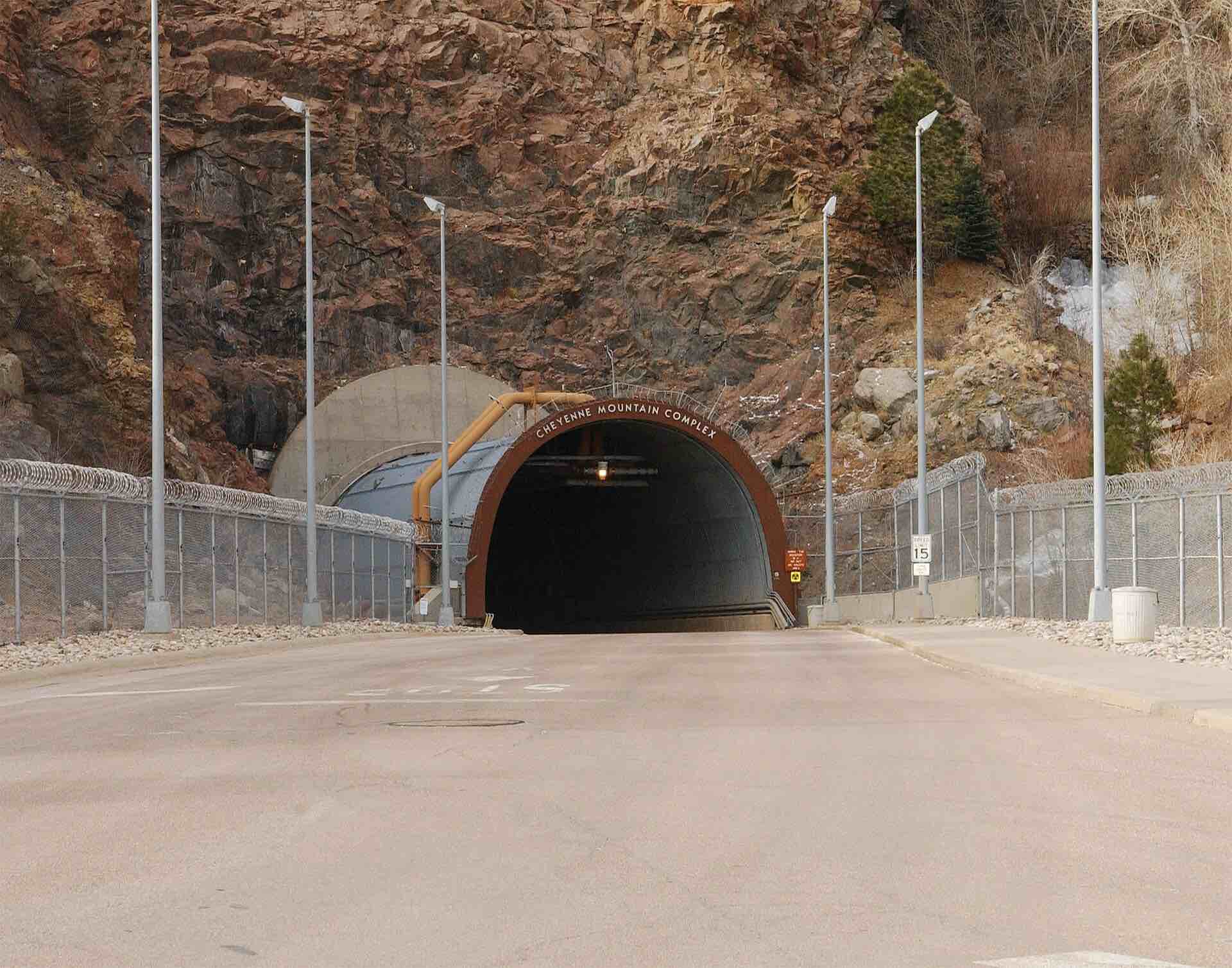
The headquarters at Cheyenne Mountain, completed in 1966, embodied the anxiety of the nuclear age. Built inside solid rock and protected by enormous blast doors, it was designed to survive a nuclear strike and continue operating. Inside were vast rooms filled with computers and command consoles, forming one of the most sophisticated command centres ever constructed.
When the Cold War ended in 1991, some observers predicted that NORAD would fade into irrelevance. The Soviet bomber fleets that had once haunted military planners were ageing relics, and the ideological confrontation between East and West had dissolved. For a brief moment it seemed that the command might become little more than a historical curiosity.
History, however, had other plans.
The terrorist attacks of September 11th, 2001 forced a radical reassessment of air defence within the United States. The idea that hijacked civilian aircraft could be used as weapons exposed a vulnerability that NORAD had never been designed to confront. Suddenly the threat was not bombers crossing the Arctic but aircraft already inside domestic airspace.
In the years that followed, NORAD adapted quickly. Procedures were rewritten, coordination with civil aviation authorities intensified, and fighter aircraft were placed on heightened alert across the continent. The command began routinely monitoring internal airspace, something largely unnecessary during the Cold War.
At the same time, the organisation’s responsibilities broadened further. NORAD assumed a maritime warning role, providing surveillance of the approaches to North America’s coastlines. It also became deeply involved in monitoring space activity, tracking satellites and orbital debris that might threaten communications or navigation systems.
Today NORAD operates as a sophisticated network of sensors, satellites and command centres designed to detect and respond to threats from air and space. Its mission can be summarised in three primary tasks: aerospace warning, aerospace control, and maritime warning for North America.
Aerospace warning involves the detection and assessment of potential threats from aircraft, missiles or space-based systems. This relies on a complex architecture of radar installations, satellites and intelligence systems that together provide a continuous picture of activity across the northern hemisphere.
Aerospace control, meanwhile, concerns the ability to respond. Fighter aircraft stationed across the United States and Canada can be scrambled within minutes to intercept unidentified or potentially hostile aircraft. Such interceptions occur more frequently than many realise, often involving Russian long-range bombers probing the edges of North American airspace.
The third task — maritime warning — reflects the growing importance of monitoring activity at sea. Modern threats are no longer confined to aircraft and missiles; submarines, surface vessels and even unmanned systems may pose risks to the continent. NORAD provides early warning to both governments when unusual maritime activity is detected.
Yet the challenges facing the command are evolving once again. Hypersonic weapons, capable of travelling at more than five times the speed of sound while manoeuvring unpredictably, threaten to compress warning times even further. Meanwhile the militarisation of space is raising concerns about the vulnerability of satellites that underpin modern economies and defence systems.
In response, both Washington and Ottawa have begun discussing major investments in modernising North America’s early-warning systems. New radar installations capable of detecting advanced missiles are under consideration, particularly in the Arctic where climate change is opening new maritime routes and altering the strategic landscape.
There is also renewed emphasis on cooperation. The Arctic, once a frozen buffer, is increasingly viewed as a potential arena of geopolitical competition involving Russia and, indirectly, China. For Canada and the United States, the defence of the northern approaches remains as vital today as it was during the Cold War.
Despite these shifting priorities, the essence of NORAD has remained remarkably consistent. It exists to provide time — time to detect threats, time to assess them, and time for political leaders to decide how to respond. In the realm of nuclear strategy, even a few minutes can make the difference between catastrophe and survival.
In an age when geopolitical tensions are once again rising, that mission appears less antiquated than once assumed. The granite chambers of Cheyenne Mountain may have been carved in the anxious years of the 1960s, but the logic behind them endures. Above the clouds and beyond the horizon, NORAD still watches the skies, quietly guarding a continent that rarely pauses to consider how closely it is being watched.
NORAD Scrambles Jets After Russian Aircraft Tracked Off Alaska