At the heart of this year’s drills lies a simple but powerful premise: that preparedness, when shared among trusted partners, becomes a force multiplier.
On April 27th, more than 500 service personnel drawn from the United States, the Philippines, Australia and New Zealand conducted a complex counter-landing exercise designed to test their ability to repel a simulated amphibious assault. The operation brought together land and air assets in a tightly choreographed display of combined firepower and coordination, culminating in the defeat of a mock adversary force.
What made this exercise notable was not simply its scale, but its novelty. For the first time, troops from all four nations participated in a live-fire counter-landing scenario during Balikatan, underscoring a shift from bilateral training towards genuinely integrated multinational operations.
Such integration is no small feat. It requires shared doctrine, seamless communication, and a level of mutual trust that cannot be improvised. Yet, as officers on the ground were quick to note, the experience of working “in the dirt” alongside allied forces has forged bonds that extend beyond the tactical. It is this human dimension—often overlooked—that transforms interoperability from a technical aspiration into a lived reality.
Balikatan, meaning “shoulder to shoulder” in Tagalog, has long served as a cornerstone of the US-Philippine alliance. But in recent years, it has evolved into something broader: a platform for regional partnership in an increasingly complex security environment.
The 2026 exercises, running from April 20 to May 8, involve more than 17,000 troops from across the Indo-Pacific and beyond, including first-time or expanded participation from countries such as Japan, Canada and France.
This widening circle of collaboration reflects a shared recognition that security challenges—whether territorial disputes, natural disasters, or emerging technological threats—rarely respect national boundaries. By training together across air, land, sea, and even cyber domains, participating nations are not only refining their warfighting capabilities but also building the habits of co-operation that underpin long-term stability.
The counter-landing drills in particular highlight a renewed emphasis on territorial defence. Conducted against the backdrop of the South China Sea—a region of undeniable strategic importance—the exercises rehearsed scenarios in which allied forces must act swiftly and cohesively to defend coastlines and critical infrastructure.
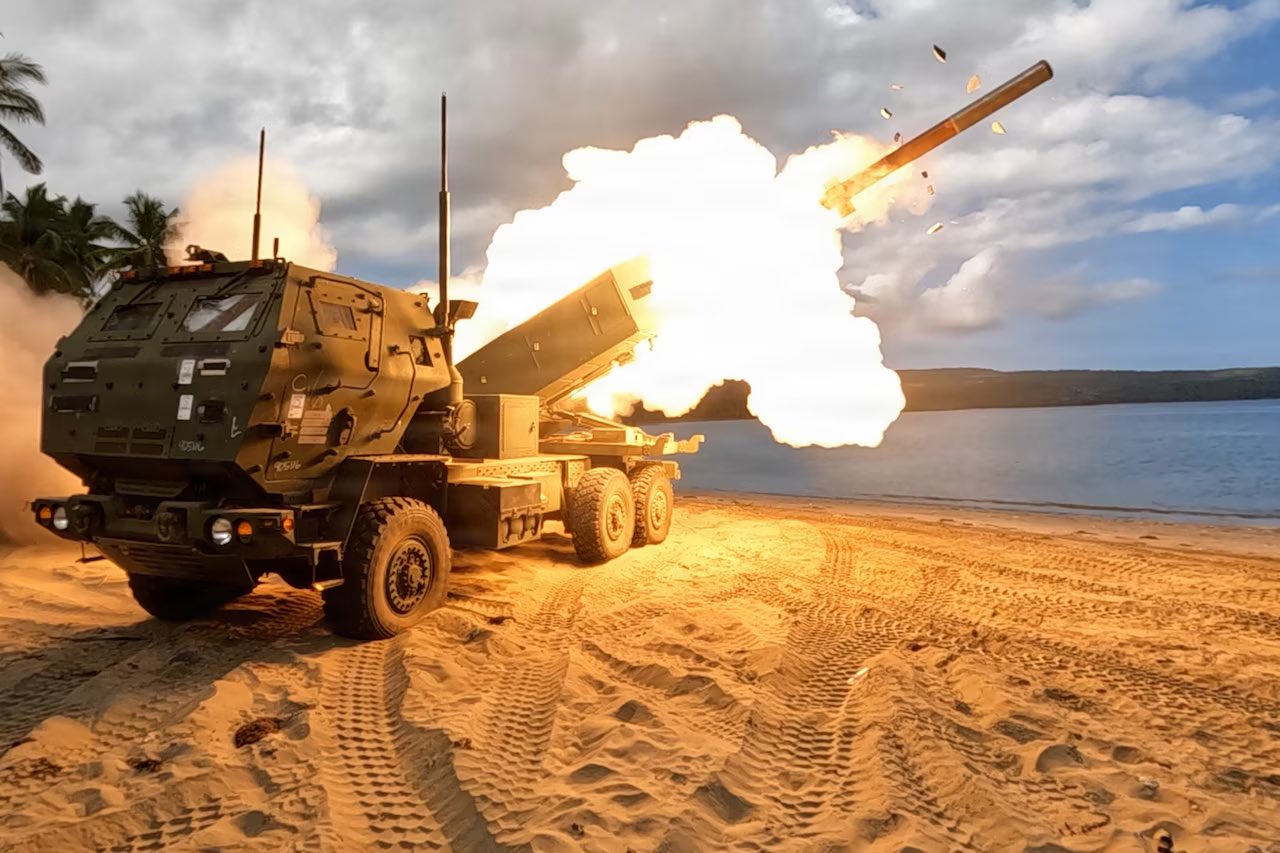
Yet it would be a mistake to view Balikatan solely through the prism of deterrence. The exercise also serves as a proving ground for innovation. The integration of advanced systems—from precision rocket artillery to unmanned platforms—demonstrates how modern militaries are adapting to an era defined by speed, connectivity and information dominance.
Equally significant is the emphasis on command and control. Establishing parallel joint task forces and synchronising their actions across multiple domains demands not only technological capability but also doctrinal alignment. It is here, perhaps more than anywhere, that the true value of multinational training becomes apparent.
For the Philippines, the exercise represents a tangible expression of an increasingly “active defence posture”, as Manila seeks to assert greater agency in safeguarding its interests while remaining firmly anchored in its alliances.
For the United States and its partners, Balikatan offers an opportunity to demonstrate commitment—not through rhetoric, but through presence and practice. In an era where strategic ambiguity often prevails, such demonstrations carry considerable weight.
There is, of course, an unavoidable geopolitical context. The Indo-Pacific remains a theatre of intensifying competition, and exercises of this nature are closely watched by observers near and far. Yet officials have consistently emphasised that Balikatan is not directed at any single nation. Rather, it is a reaffirmation of a collective responsibility: to ensure that the region remains open, stable and secure.
If there is a broader lesson to be drawn, it is that security in the 21st century is increasingly collaborative. No single nation, however powerful, can address the full spectrum of modern threats alone.
Balikatan 2026, in its scale, ambition and execution, offers a compelling illustration of what such collaboration can achieve. It is, quite simply, a testament to the enduring value of standing shoulder to shoulder.
Trump signals possible cut to US troops in Germany amid dispute with Berlin
Main Image: U.S. Dept. of War