

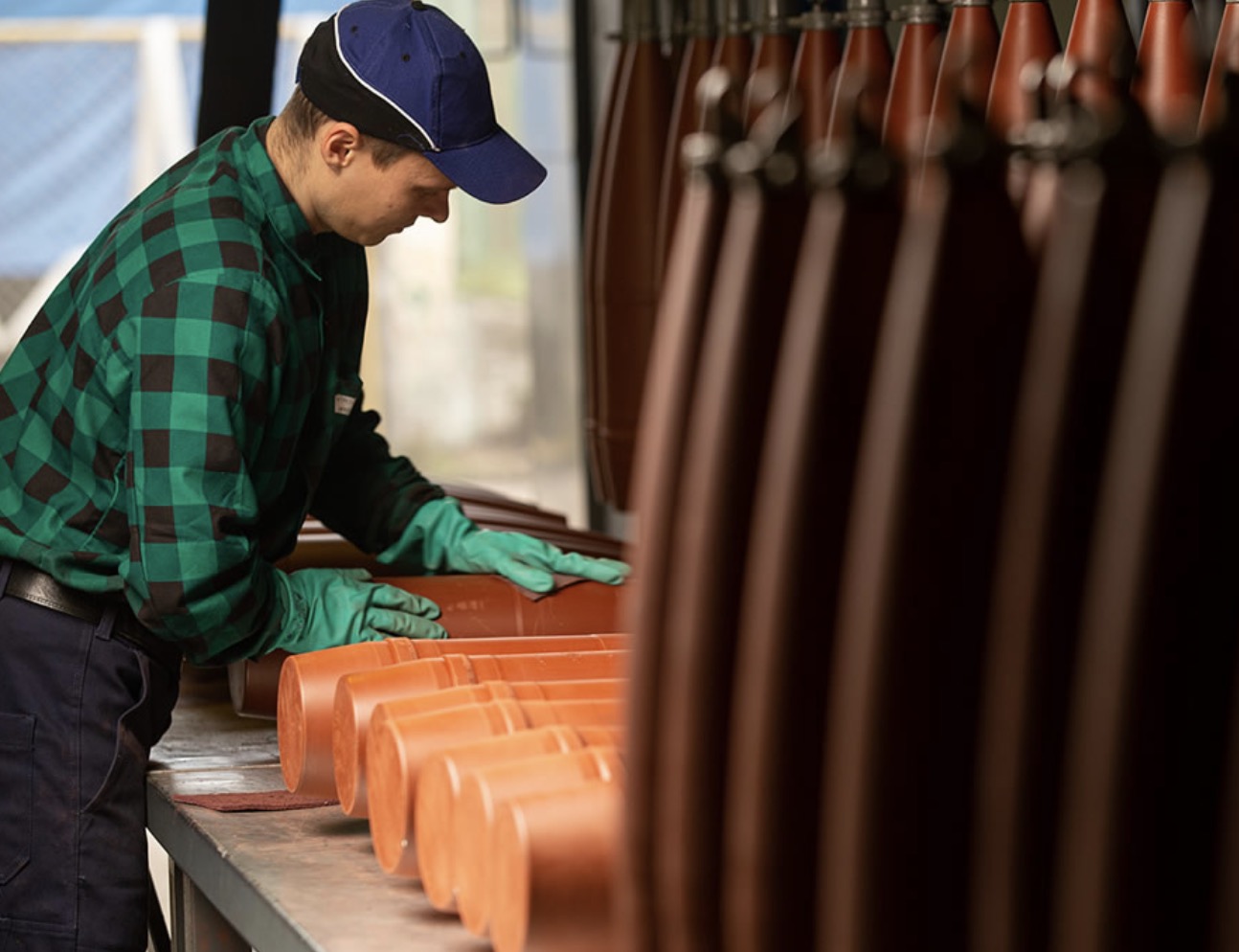
The Polish explosives manufacturer Nitro-Chem, already the largest producer of TNT within NATO, has announced plans to build a new production line in response to a sharp resurgence in global demand for munitions.
The decision, revealed this week, is more than a routine industrial investment. It reflects the changing realities of a world in which ammunition stocks have been depleted by successive crises and where governments are rediscovering the hard mathematics of military logistics.
Nitro-Chem, a subsidiary of Poland’s state-owned defence conglomerate PGZ, will sign an agreement with the Polish engineering firm Prozap, itself part of the chemicals group Grupa Azoty, to design and construct the new TNT facility. The expansion will modernise the company’s infrastructure and significantly increase its output of trinitrotoluene, the century-old explosive that remains the backbone of aerial bombs and large-calibre artillery shells.
The company has been producing TNT since the 1940s and currently manufactures roughly 10,000 tonnes each year. That figure already places it at the top of NATO’s TNT league table. Yet the surge in orders over the past two years has left even this capacity looking insufficient.
Behind the expansion lies a confluence of military pressures. The most immediate catalyst has been the escalation of hostilities in the Middle East following the late-February United States–Israeli strikes against Iran, which rapidly consumed large quantities of precision bombs and artillery ammunition. Washington has since pressed Western arms manufacturers to accelerate production in order to replenish depleted stockpiles.
In practical terms, that demand flows directly down the supply chain. The explosive filler inside a modern bomb may seem mundane beside the sophistication of its guidance systems, but without it there is no weapon. TNT remains the preferred compound for many munitions because of its stability, transportability and predictable detonation characteristics.
For Europe, the resurgence of interest in TNT production also reveals an uncomfortable truth: much of the West allowed this industrial capability to wither after the Cold War. With defence budgets shrinking during the 1990s and early 2000s, several Western countries either reduced or eliminated their TNT manufacturing capacity entirely, citing falling demand and environmental concerns about chemical contamination.
The result is that today’s Western ammunition supply chain relies heavily on a handful of specialised producers. Nitro-Chem sits at the centre of that network.
The Polish firm has already become a major supplier to American weapons programmes. In 2025 it signed a contract worth roughly 1.2 billion zlotys—about $310 million—to deliver 18,000 tonnes of TNT to a United States intermediary between 2027 and 2029. The explosive will ultimately be used in the production of artillery shells and aerial bombs for the US armed forces.
Those figures illustrate how rapidly demand has rebounded. Artillery-heavy conflicts, from Ukraine to the Middle East, have reminded military planners that modern warfare still consumes ammunition at astonishing rates. Even the most technologically advanced armies find themselves rediscovering the importance of basic explosive production capacity.
For Poland, the timing is politically convenient as well as economically attractive. The country has spent the past several years positioning itself as a central pillar of Europe’s defence industry. Warsaw has embarked on one of the continent’s most ambitious military modernisation programmes, purchasing advanced tanks, artillery and aircraft while simultaneously investing in domestic production.
In this sense, Nitro-Chem’s expansion fits neatly into a broader strategic narrative. Poland is not merely strengthening its own armed forces; it is embedding itself deeper within the industrial architecture of NATO.
The company’s statement accompanying the announcement reflected this dual purpose. The new TNT line, it said, would “increase production capacity and modernise technological infrastructure while maintaining the highest safety standards”. It added that the investment responded both to rising foreign demand and to “strategic needs related to national security and defence”.
Industrial safety is no trivial matter in the explosives sector. TNT manufacturing is a hazardous business involving nitration processes that must be carefully controlled to prevent accidents and environmental contamination. Modernisation therefore serves not only to increase output but also to introduce more advanced monitoring and containment systems.
Yet the symbolism of the project goes beyond technical improvements. Across Europe, policymakers are increasingly aware that the continent’s defence industry must scale up after decades of relative neglect. Ammunition shortages experienced during recent conflicts have exposed the fragility of existing supply chains.
Poland’s move may therefore serve as a template for other countries seeking to rebuild dormant capabilities. Expanding TNT production is hardly glamorous compared with the development of hypersonic missiles or artificial intelligence-enabled weapons. But it is precisely this kind of unglamorous industrial base that determines whether advanced militaries can sustain prolonged operations.
In the end, the story unfolding in Bydgoszcz is one of rediscovered realities. The geopolitical optimism that followed the Cold War encouraged the belief that large-scale industrial warfare belonged to history. Factories that once churned out explosives were repurposed or closed altogether.
Today that assumption is being quietly reversed.
The construction of a new TNT line in Poland may appear a modest development, but it signals something larger: the return of munitions production as a strategic priority in an increasingly unsettled world.
Main Image: Nitro Chem
Poland Arms Its Eastern Frontier as Europe Rediscovers the Basics of Deterrence


Britain’s Consistent Message on Ukraine Carries Growing Weight at the OSCE