In an interview with The Atlantic, Papperger dismissed much of Ukraine’s drone sector as little more than “playing with Lego” and described some manufacturers as “Ukrainian housewives” using kitchen 3D printers. The remarks drew a sharp response in Ukraine and prompted Rheinmetall to issue a subsequent statement expressing “utmost respect” for Ukraine’s defence effort and its “innovative strength”.
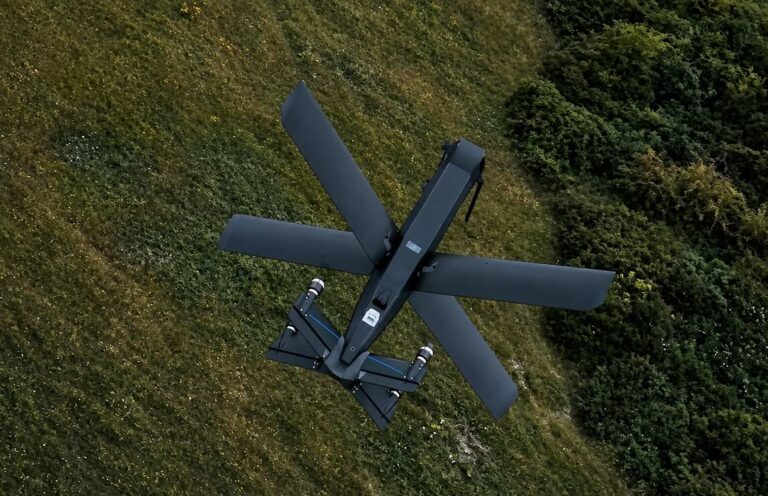
The controversy matters because it touches a central question of the war: whether low-cost, rapidly iterated drone systems are beginning to reshape the economics of modern warfare faster than Europe’s established defence manufacturers can adapt. Simon Shuster’s article in The Atlantic framed that question directly, asking why armies still buy tanks and artillery when Ukrainian forces have shown that comparatively cheap drones can destroy or disable them. Papperger’s response was not merely sceptical; it was openly dismissive of the idea that Ukraine’s drone ecosystem represents a genuine technological advance.
Kyiv’s answer has been that innovation does not always resemble the traditional model of a large Western prime contractor. Ukrainian officials and industry figures argue that the country’s advantage lies in speed, adaptability and distributed production rather than in the prestige associated with legacy defence firms. President Volodymyr Zelenskyy replied with sarcasm, saying that if every Ukrainian housewife could really make drones, then every Ukrainian housewife could also be chief executive of Rheinmetall. The exchange quickly moved beyond a personal dispute and became a symbol of the gap between Ukraine’s wartime production culture and the slower procurement logic of Europe’s established arms sector.
There is substance behind that dispute. Drones have been critical to Ukraine’s war effort since the start of Russia’s full-scale invasion, while Ukrainian officials say they have become central to battlefield attrition. At the same time, Ukraine is trying to convert wartime necessity into an export strategy. Zelenskyy announced in February that Kyiv would open ten weapons export centres in Europe, with Germany among the first countries involved, in an attempt to create channels for battlefield-tested systems to reach foreign partners. That shift suggests Ukraine is not treating drones as an improvised wartime expedient alone, but as the basis of a long-term defence industry.
The wider European context also cuts against the suggestion that Ukrainian firms are structurally excluded from NATO and EU markets. The European Commission’s SAFE instrument provides up to €150 billion in loans for defence investment and explicitly allows Ukraine to participate in joint procurement and procurement from its defence industry. The Commission states that, based on submitted national defence investment plans, 15 member states will undertake projects with Ukraine. Analysts at CSIS describe this as part of Ukraine’s growing integration into Europe’s defence industrial base, even while warning that fragmentation remains a problem. In other words, the barriers are real, but they are not absolute.
Papperger’s remarks also landed in a context where Ukraine’s interceptor-drone expertise is attracting outside interest. Reuters reported this week that Ukrainian companies are looking towards export opportunities in the Gulf as states in the region seek defences against Iranian-style drone threats. Zelenskyy has said Ukraine concluded or discussed security arrangements with Saudi Arabia, the United Arab Emirates and Qatar, among others, centred partly on air-defence and drone expertise. Reuters also reported that Ukraine says, with sufficient funding, it could produce around 2,000 interceptor drones a day. These are not the signals of a sector with no route to foreign markets.
None of this means Ukraine has rendered heavy armour obsolete. European armies are still investing in tanks, artillery and air defence because large-scale land warfare requires layered capability, not a single dominant system. Rheinmetall remains one of the central industrial beneficiaries of Europe’s rearmament and continues to expand production across several categories. But the backlash to Papperger’s comments reflects a harder truth for the sector: Ukraine has demonstrated that inexpensive, expendable and constantly modified systems can impose severe costs on far more expensive platforms. That does not eliminate the need for conventional armoured vehicles. It does, however, alter the commercial and strategic environment in which companies built around those vehicles operate.
For that reason, the episode is better understood not as a social-media quarrel but as an industrial argument about who is shaping the next phase of warfare. Rheinmetall’s follow-up statement appeared designed to contain the political damage. Yet the original remarks had already exposed a tension that is unlikely to disappear: Ukraine’s drone industry is no longer viewed simply as an improvised wartime workshop. Increasingly, it is being treated by governments, investors and defence planners as a serious part of the emerging European security architecture.