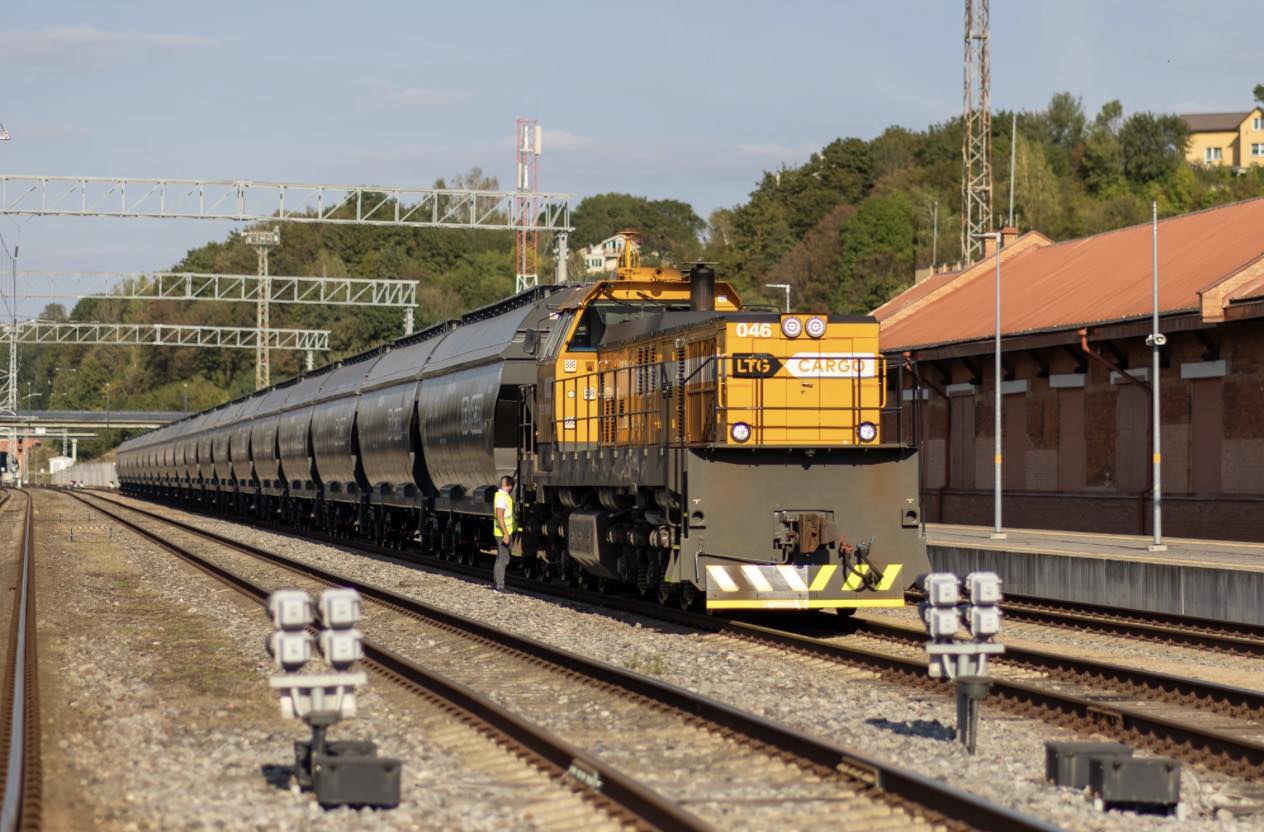
The development, reported by RailMarket, marks a transition for the state-owned company from a subcontracted logistics provider to a direct bidder for military transport contracts—an evolution that reflects broader shifts in European security priorities and infrastructure readiness.
At the heart of this milestone is the awarding of a NATO Commercial and Government Entity (NCAGE) code, a credential that effectively opens the door to the Alliance’s procurement system. With this designation, LTG Cargo can now independently submit bids for rail-based military transport services, rather than relying on intermediary partnerships with other European operators.
For a company that has steadily built its credentials in military logistics over the past decade, the move is less a leap into the unknown than a formal recognition of existing capabilities. LTG Cargo has long been involved in transporting NATO equipment and personnel across the Baltic region, particularly between Western Europe and the Alliance’s eastern flank. The difference now is that it can operate as a principal contractor, a shift that could prove commercially and strategically transformative.
The timing is notable. Europe’s security landscape has changed dramatically in recent years, with NATO placing renewed emphasis on “military mobility”—the ability to move troops and heavy equipment quickly across borders. Rail has emerged as a critical component of this effort, particularly for transporting large volumes of heavy materiel efficiently and reliably.
In this context, LTG Cargo’s geographic position offers a distinct advantage. Based in Lithuania and operating across the Baltic States, the company sits at a crucial junction between Western Europe and NATO’s eastern frontier. Its network connects not only Lithuania but also Latvia and Estonia, enabling the movement of allied forces to and from forward deployment areas.
The scale of its recent activity underscores this growing role. In 2025 alone, LTG Cargo operated around 180 trains carrying military equipment—an increase from 145 in 2024 and 143 in 2023, continuing a steady upward trajectory from just over 100 in 2022. This represents a roughly 70 percent increase in military transport volumes over four years, a figure that reflects both rising demand and the company’s expanding operational capacity.
Such growth has not occurred in isolation. It forms part of a broader strategy by the parent group, LTG Group—Lithuania’s state-owned railway operator—to align its infrastructure and services with NATO requirements. Investments in dual-use infrastructure, capable of serving both civilian and military needs, have become a priority.
One example is the development of enhanced loading facilities and intermodal terminals designed to handle heavy military equipment more efficiently. Projects such as the expansion of infrastructure in Palemonas aim to improve the transfer of cargo between different rail gauges—a persistent logistical challenge in the Baltic region, where European standard-gauge lines meet the broader gauge inherited from the Soviet era.
These upgrades are not merely technical improvements; they are part of a strategic effort to ensure that Lithuania can serve as a reliable logistics hub for NATO operations. Efficient rail links are essential for reinforcing the Alliance’s eastern flank, particularly in scenarios requiring rapid deployment.
For LTG Cargo, the commercial implications are equally significant. Direct access to NATO procurement processes provides an opportunity to secure long-term contracts and deepen its integration into Western European logistics networks. The company has already been expanding its footprint beyond Lithuania, operating subsidiaries in Poland and Ukraine and offering a range of services including intermodal transport, freight forwarding, and rolling stock maintenance.
Yet challenges remain. Military logistics demands high levels of reliability, security, and interoperability with allied systems. Competing for NATO contracts will place LTG Cargo alongside established Western European operators with extensive experience in defence transport. Success will depend not only on cost competitiveness but also on the ability to meet stringent operational standards.
Nevertheless, the company’s track record suggests it is well positioned to compete. Its experience in handling cross-border military shipments, combined with ongoing infrastructure investments and a growing volume of operations, provides a solid foundation.
More broadly, LTG Cargo’s inclusion in NATO’s supplier list highlights a wider trend: the increasing role of civilian logistics providers in defence planning. As European governments seek to enhance readiness without maintaining large standing transport capacities, partnerships with commercial operators are becoming essential.
Rail, in particular, is regaining strategic importance after decades of relative neglect in military planning. Its ability to move large quantities of equipment over long distances, while reducing congestion on road networks, makes it an indispensable component of modern defence logistics.
In that sense, LTG Cargo’s new status is more than a corporate milestone. It is a reflection of how Europe is rethinking the intersection of infrastructure, commerce, and security in an era of renewed geopolitical tension.
NATO says European allies and Canada sharply increased defence spending in 2025