The talks, chaired at the Élysée Palace by President Emmanuel Macron and Prime Minister Keir Starmer, bring together roughly 30 to 40 countries, according to varying reports, at a moment when European governments are increasingly concerned not only by the military crisis in the Gulf but by its direct implications for energy prices, inflation, aviation and supply chains across Europe.
The Paris meeting matters because it is not being framed as an extension of the American military campaign against Iran. On the contrary, French and British officials have presented it as the basis for a future defensive coalition of non-belligerent states, one that would only become operational after a real ceasefire rather than during a temporary pause in fighting. The distinction is politically important. Several European capitals have refused to join Washington’s blockade strategy against Iran, while still insisting that freedom of navigation in the Gulf must be restored as soon as conditions allow.
That leaves Europe in a position it has faced before: heavily exposed to the economic consequences of the crisis, limited in military options, and intent on avoiding the appearance of either inaction or dependence. The Hormuz initiative is therefore taking shape as more than a technical exercise in maritime planning. It is becoming a measure of whether Europe can mount a credible security response beyond direct US command while sustaining its long-stated ambition of strategic autonomy. The United States is not expected to take part in the Paris meeting and is not envisaged as a member of the proposed mission, though intelligence-sharing with Washington would continue.
For Brussels, the energy dimension is central. The European Commission said in late March that EU oil and gas security of supply remained stable for the time being, but acknowledged that the conflict in the Middle East was already affecting global prices. Since then, the situation has worsened. Energy Agency chief Fatih Birol warned Europe could face severe jet fuel disruption within weeks if normal energy flows through Hormuz are not restored. Even if that projection proves too severe, the warning underlines the extent to which the Gulf crisis is no longer a remote geopolitical concern for Europe, but an immediate economic vulnerability.
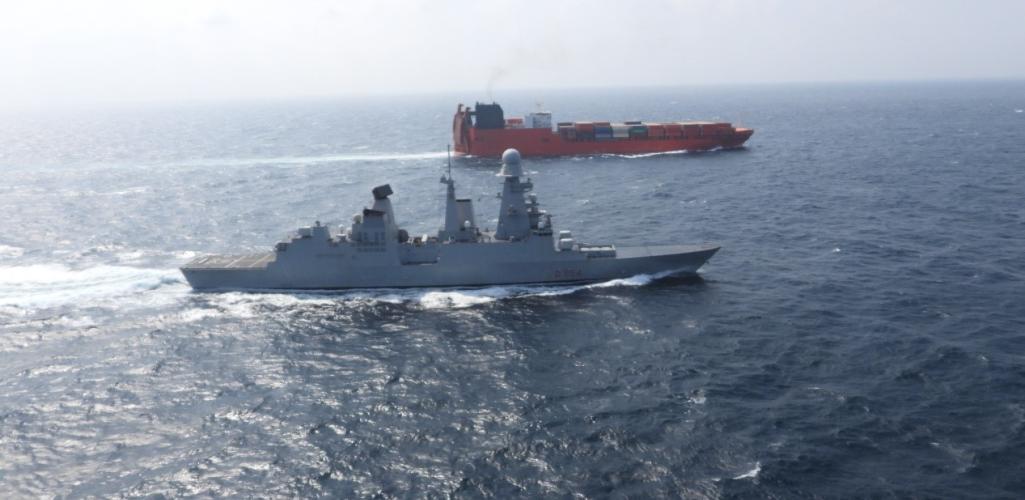
The operational thinking discussed in Paris reportedly includes mine clearance, intelligence sharing and escort arrangements for commercial shipping. French Defence Minister Catherine Vautrin said that European countries including Belgium, the Netherlands and France have the naval mine-clearing capacity needed for such a mission. That detail is significant from a Brussels perspective because it points to a practical, capability-based European role rather than another general declaration of concern. It also suggests that, if a ceasefire takes hold, the mission could become one of the clearest recent examples of European maritime coordination outside the NATO framework, even if NATO allies are heavily represented among its participants.
There is also a wider institutional question. Europe has, in recent years, expanded its discussion of economic security, resilience and strategic dependencies, but Hormuz exposes how dependent the Union remains on external maritime stability. The Red Sea disruptions had already shown how quickly shipping insecurity can affect freight costs and delivery times. The present crisis is more serious because of the Strait of Hormuz’s central role in energy transport. A prolonged closure would hit not only refiners and airlines but also industrial competitiveness, consumer prices and the wider effort to stabilise the eurozone economy after successive external shocks.
The politics of the Paris meeting are equally revealing. The presence of Macron, Starmer, German Chancellor Friedrich Merz and Italian Prime Minister Giorgia Meloni gives the gathering a distinctly European core, even if other participants from the Middle East and elsewhere are expected to join remotely. In practical terms, this is a coalition-building exercise. In political terms, it is an attempt to show that Europe is prepared to protect global trade routes without endorsing the wider military logic of the present conflict. That is likely to be welcomed in Brussels, where concern over escalation has been matched by growing unease at Europe’s lack of independent leverage in hard-security crises beyond the continent.
Whether the proposed mission ultimately takes shape remains uncertain. Yet Friday’s meeting matters for a more immediate reason: it shows that European governments are beginning to treat the security of the Strait of Hormuz as a direct European interest, not simply a crisis to be watched from the sidelines. For the EU, the Paris conference is therefore more than an attempt to reopen a waterway. It is a test of whether Europe is prepared to align its economic vulnerability with practical action.