It is anything but. Beneath the ceremonial language and carefully staged commemorations lies a relationship that has evolved with remarkable haste since the invasion of Ukraine, and one that is increasingly reshaping the geopolitical balance across Eurasia.
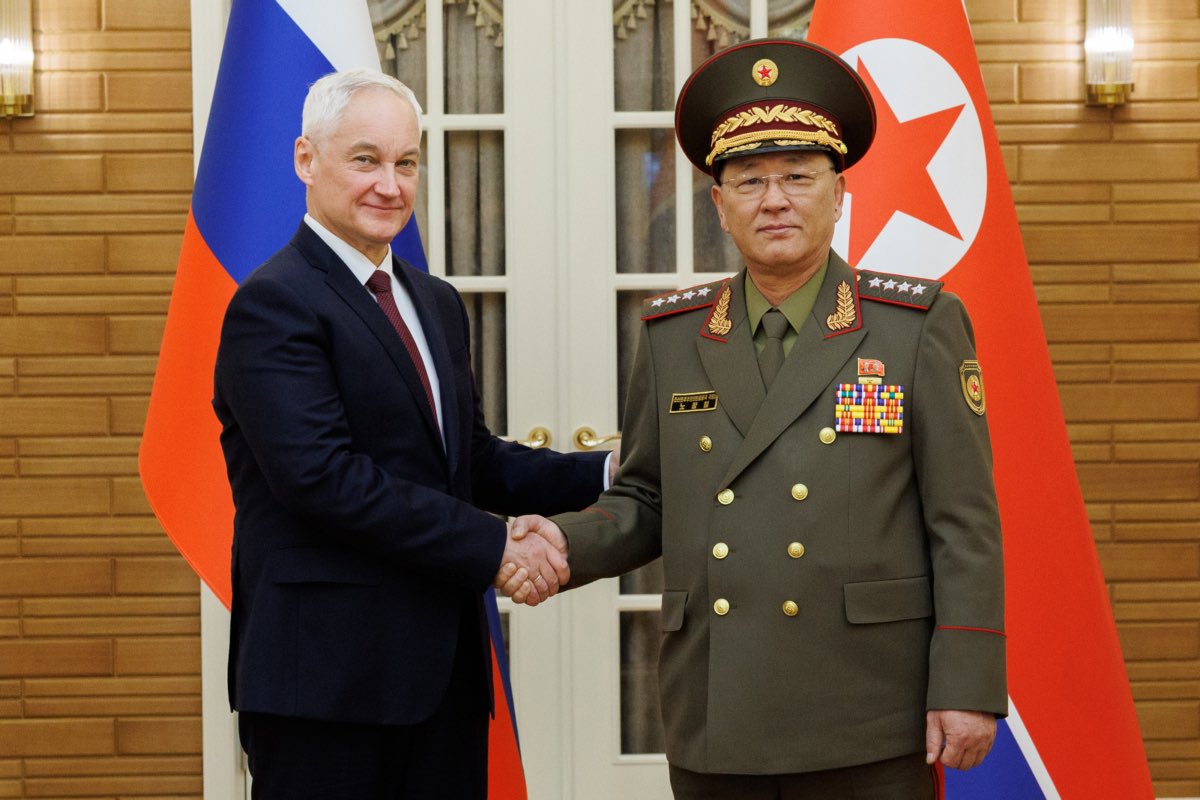
According to a <Reuters report>, Belousov has travelled to North Korea for high-level talks with the country’s leadership and military establishment. His visit follows closely on the heels of another senior Russian delegation, underscoring a tempo of engagement that is no longer episodic but systematic.
The context is critical. Since 2023, Moscow and Pyongyang have moved from cautious alignment to something approaching a strategic partnership. The turning point came in 2024, when President Vladimir Putin and Kim Jong Un signed a comprehensive treaty that included a mutual defence clause.
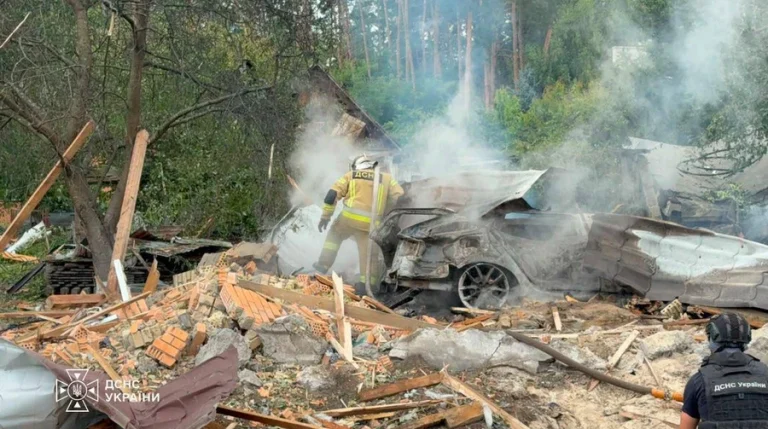
What distinguishes the current phase is not merely diplomatic symbolism, but operational cooperation. North Korea has reportedly supplied both matériel and manpower to support Russia’s war effort in Ukraine, particularly in contested regions such as Kursk. The unveiling of a memorial in Pyongyang to North Korean soldiers killed in that conflict — an event linked directly to Belousov’s visit — signals a rare public acknowledgement of this collaboration.
This is a marked departure from the covert, deniable relationships that characterised Cold War-era alignments. Today’s Russia–North Korea axis is increasingly overt, even performative, suggesting both sides see strategic advantage in signalling their unity.
Belousov’s itinerary, which includes meetings with senior military officials and participation in “ceremonial and commemorative events,” is carefully calibrated. These events serve dual purposes: reinforcing elite-level ties while broadcasting a message to external audiences.
For Moscow, the optics matter. Russia is demonstrating that it retains partners willing to engage — and to assist — despite Western sanctions and diplomatic isolation. For Pyongyang, the relationship offers economic lifelines, military technology, and a degree of international relevance that it has long sought.
The presence of multiple Russian officials in Pyongyang within days of one another reflects a coordinated effort rather than a series of ad hoc visits. Interior, parliamentary, and now defence representatives have all made the journey, suggesting a broad-based deepening of ties across security, governance, and political domains.
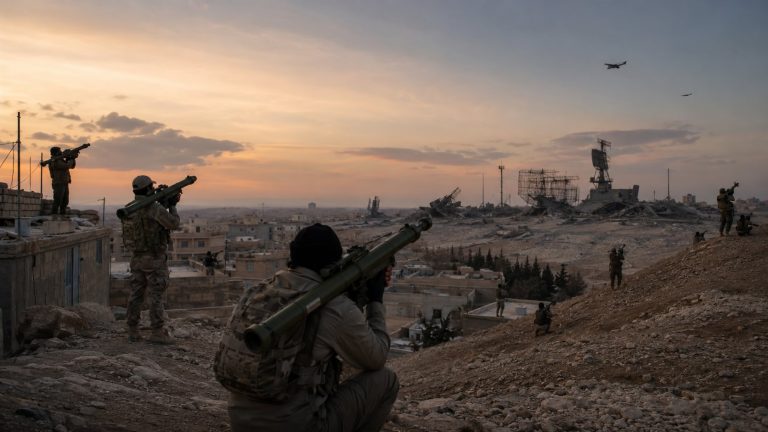
The implications extend well beyond the Korean Peninsula. The emerging alignment forms part of a wider pattern in which Russia is strengthening ties with states willing to challenge the Western-led order. Parallel developments — including enhanced military cooperation between Russia and China — point to a nascent bloc of convenience rather than a formal alliance.
In this context, North Korea occupies a unique niche. It offers Russia both immediate and asymmetric advantages: a source of munitions compatible with Soviet-era systems, a reservoir of manpower, and a partner largely immune to additional sanctions.
At the same time, the relationship carries risks. For Moscow, reliance on Pyongyang underscores the strain imposed by prolonged conflict. For North Korea, deeper entanglement in the Ukraine war may invite greater scrutiny and potential retaliation from Western powers.
It would be easy to dismiss the visit as largely symbolic — another instance of diplomatic theatre. Yet symbolism, in international relations, often precedes substance. The memorialisation of North Korean casualties, the frequency of high-level exchanges, and the formalisation of defence commitments all point to a relationship that is becoming institutionalised.
The language used by Russian officials reinforces this trajectory. Expressions of gratitude for North Korean support, and confidence in the “continued strengthening” of the partnership, suggest expectations of ongoing cooperation rather than a temporary alignment of interests.
Moreover, the integration of military, political, and infrastructural initiatives — including joint projects such as cross-border transport links — indicates a multi-dimensional partnership. This is not merely about wartime expediency; it is about constructing a durable framework for collaboration.
The visit also reflects a broader recalibration of global power dynamics. As Western nations continue to support Ukraine and impose sanctions on Russia, Moscow has accelerated its pivot towards alternative partners. North Korea, once a peripheral player, has become a central component of that strategy.
This realignment challenges traditional assumptions about isolation and influence. Pyongyang, long regarded as diplomatically marginal, is leveraging its position to extract concessions and enhance its strategic standing. Russia, for its part, is demonstrating a willingness to engage with partners that were previously considered liabilities.
Belousov’s visit to Pyongyang is more than a diplomatic courtesy call. It is a visible marker of a relationship that has moved from opportunistic cooperation to strategic alignment. The combination of military collaboration, political signalling, and institutional integration suggests that the Russia–North Korea partnership is entering a new phase — one with implications that will be felt far beyond the immediate theatres of conflict.
For Western policymakers, the message is clear: the geopolitical landscape is becoming more fragmented, more transactional, and more resistant to traditional forms of pressure. In this environment, alliances are not only shifting — they are being redefined in real time.
Main Image: Ministry of Defence
Seoul says 10,000 North Korean troops deployed near Russia–Ukraine border