Ukrainian long-range drones have reached Russia’s Urals region, striking or approaching targets in Yekaterinburg and Chelyabinsk, more than 1,700 kilometres from Ukrainian-controlled territory and around 1,900 kilometres from Kyiv. The attacks on 25 April mark a further expansion of Ukraine’s deep-strike campaign and raise renewed questions about the density and effectiveness of Russia’s air defence network.
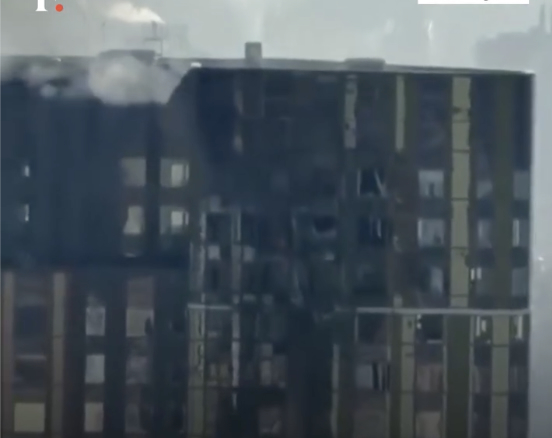
Russian officials confirmed drone activity in both Sverdlovsk and Chelyabinsk regions. Denis Pasler, governor of Sverdlovsk region, said a drone hit a residential high-rise in Yekaterinburg, injuring several people and prompting evacuations. Reuters verified footage showing smoke rising from the upper floors of a modern apartment block. In Chelyabinsk region, governor Alexei Teksler said air defences had repelled an attack on an infrastructure facility, with no reported casualties or damage.
Russia’s Defence Ministry said its forces intercepted and destroyed 127 Ukrainian fixed-wing drones overnight across multiple regions, including Sverdlovsk and Chelyabinsk, as well as Crimea and areas over the Black and Azov Seas. The scale of the reported interception effort, cited by Interfax, underlines the breadth of the operation and the number of regions now exposed to Ukrainian unmanned systems.
The reported flight path is significant. Drones travelling to Chelyabinsk or Yekaterinburg would have had to cross large parts of European Russia and the Volga-Urals corridor, potentially passing through or near Belgorod, Voronezh, Saratov, Samara, Orenburg, Tatarstan or Bashkortostan before reaching the Urals. Even allowing for indirect routing to avoid known air defence zones, the operation suggests a flight time of several hours and a practical reach of roughly 1,800 kilometres or more.
That range also undermines a recent Russian information line alleging that Ukrainian drones require access to Baltic or wider NATO airspace to strike deep inside Russia. Moscow has accused Estonia, Latvia, Lithuania and Finland of allowing Ukrainian drones to transit their airspace during attacks on Russian ports in the Leningrad region. The Baltic states have rejected those claims, describing them as false and stating that they have not opened their airspace for Ukrainian strikes. Those accusations followed attacks on Russian oil export infrastructure in the Baltic region, including incidents reported by The Moscow Times.
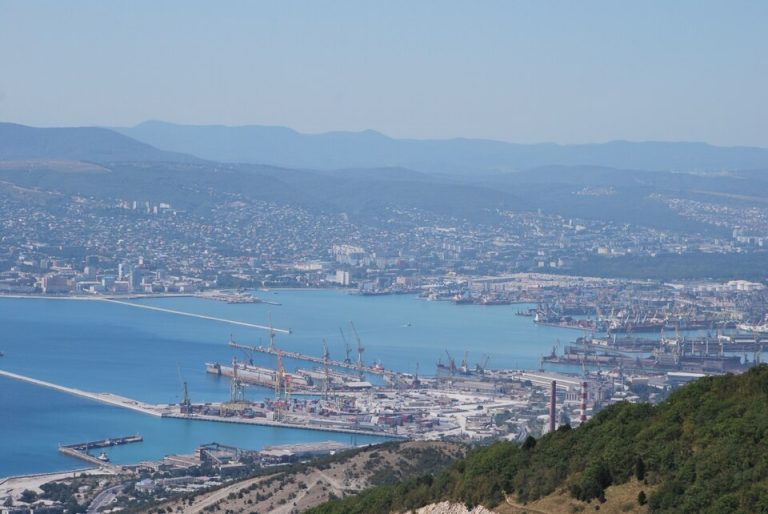
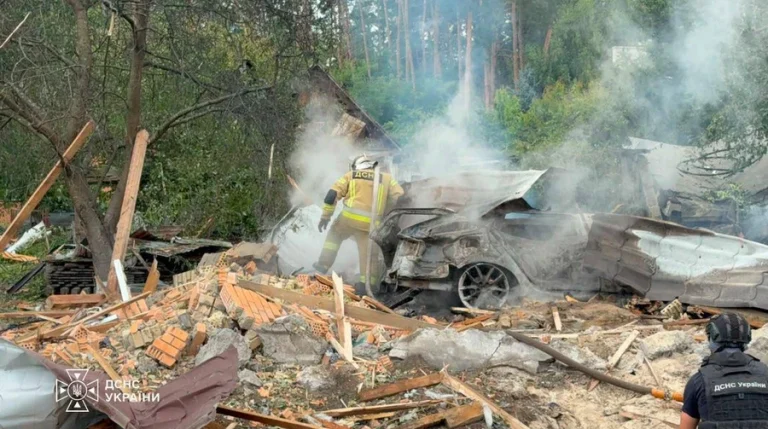
The Urals incident illustrates that Ukraine can reach deep Russian targets without any such route. It also coincides with Kyiv’s continuing campaign against Russian oil, logistics, command and drone-production infrastructure. In recent weeks, Ukrainian strikes have targeted Russian port and energy facilities, including Tuapse on the Black Sea, where a drone attack caused a fire and damaged port infrastructure.
Ukraine has also used domestically produced Neptune missiles against the Atlant Aero facility in Taganrog. According to Ukraine’s General Staff, cited by Interfax-Ukraine, the 19 April strike destroyed two production buildings and damaged four others at a plant involved in the design, production and testing of Molniya strike and reconnaissance drones, as well as components for Orion UAVs.
These operations point to a wider Ukrainian approach: degrading Russia’s ability to sustain drone warfare while simultaneously testing the reach and resilience of its own long-range systems. Strikes on ammunition depots, logistics hubs, UAV control points and command posts in occupied Ukrainian territory and inside Russia are intended to disrupt supply, command and strike cycles before they reach the front.
The Yekaterinburg and Chelyabinsk attacks do not by themselves prove that Russia lacks air defence across its interior. Russia is a vast state, and no air defence system can provide continuous coverage over every route, city and industrial site. But the ability of Ukrainian drones to reach the Urals shows that Russia faces a growing resource-allocation problem: protecting the front, occupied Crimea, border regions, oil export infrastructure, defence plants, air bases and major urban centres at the same time.
For Ukraine, the strategic value lies less in the physical damage from any single drone than in forcing Russia to disperse scarce air defence assets across an expanding geography. For Moscow, the incident is a warning that the rear is no longer insulated from the war. The Urals are not simply distant from Ukraine; they are also home to industrial and defence-related facilities that support Russia’s military economy.
The 25 April strike therefore marks a new stage in the deep-strike contest. Ukraine is demonstrating greater range, persistence and target selection. Russia, meanwhile, is being forced to defend an increasingly large battlespace with systems already under pressure from attacks near the front, in occupied territories and around critical infrastructure.