Travelling at speeds exceeding Mach 5, often manoeuvrable and capable of evading traditional missile defences, these systems have moved from experimental curiosities to operational realities. Their development has not only accelerated great power competition but has also exposed the limits of existing deterrence frameworks, raising uncomfortable questions about stability in an increasingly contested world.
At the heart of the hypersonic revolution lies a deceptively simple premise: speed, combined with unpredictability, overwhelms defence. Traditional ballistic missiles follow a largely predictable trajectory, allowing early warning systems and interceptors a fighting chance. Hypersonic glide vehicles (HGVs), by contrast, are lofted into the upper atmosphere before gliding at extreme speeds while manoeuvring laterally and vertically. Hypersonic cruise missiles (HCMs), powered by advanced scramjet engines, sustain high speeds within the atmosphere itself. In both cases, the defender’s problem becomes exponentially more difficult.
The United States, Russia and China have been at the forefront of this technological race, though their trajectories differ markedly. Russia, constrained economically yet rich in Soviet-era research, has been the most eager to proclaim operational capability. Systems such as Avangard and Kinzhal have been deployed with considerable fanfare. Moscow’s narrative is one of strategic parity regained, a means of bypassing Western missile defences and reasserting its status as a peer competitor. Whether these systems perform as advertised remains a matter of debate, particularly given mixed battlefield evidence in Ukraine, where the Kinzhal has been both used and, on occasion, reportedly intercepted.
China’s approach has been more methodical and arguably more concerning. The DF-17, equipped with a hypersonic glide vehicle, has entered service as part of Beijing’s broader anti-access/area denial (A2/AD) strategy. Unlike Russia, China has invested heavily in the industrial and technological ecosystem underpinning hypersonics: materials science, propulsion, guidance systems and testing infrastructure. Its advances suggest not merely a desire for prestige but a coherent doctrine aimed at deterring US intervention in the Indo-Pacific. Reports of fractional orbital bombardment system (FOBS)-like tests — in which a hypersonic vehicle circles the globe before striking — have only heightened concerns about the erosion of traditional warning times.
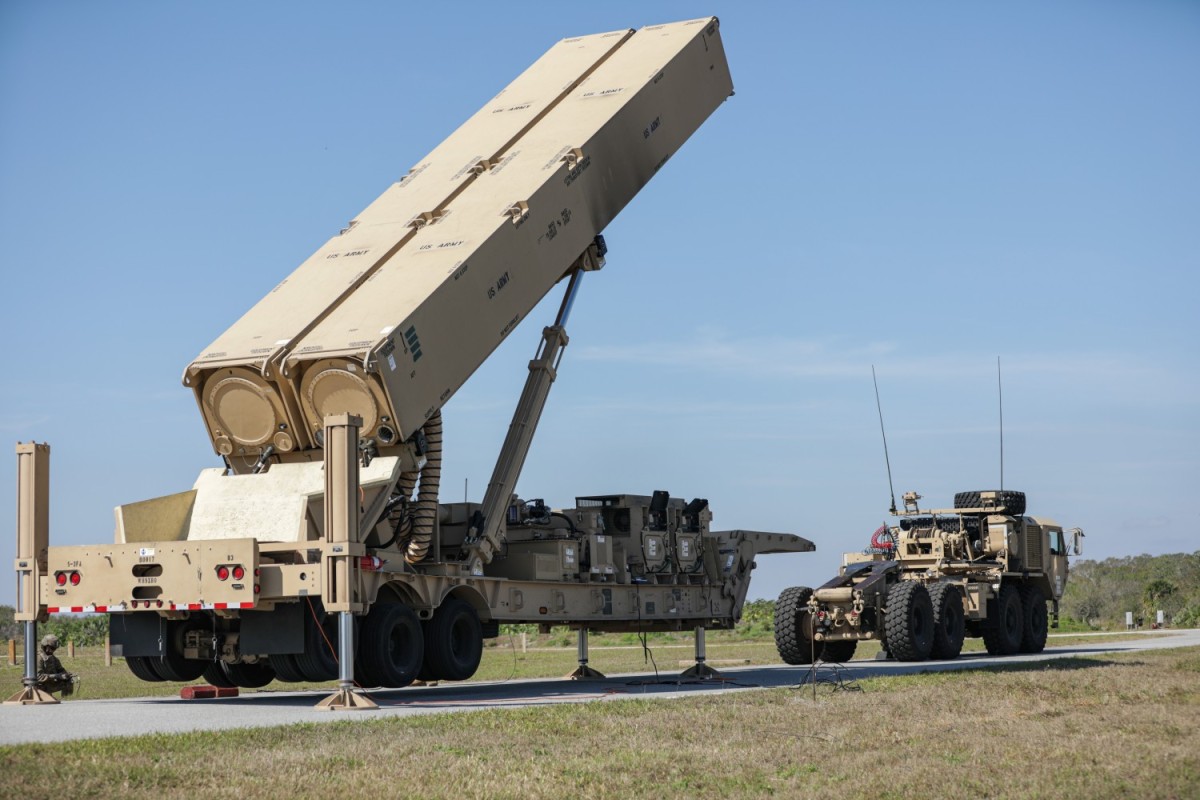
The United States, despite its technological prowess, has found itself in an unfamiliar position: playing catch-up. For much of the post-Cold War era, Washington prioritised missile defence and counterinsurgency over next-generation strike capabilities. Hypersonic programmes languished in laboratories, their promise acknowledged but not urgently pursued. That complacency has since evaporated. Programmes such as the Air-Launched Rapid Response Weapon (ARRW) and the Long-Range Hypersonic Weapon (LRHW) reflect a renewed urgency, though development has been uneven, marked by testing setbacks and budgetary scrutiny. The Pentagon’s challenge is not merely technical but conceptual: how to integrate hypersonics into a doctrine that has long relied on air superiority and precision-guided munitions.
Beyond the leading trio, other nations have begun to explore hypersonic technologies, albeit on a smaller scale. India has tested its Hypersonic Technology Demonstrator Vehicle, while countries such as France, Australia and Japan have initiated research programmes, often in collaboration with allies. The United Kingdom, though less publicly vocal, is also engaged in hypersonic research, recognising that the technology’s proliferation is not a question of if, but when.
What distinguishes the current phase of development from earlier missile races is the convergence of enabling technologies. Advances in computational modelling, high-temperature materials and sensor miniaturisation have collectively lowered the barriers to entry. The once formidable challenges of maintaining structural integrity at extreme speeds and temperatures are gradually being overcome. Scramjet propulsion, long a theoretical possibility, is now approaching practical viability. This convergence has compressed timelines and intensified competition, creating a sense of urgency that recalls the early days of the nuclear age.
Yet the strategic implications of hypersonic weapons extend far beyond their technical characteristics. At their core, these systems threaten to undermine the delicate balance of deterrence that has, for all its flaws, prevented great power conflict for decades. Deterrence relies on the ability to detect, attribute and respond to an attack. Hypersonic missiles complicate each of these elements. Their speed reduces decision-making time to minutes, if not seconds. Their manoeuvrability obscures their intended target, complicating attribution. Their potential dual-capability — conventional or nuclear — introduces ambiguity that could prove catastrophic in a crisis.
Consider, for instance, a scenario in which a hypersonic missile is launched towards a high-value target. Early warning systems detect the launch but cannot immediately determine whether the payload is conventional or nuclear. Decision-makers, operating under intense time pressure, must choose between restraint and retaliation. The risk of miscalculation is obvious, and the consequences potentially irreversible. In such an environment, the margin for error shrinks to vanishing point.
Missile defence systems, the traditional counter to offensive missile capabilities, are ill-suited to the hypersonic challenge. Intercepting a manoeuvring target travelling at hypersonic speeds requires unprecedented levels of tracking accuracy and interceptor performance. Existing systems, designed primarily for ballistic trajectories, struggle to cope. Efforts are underway to develop new sensor architectures, including space-based tracking systems capable of maintaining continuous coverage of hypersonic threats. The United States’ Hypersonic and Ballistic Tracking Space Sensor (HBTSS) programme is one such initiative, though it remains in development.
In the absence of reliable defence, attention has turned to alternative strategies. One approach emphasises deterrence by denial: hardening and dispersing critical assets to reduce their vulnerability. Another focuses on pre-emption, targeting hypersonic systems before they can be launched. Both approaches carry risks and limitations. Hardening infrastructure is costly and cannot guarantee protection against a determined adversary. Pre-emption, meanwhile, raises profound ethical and strategic questions, particularly in the absence of clear warning.
Arms control, once a cornerstone of strategic stability, has struggled to keep pace with technological change. Existing treaties, such as New START, were conceived in an era dominated by ballistic missiles and nuclear warheads. Hypersonic weapons fall into a grey area, often escaping clear categorisation. Efforts to establish norms or agreements governing their development and deployment have been tentative at best. The geopolitical climate — marked by mistrust and competition — is hardly conducive to cooperation.
Nevertheless, there are glimmers of recognition that unconstrained competition carries dangers. Some analysts have proposed confidence-building measures, such as transparency in testing or limits on deployment. Others advocate for broader frameworks that address emerging technologies more comprehensively. Whether such proposals gain traction remains uncertain. The incentives to develop and deploy hypersonic weapons are strong, particularly for states seeking to offset perceived disadvantages in other areas.
It is also worth considering the role of hypersonics within the broader evolution of warfare. These systems are not a panacea; they are one component of an increasingly complex battlespace. Their effectiveness depends on integration with intelligence, surveillance and reconnaissance (ISR) networks, as well as command and control systems capable of processing and acting on information at unprecedented speeds. In this sense, hypersonic weapons are as much about systems integration as they are about speed.
The economic dimension should not be overlooked. Developing and deploying hypersonic weapons is an expensive endeavour, requiring sustained investment in research, testing and production. For some countries, this may prove a limiting factor. For others, particularly those with large defence budgets and industrial capacity, the costs are more easily absorbed. The result may be a widening gap between those who possess hypersonic capabilities and those who do not, with implications for regional and global power dynamics.
Public discourse on hypersonic weapons has, at times, veered towards the sensational. Headlines proclaiming “unstoppable” missiles risk obscuring the nuances of the technology. While hypersonics present significant challenges, they are not invincible. Countermeasures will evolve, as they have in every previous iteration of the offence-defence cycle. The history of military technology is replete with examples of purportedly decisive innovations that were ultimately absorbed into a dynamic equilibrium.
Yet it would be a mistake to dismiss the significance of the current moment. The development of hypersonic weapons represents a genuine shift in the character of strategic competition. By compressing timelines and increasing uncertainty, these systems place a premium on speed — not merely of missiles, but of decision-making. They demand new approaches to command and control, new investments in resilience and, perhaps most importantly, new thinking about the nature of deterrence itself.
For policymakers, the challenge is to navigate this evolving landscape without succumbing to either complacency or alarmism. Investment in research and development is essential, as is the cultivation of alliances that can share the burden of innovation and defence. At the same time, there is a pressing need for dialogue — however difficult — aimed at reducing the risks of miscalculation and escalation.
The past decade has brought hypersonic weapons from the margins to the mainstream of military planning. The next decade will determine whether they become a destabilising force or are integrated into a new, if uneasy, equilibrium. Much will depend on choices made now: about investment, doctrine and the willingness to engage with adversaries on issues of mutual concern.
In the end, hypersonic missiles are not merely a technological development; they are a test of strategic imagination. They force us to confront the limits of existing frameworks and to consider how stability can be maintained in an era defined by speed and uncertainty. Whether that test is met remains to be seen.
Main Image: Public Domain, https://en.wikipedia.org/w/index.php?curid=73445813