

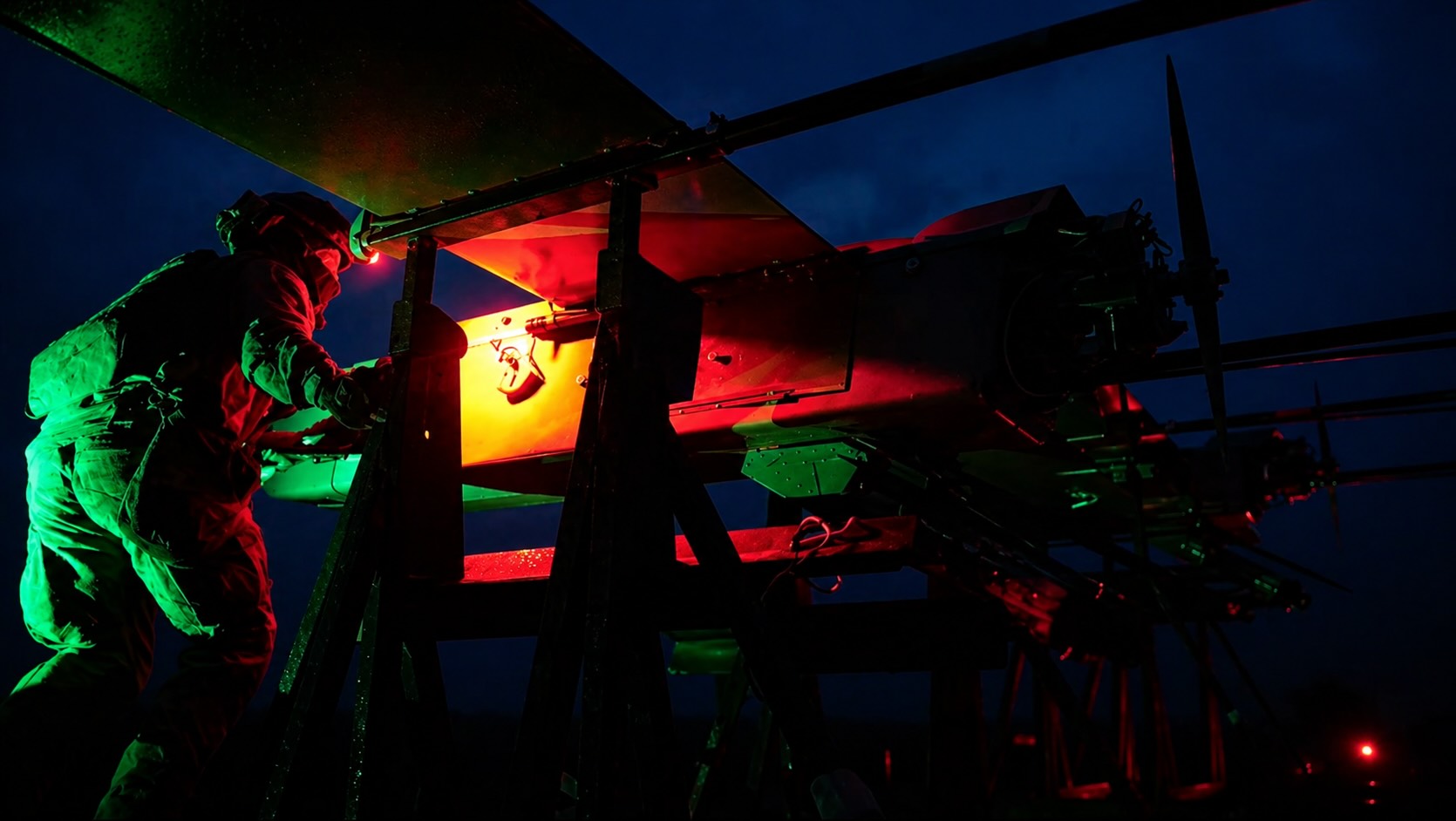
Ukraine’s growing drone campaign has become one of the most significant developments in the war, even if it does not yet amount to a full transfer of the strategic initiative to Kyiv. Russian forces continue to exert pressure along parts of the front, while Ukraine still faces constraints in manpower, ammunition and dependence on Western military assistance. Yet the scale, range and organisation of Ukraine’s unmanned systems are changing the terms of the conflict.
The clearest indication of this shift came in a recent interview given by Robert Brovdi, better known by his call sign “Madyar”, the commander of Ukraine’s Unmanned Systems Forces. In remarks reported from his BBC interview, Brovdi said that the European part of Russia could no longer be regarded as a peaceful rear area, at least within a range of up to 2,000 kilometres from Ukraine’s border.
His comments reflect a central element of Kyiv’s current approach: using drones not only as tactical battlefield tools, but as instruments of strategic pressure. Brovdi identified oil refineries, terminals and related infrastructure as legitimate targets, arguing that such facilities contribute to the financing and sustainment of Russia’s war effort. The argument is consistent with Ukraine’s recent pattern of strikes on energy sites inside Russia, including facilities far beyond the immediate combat zone.
The Black Sea port city of Tuapse has become a visible example of this campaign. The Rosneft-owned Tuapse refinery halted operations after a Ukrainian drone strike on April 16, 2026. The refinery has an annual capacity of around 12 million metric tonnes, or approximately 240,000 barrels per day. Further attacks damaged transport and oil storage facilities, and another strike on April 28 caused a major fire at the site, prompting evacuations nearby.
Tuapse is not merely a symbolic target. It is part of Russia’s oil refining and export infrastructure, and disruption there has operational and economic relevance. For Ukraine, such strikes are intended to impose costs on Russia, complicate logistics and reduce the financial resources available to sustain the war. For Moscow, they are presented as attacks on civilian infrastructure. This dispute over classification is likely to intensify as Ukrainian drones reach deeper into Russian territory and Russia continues its own missile and drone attacks against Ukrainian cities and infrastructure.
Brovdi’s interview also highlighted another objective: reducing Russia’s manpower advantage. According to reports of his remarks, the Unmanned Systems Forces are seeking to inflict losses on Russian personnel at a rate that exceeds Moscow’s ability to recruit replacements. He reportedly referred to a target of at least 30,000 Russian personnel killed or seriously wounded per month, and said that around 30 per cent of Ukraine’s drone strikes should be directed at Russian manpower.
Such figures cannot be independently verified and should be treated as Ukrainian military claims. However, they reveal how Kyiv is framing the role of drones in the war. The aim is not simply to destroy equipment or disrupt supply lines, but to turn unmanned systems into a means of sustained attrition. Brovdi has also claimed that the Unmanned Systems Forces represent only around 2 per cent of Ukraine’s armed forces, while accounting for about 30 per cent of Russian losses attributed to Ukrainian operations.
This development is not confined to drone operators at the front. Modern unmanned warfare relies on reconnaissance, electronic warfare, communications, data analysis, production networks and command centres. These may be located far from the line of contact. In this sense, the drone war has become a distributed military system, linking frontline operators with command structures and technical personnel far behind them.
Russia is also heavily invested in drones. According to the Associated Press, Ukraine said it shot down more than 33,000 Russian drones in March 2026, the highest monthly figure it has reported since the beginning of the full-scale invasion. The same report said Ukraine’s long-range attack drones can now reach up to 1,750 kilometres, almost three times their early-war range.
The result is a conflict in which unmanned systems are no longer secondary assets. They have become central to battlefield surveillance, strike operations, air defence and attacks on strategic infrastructure. Ukraine’s task is to use this capability to compensate for Russian advantages in manpower and depth. Russia’s task is to absorb, adapt and expand its own drone production and air defence capacity.
It would be premature to say that Ukraine has regained the strategic initiative across the war as a whole. Russia still holds substantial advantages in personnel, industrial scale and territorial depth. But Ukraine’s drone campaign has created a new operational reality. Russian rear areas are less secure than before, energy infrastructure is exposed, and the cost of sustaining the war is being pushed deeper into Russian territory.


Britain’s Consistent Message on Ukraine Carries Growing Weight at the OSCE