

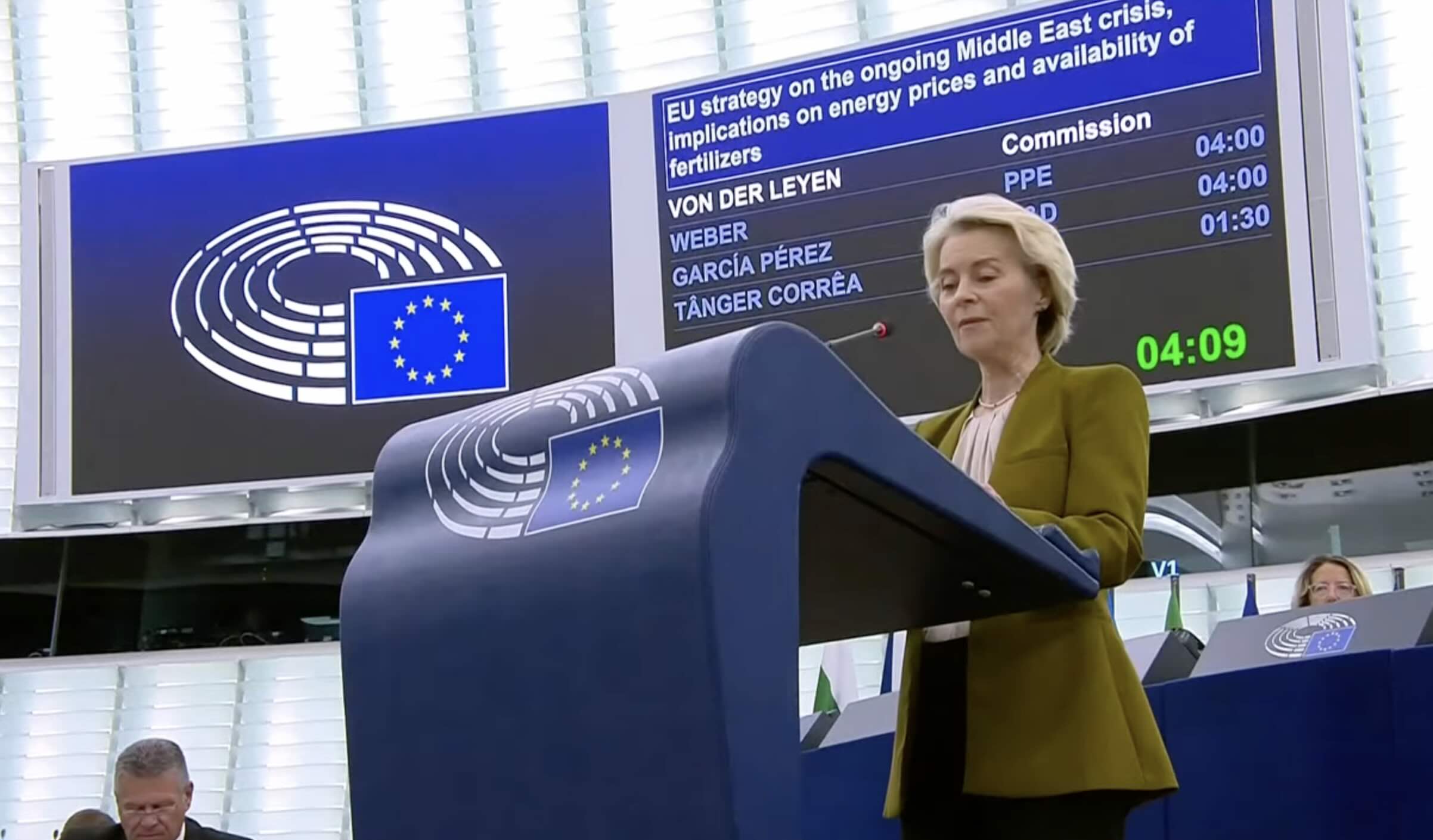
Speaking at a European Parliament plenary session on April 29th, von der Leyen said the EU had now delivered on its earlier pledge to make the loan available to Ukraine “one way or another”. She said the first €45 billion tranche for 2026 would be disbursed during the current quarter.
According to the European Commission, one third of the €90 billion facility will be used to support Ukraine’s budgetary needs, while two thirds will be allocated to defence. The first defence package, von der Leyen said, would focus on “drones from Ukraine, for Ukraine”, worth about €6 billion.
The announcement underlines the growing centrality of unmanned systems in Ukraine’s war effort. Ukrainian drones have become a major component of battlefield operations, including reconnaissance, artillery targeting, air defence support, and strikes against Russian military logistics. By directing EU funding towards Ukrainian production, Brussels is seeking not only to supply equipment but also to reinforce Ukraine’s own defence industrial base.
The €90 billion loan was formally approved by the Council of the European Union on April 23rd, after earlier political delays. The Council said the package was designed to help finance Ukraine’s urgent budgetary and defence requirements, with disbursements expected to begin as soon as possible.
The structure of the loan reflects a broader shift in EU support for Ukraine. Earlier assistance was often centred on macro-financial aid, humanitarian support, and the transfer of military equipment from member states’ existing stocks. The new package gives greater emphasis to procurement and production, particularly in areas where Ukraine has developed significant wartime expertise.
Von der Leyen told MEPs that the EU would continue to support “the brave Ukrainian people and their armed forces”. She added that “while Russia is doubling down on its aggression, Europe is doubling down on our support for Ukraine”.
The decision also comes as EU institutions and member states seek to accelerate defence procurement mechanisms. Ukraine’s drone sector has expanded rapidly since Russia’s full-scale invasion in 2022, with domestic manufacturers producing a wide range of systems at relatively low cost and adapting designs quickly to battlefield needs. EU funding for drones produced in Ukraine could shorten supply chains and ensure that procurement reflects the operational demands identified by Ukrainian forces.
For Kyiv, the package provides both financial and military significance. The budgetary component of the loan will help sustain government services, while the defence allocation offers a dedicated source of funding for equipment needed at the front. Ukrainian officials have repeatedly argued that predictable multi-year support is essential as Russia continues to mobilise resources for a prolonged war.
For the EU, the loan forms part of a wider effort to demonstrate that European backing for Ukraine will continue despite political divisions within the bloc and uncertainty over wider transatlantic support. The approval of the package followed months of negotiations among member states over financing, legal arrangements, and the balance between budgetary assistance and defence support.
The emphasis on drones also reflects lessons drawn from the war. Cheap and rapidly produced unmanned systems have altered the conduct of operations across the front line, increasing battlefield surveillance and creating constant pressure on armoured vehicles, artillery positions, supply routes, and troop concentrations. Both Ukraine and Russia have invested heavily in drone production, electronic warfare, and counter-drone systems.
Brussels’ decision to support Ukrainian drone manufacturing indicates that the EU regards Ukraine not only as a recipient of military aid but also as a producer of defence capabilities relevant to European security. The approach may also have implications for future defence industrial cooperation between Ukraine and the EU, particularly as Ukraine pursues closer integration with European institutions.
The €6 billion drone package is expected to be transferred no later than the end of June. Its implementation will be closely watched by Kyiv, EU capitals, and European defence industries, as the bloc seeks to convert political commitments into equipment reaching Ukrainian forces.

Britain’s Consistent Message on Ukraine Carries Growing Weight at the OSCE