

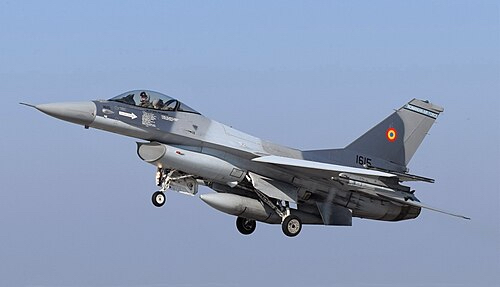
The move, passed with commendable urgency, clears the final political hurdle ahead of a looming deadline and signals a country ready to shoulder its responsibilities on NATO’s eastern flank with renewed confidence and ambition.
For a nation long situated at the crossroads of competing geopolitical pressures, the decision represents far more than a line item in a defence budget. It is, rather, a declaration of strategic maturity—an acknowledgement that security in the 21st century demands investment, partnership, and above all, foresight.
At the heart of the initiative lies the European Union’s SAFE programme, a €150 billion instrument designed to help member states modernise their armed forces through low-cost, long-term loans. Romania stands to access some €16.6 billion in total funding by 2030, placing it among the foremost beneficiaries of Brussels’ renewed defence posture.
That Bucharest has moved swiftly to unlock the first €8.33 billion tranche speaks volumes. In an era when political uncertainty can so often paralyse decision-making, Romania’s parliament has instead demonstrated resolve. Even amid domestic turbulence—including coalition fractures and a looming confidence vote—the country’s leadership has prioritised national and regional security.
The substance of the contracts themselves is equally encouraging. Rather than simply importing military hardware, Romania has chosen to anchor much of the investment in domestic production. This is a shrewd and forward-looking approach, one that promises not only to enhance military capability but also to stimulate economic growth and technological development at home.
Germany’s defence giant Rheinmetall is expected to oversee projects worth roughly €5 billion, including the construction of a munitions facility, the supply of infantry fighting vehicles, and the deployment of advanced air defence systems. Meanwhile, France’s Airbus will manufacture helicopters within Romania, creating jobs and embedding high-value industrial expertise in the country.
Such partnerships underline a broader truth: Europe’s defence renaissance is not merely about spending more, but about spending smarter—and together. By insisting on significant European industrial participation, the SAFE programme ensures that investment circulates within the continent, reinforcing strategic autonomy while deepening integration among member states.
Romania’s geographical position lends particular urgency to these efforts. Sharing a 650-kilometre border with Ukraine and facing the realities of an increasingly volatile Black Sea region, the country has found itself on the front line of Europe’s security concerns. Incidents involving Russian drones breaching Romanian airspace have served as a stark reminder that the war in Ukraine is not a distant conflict, but one with immediate implications for neighbouring states.
Against this backdrop, the inclusion of advanced radar systems, anti-drone technologies, and enhanced transport links to Ukraine and Moldova takes on added significance. These are not abstract investments; they are practical measures designed to safeguard infrastructure, protect civilian populations, and ensure the smooth movement of goods and assistance across borders.
Equally noteworthy is the revival of Romania’s Mangalia naval shipyard, where new corvettes are set to be built. Once a symbol of industrial decline, the yard is now poised to become a cornerstone of the country’s maritime defence capability—a vivid illustration of how strategic investment can breathe new life into dormant assets.
Critics may point to the scale of the expenditure, yet such concerns risk missing the broader context. Defence spending of this nature is not an indulgence but an insurance policy—one that underwrites stability, deters aggression, and preserves the conditions necessary for economic prosperity. In a Europe that has, for too long, relied on the security guarantees of others, Romania’s example is both timely and instructive.
Indeed, the decision aligns neatly with a wider shift across the continent. From Berlin to Paris, capitals are reassessing their defence priorities, recognising that the post-Cold War peace dividend can no longer be taken for granted. Romania, it seems, is not merely keeping pace with this trend but helping to set it.
There is, too, a political dimension worth noting. By pressing ahead with these contracts despite internal divisions, Romania’s pro-European forces have sent a clear signal of intent—to allies and adversaries alike. It is a message that speaks of continuity, reliability, and a steadfast commitment to the European project.
In the final analysis, the approval of these contracts is more than a bureaucratic milestone. It is a statement of purpose. Romania has chosen to invest in its future, to strengthen its partnerships, and to play its part in the collective defence of Europe.
At a time when uncertainty looms large across the international landscape, such clarity is not merely welcome—it is indispensable.
Main Image: – dvidshub.net
Rheinmetall to build propellant plant in Romania as EU expands defence production

Britain’s Consistent Message on Ukraine Carries Growing Weight at the OSCE