Ukraine’s Ministry of Defence says 24 companies have joined a private air-defence initiative intended to strengthen the protection of industrial facilities and reduce pressure on regular military air-defence units.
The ministry said on 1 May that the companies involved come from several regions, including Kharkiv, Odesa, Kyiv, Poltava and Zakarpattia. They include enterprises with different ownership structures and operate within an experimental system launched in late 2025 to help defend sites frequently targeted by Russian drone attacks.
The official announcement describes private air defence as part of Ukraine’s multi-layered national air-defence system, not a separate armed structure. The groups operate under the command of the relevant Air Command of the Air Force of the Armed Forces of Ukraine.
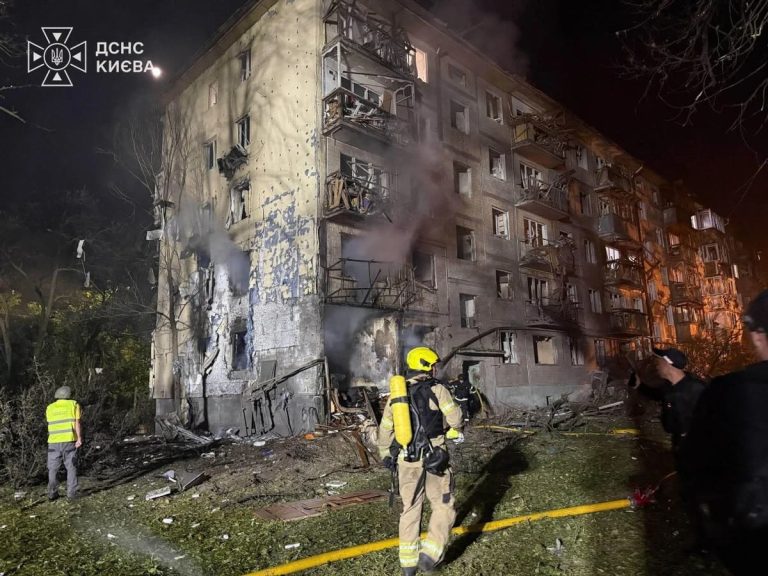
The initiative reflects one of the central pressures in Ukraine’s air war: the need to defend a wide range of civilian, industrial and energy sites against drones while preserving scarce military air-defence assets for the most critical threats. Russian long-range drone attacks have repeatedly targeted Ukrainian cities, infrastructure and production facilities, forcing Kyiv to broaden the range of systems and personnel involved in air defence.
Under the model set out by the ministry, private air-defence groups are formed from civilian employees who have completed training, obtained the required certificates and clearances, and meet legal and operational requirements. They may be authorised to use designated air-defence assets in specific areas and at specific times, but only with approval from the Air Force command structure.
The ministry has stressed that participation in such groups does not create an exemption from mobilisation. Personnel may include employees who are not subject to conscription under Ukraine’s mobilisation legislation, as well as members of paramilitary security services where such units exist at the enterprise.
A separate ministry explainer, published on 1 May, sets out the wider rules for companies seeking to participate. Enterprises must meet criteria related to licensing, security clearance, sanctions status, ownership links and operational capacity. Companies with links to Russia, or with business activity in Russia, are excluded.
The same guidance says participating companies may buy some air-defence equipment at their own expense after receiving the required approvals. They may also request temporary use of certain weapons and ammunition from military units, where those assets are not currently being used by combat formations. Any such transfer requires a decision by the Air Force command.
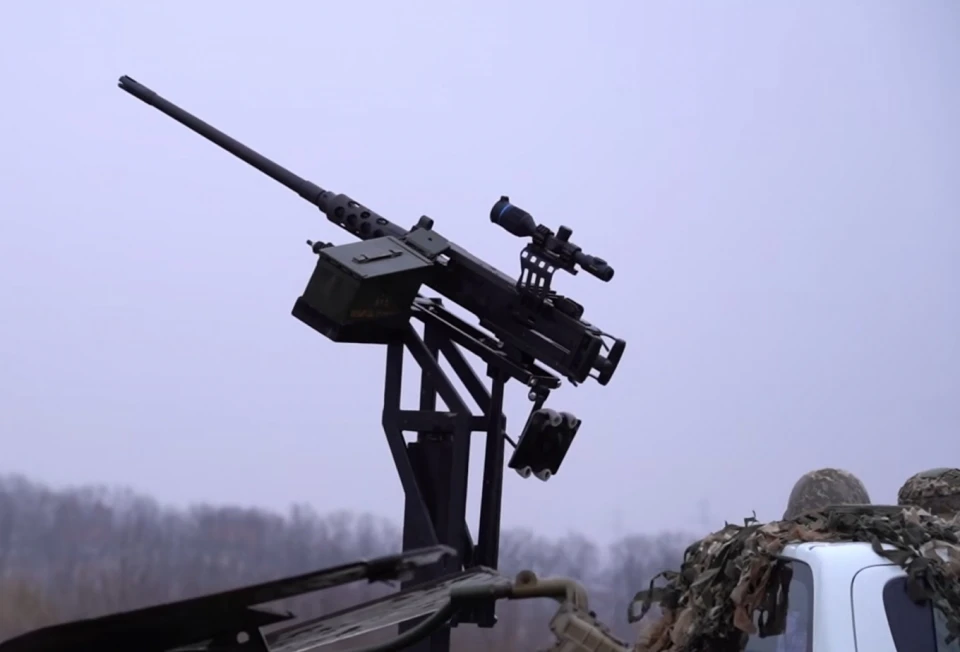
The approved equipment may include interceptor drones, electronic warfare systems, detection and monitoring systems, target-tracking equipment and specially equipped vehicles. The ministry states that any use of these assets must be coordinated with the relevant Air Command to prevent interference with regular military units and to ensure technical and tactical compatibility.
That command-control requirement is central to the project. The targets assigned to private air-defence teams are determined by the Air Force command according to the weapons available and the task assigned. A company equipped with interceptor drones for Shahed-type targets, for example, would not be tasked against ballistic missiles.
Training is also separated from the normal military training burden. According to the ministry, private air-defence personnel are trained through private training centres and certified schools, with possible assistance from the Defence Forces. Training may include simulators, computer-based instruction and practical work at training grounds.
The initiative has already produced at least one operational result, according to the ministry. In April, a private air-defence group shot down a jet-powered Shahed-type drone flying at more than 400 km/h. That earlier case, while not a basis for assessing the full effectiveness of the scheme, indicates the type of threat the system is being designed to counter.
For Ukraine, the scheme is an attempt to convert vulnerable enterprises into active participants in local air defence, while avoiding the risks of uncoordinated armed action. It also reflects the wider adaptation of Ukraine’s defence system to a war in which low-cost drones can threaten factories, logistics sites and energy assets far behind the front line.
The operational logic is straightforward. If industrial facilities can defend limited sectors of airspace under military control, regular air-defence units may be able to concentrate on higher-priority targets and more complex threats. The approach also gives companies a direct role in protecting employees, production capacity and surrounding communities.
The expansion to 24 companies is a significant development in Ukraine’s layered air-defence model. It shows how the country is trying to distribute protection against drone attacks across military, civilian and industrial structures while keeping command authority inside the Armed Forces.