

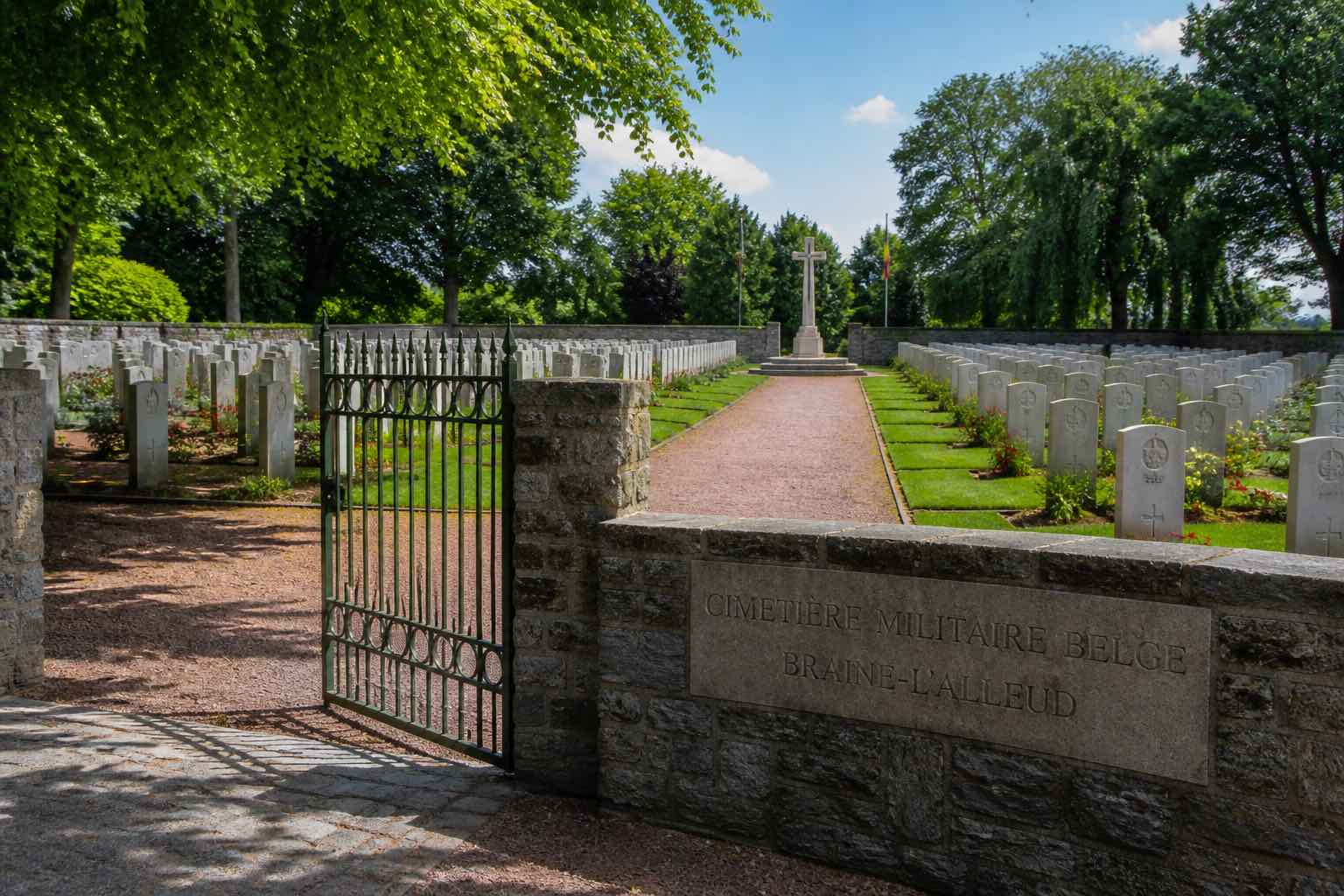
Sometime in recent days, thieves descended upon the municipal cemetery on rue Pierre Flamand and stripped it of 232 commemorative plaques. These were not decorative trinkets nor anonymous fixtures. Each bore the name of a soldier, a former combatant, or a deportee—men whose lives had been consumed by the great upheavals of the 20th century.
The scale of the theft is breathtaking. Two hundred and thirty-two plaques removed in one operation suggests not opportunism but preparation. It implies vehicles, tools, time—and a chilling indifference to the sanctity of the site. The cemetery itself, ordinarily a place of reflection and continuity, has been left scarred, its rows of graves now punctuated by absence rather than remembrance.
Local authorities, alerted to the crime on Sunday afternoon, have begun investigations. Yet even as police search for those responsible, a more profound question lingers: what kind of society permits such acts to become conceivable?
The plaques, reportedly made of metal—likely lead or bronze—may have been targeted for their scrap value. This is not without precedent. Across Belgium and beyond, war memorials have increasingly fallen prey to metal thieves, their historic and emotional significance reduced to little more than a calculation of weight and resale price.
But to explain the crime is not to excuse it. There is something particularly jarring about the violation of military graves. These are not merely burial sites; they are repositories of collective memory, reminders of sacrifice on a scale that modern Europe has, mercifully, not witnessed for generations. In a region so closely tied to the legacy of the Napoleonic wars and the cataclysm of Battle of Waterloo, the symbolic resonance is difficult to ignore.
Braine-l’Alleud itself sits in the shadow of that most famous battlefield, where tens of thousands fell in a single day. The surrounding landscape is dotted with monuments, cemeteries, and memorials, each bearing silent witness to the cost of conflict. To steal from such a place is, in a sense, to tamper with the very foundations of European memory.
For the families of those commemorated—if indeed any still remain—the loss is deeply personal. A name engraved in metal is more than an inscription; it is a point of connection across time, a reassurance that a life, once lived, has not been forgotten. Its removal is not merely theft but erasure.
Municipal officials now face the unenviable task of restoration. Replacing the plaques will be costly, both financially and symbolically. Even if new markers are installed, they will lack the patina of age, the sense of continuity that the originals carried. Something intangible has been lost.
There is, too, a broader unease. Such crimes speak to a gradual coarsening of values, a willingness to treat the past as expendable. In an era when Europe’s historical consciousness is often invoked in political discourse, it is sobering to see how fragile that consciousness can be in practice.
And yet, perhaps there is also an opportunity—albeit born of misfortune. Public outrage, if it comes, may serve as a reminder of what these sites represent. It may prompt renewed efforts to protect and preserve them, to ensure that the memory they embody is not so easily stripped away.
For now, however, the cemetery in Braine-l’Alleud stands diminished. Where once there were names, there are now gaps. Where there was continuity, there is rupture.
The thieves may have sought only metal. What they have taken, however, is something far more valuable: a fragment of remembrance, quietly maintained across generations, now abruptly—and shamefully—removed.
Ypres Reveals Its Dead: Two Lost Officers of 1915 Finally Identified



Ukraine’s Defence Industry and Its European Future