NATO Secretary General Mark Rutte has said European allies have “heard the message” from Washington over security burden-sharing, as the Middle East crisis places renewed pressure on the alliance’s European members to provide basing, logistics and operational support.
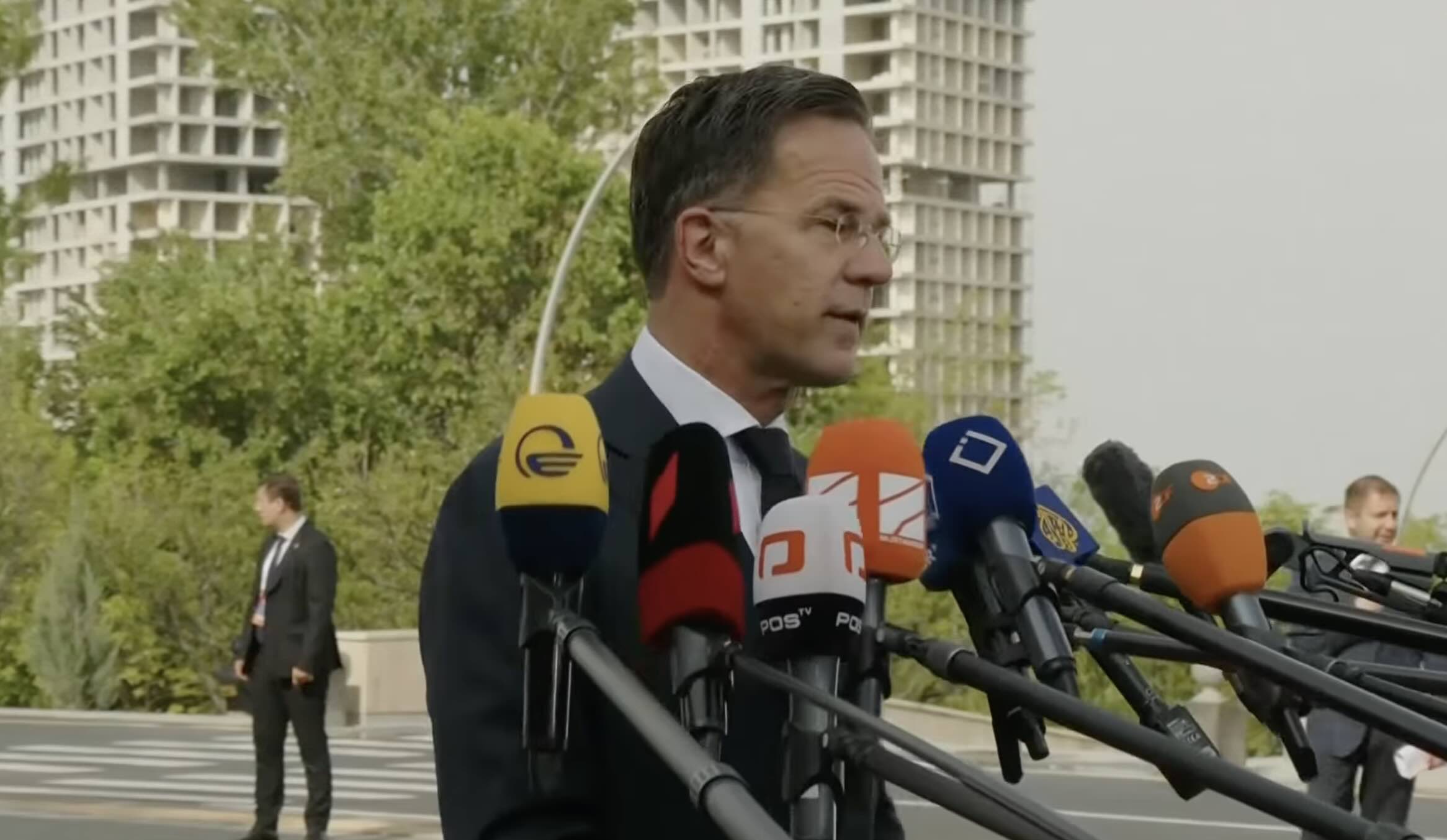
Speaking at the start of the European Political Community meeting in Armenia on 4 May, Rutte said there had been disappointment in Washington over the European reaction to developments in the Middle East and to the US and Israeli campaign against Iran. His remarks were published in a NATO transcript of his doorstep statement.
Rutte said European leaders had received the message from the United States “loud and clear”. He pointed to bilateral basing agreements and logistical arrangements involving Montenegro, Croatia, Romania, Portugal, Greece, Italy, the United Kingdom, France and Germany. He also said more European countries were pre-positioning essential logistical and other support, including minehunters and minesweepers, closer to potential theatres of operation.
The comments are significant because they place current Middle East tensions within a wider debate about the distribution of military responsibility inside NATO. The issue is no longer limited to defence spending targets. It now includes the practical ability of European allies to host forces, move equipment, support US operations and prepare maritime assets before they are required.
Rutte was responding to questions over whether the European Political Community gathering resembled a NATO summit without the United States. He rejected the comparison by noting that the United States is not a member of the EPC, but said global affairs and transatlantic issues would be discussed. The setting was relevant: the EPC brings together EU and non-EU European states and has increasingly become a forum for discussing wider security issues beyond the formal structures of NATO and the European Union.
The NATO chief’s remarks also touched on the continuing role of US President Donald Trump in shaping European defence behaviour. Rutte said Europeans had listened to the US President over basing and logistical support, as they had done at last year’s NATO summit in The Hague over defence spending commitments. He described the direction of travel as “a bigger role for Europe in a stronger NATO”.
For European defence planners, the operational meaning of that phrase is increasingly concrete. Basing agreements allow allied forces to use facilities, airfields, ports and infrastructure in support of military operations. Logistical support determines whether aircraft, ships, equipment and personnel can be sustained at speed and scale. Pre-positioned assets reduce reaction time and give commanders more options during a crisis.
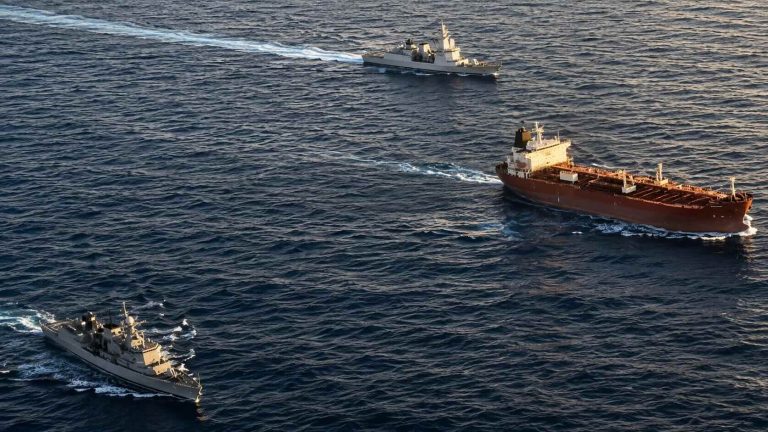
The reference to minehunters and minesweepers is particularly relevant in the context of Gulf security. If tensions in and around the Strait of Hormuz intensify, mine countermeasure vessels would be among the assets required to keep sea lanes open or to respond to attacks on commercial and military shipping. For NATO members, the availability of such assets close to a theatre can be as important as headline force numbers.
Rutte did not announce a new NATO mission, deployment or formal alliance decision. His statement instead described a pattern of national and bilateral action by European allies in response to US requests. That distinction matters. NATO as an alliance has not been presented as the central military actor in the Middle East crisis, but several European NATO members are being drawn into the operational support structure around it.
The comments also underline the political sensitivity of US troop deployments in Europe. Asked about the possibility of removing American soldiers from Germany, Rutte declined to address that specific case. He said Germany had implemented what it had agreed bilaterally over many years, but returned to the broader point that Washington had been disappointed by European reactions and that European countries were now delivering on basing and logistical requests.
This reflects a continuing shift in alliance politics. For years, the burden-sharing debate was framed around budgets, percentage targets and procurement shortfalls. The current crisis shows that the debate also concerns readiness, access, transport, sustainment and the ability to support military activity outside Europe’s immediate territory.
The Middle East crisis has therefore become a test of European military utility as well as political alignment. If European allies can provide bases, logistics and maritime support at short notice, they strengthen their position inside NATO and reduce pressure on the United States to carry the operational load alone. If they cannot, US criticism over European dependency is likely to intensify.
For Europe, the issue is complicated by geography and public politics. Some governments may be more willing to provide logistical support than to take part in combat operations. Others may prefer bilateral arrangements with Washington rather than a visible NATO role. Rutte’s remarks suggest that this is already happening, with European countries moving through national and bilateral channels rather than waiting for a single alliance-wide decision.
The result is a more practical, less symbolic phase of the burden-sharing debate. The question is not only whether European states spend enough, but whether they can deliver usable military support when the United States asks for it. Rutte’s message in Armenia was that many of them are now doing so.