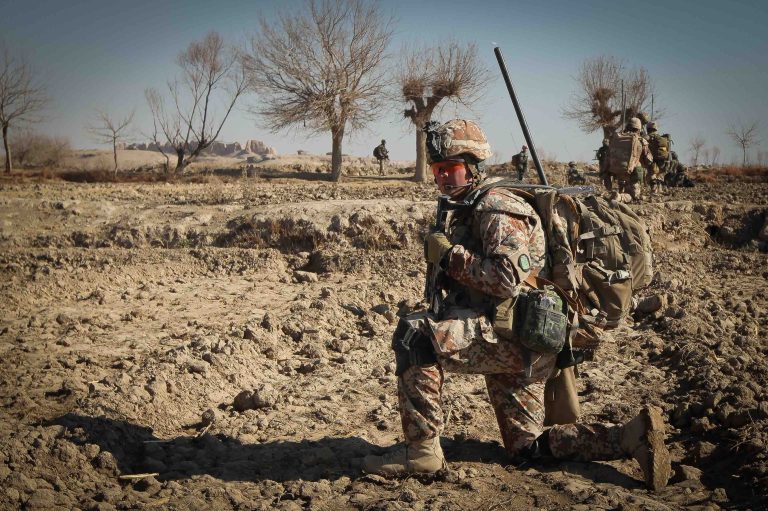
The popular shorthand, often repeated in political rhetoric, is that the United States stations troops in Europe to “defend Europe.” That has not been the primary purpose for decades. Europe is not a charity case. It is, instead, one of the most important platforms from which the United States projects power across the globe.
To treat these bases as a favour to ungrateful allies is to misunderstand the architecture of American global dominance itself.
Since the end of the Second World War, the United States has constructed a dense network of bases across Europe—most notably in Germany, the United Kingdom, Italy, and increasingly in Eastern Europe. These installations were born out of wartime necessity and then hardened during the Cold War, when hundreds of thousands of American troops were stationed on the continent.
But the Cold War mission—deterring the Soviet Union—evolved rather than disappeared. What replaced it was something arguably far more important: a permanent forward operating system for American global military reach.
Military doctrine is explicit on this point. Forward basing allows a nation to deploy and sustain forces rapidly, conduct expeditionary warfare, and gather intelligence, all while extending political influence. The Pentagon’s own definition of power projection emphasises the ability to deploy forces “from multiple dispersed locations” to respond to crises worldwide. Europe is the most sophisticated example of that principle in action.
Germany, in particular, is not merely a host—it is the central node. Today, tens of thousands of U.S. troops remain stationed there, alongside command headquarters, logistics hubs, training grounds, and the largest American military hospital outside the United States. From these bases, American forces have supported operations in Iraq, Afghanistan, and most recently the Middle East.
That is not European defence. That is global reach.
If Germany is the logistical brain, the United Kingdom functions as a forward-operating launchpad. American airbases in Britain date back to 1941, when Washington began supporting the Allied war effort. They have never truly left.
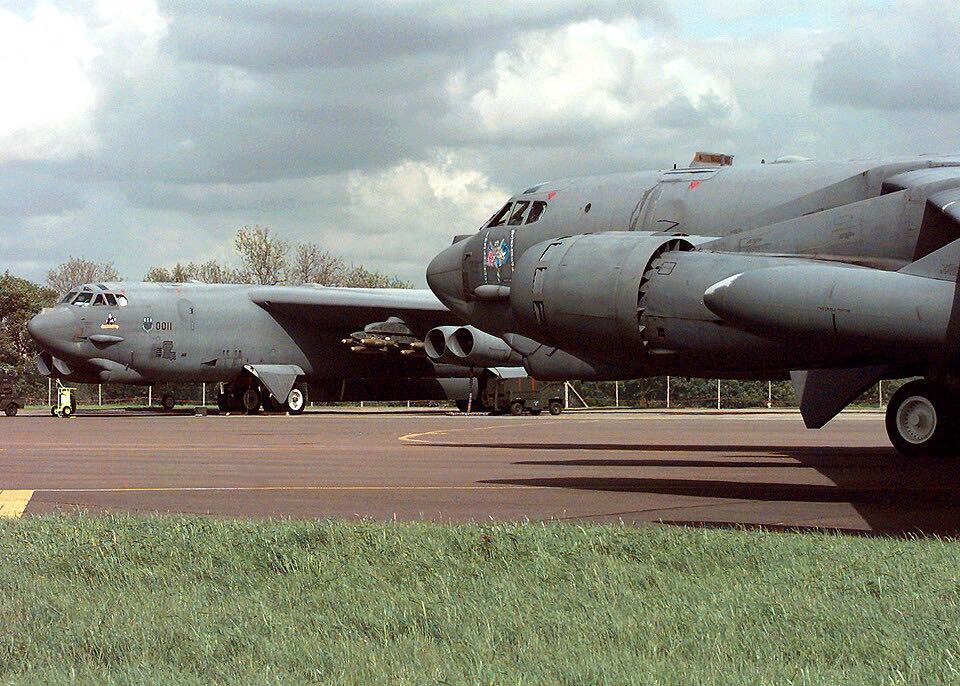
Today, installations such as RAF Lakenheath and RAF Fairford are used for bomber deployments, intelligence gathering, and potentially nuclear operations. The United Kingdom, geographically positioned between North America, Europe, and the Middle East, serves as what strategists once called an “unsinkable aircraft carrier.”
These bases enable rapid strike capability across multiple theatres—from Eastern Europe to North Africa to the Persian Gulf—without requiring forces to deploy directly from the continental United States. In an age where response time can determine the outcome of conflicts, that proximity is priceless.
Yet this is precisely the value that Trump appears willing to discount.
Beyond tanks and aircraft, European bases play a critical role in intelligence gathering. Facilities such as Menwith Hill in the UK form part of a global surveillance architecture that feeds into American signals intelligence and drone operations.
This intelligence ecosystem is not incidental; it is foundational. It allows the United States to monitor adversaries, coordinate allies, and conduct operations with a level of situational awareness unmatched by any rival.
To reduce this presence would not simply mean fewer troops on the ground. It would mean blinding, or at least dimming, one of the most powerful intelligence networks ever constructed.
Military power is often imagined in terms of firepower, but logistics is its true engine. European bases function as staging areas, supply depots, maintenance hubs, and transit points. They allow the United States to move troops and equipment rapidly across continents.
Ramstein Air Base in Germany, for example, is one of the most important air mobility hubs in the world. It connects American forces across Europe, Africa, and the Middle East. Remove or degrade such infrastructure, and the United States does not simply lose convenience—it loses capability.
This is why analysts warn that reducing the U.S. footprint in Europe would harm operational reach and flexibility. It would stretch supply lines, slow response times, and increase costs elsewhere.
In short, it would make the United States less powerful.
There is another dimension, less discussed but equally significant: perception.
American bases in Europe are not just military assets; they are symbols. They signal commitment, reassure allies, and remind adversaries of American presence. They also embed the United States deeply within European political and social structures, creating networks of influence that extend far beyond the military.
Base communities—complete with schools, shops, and families—serve as long-term anchors of American culture and diplomacy. The presence of U.S. forces normalises American leadership in European security affairs and reinforces transatlantic ties.
Withdraw that presence, and the symbolic effect is immediate. Allies begin to doubt. Rivals begin to test limits. Influence erodes.
Trump’s approach reduces all of this to a transactional complaint: that European allies do not pay enough for their own defence. There is a kernel of truth in that criticism—burden-sharing has long been uneven—but it misses the broader strategic picture.
The United States does not maintain bases in Europe out of generosity. It does so because those bases serve American interests.
To threaten their removal as a bargaining chip is akin to threatening to dismantle one’s own infrastructure in order to win a short-term argument. It may produce headlines, but it undermines long-term strategy.
Indeed, even within the U.S. defence establishment, there is recognition that European bases are indispensable. Experts consistently argue that reductions would weaken American reach and global posture.
Trump’s rhetoric, therefore, is not merely controversial—it is strategically incoherent.
Perhaps the most troubling aspect is not what Trump might do, but what a future president would have to undo.
Military infrastructure is not easily rebuilt. Bases require agreements, construction, integration, and years—sometimes decades—of investment. Once closed, they are rarely reopened in the same form. Host nations may be less willing. Political conditions may change. Strategic opportunities may be lost.
If the United States were to significantly scale back its European presence, a successor administration would face a diminished platform from which to operate. Rebuilding that platform would be costly, slow, and uncertain.
More importantly, the damage to credibility would linger. Allies would question American reliability. Adversaries would probe for weakness. The United States would find itself reacting to events rather than shaping them.
There is a deeper risk still. As some analysts have warned, dismantling the European base network could signal a shift from global to merely regional power status.
That may sound alarmist, but it captures an essential truth: great powers depend on forward presence. Without it, their reach contracts.
Europe, in this sense, is not a peripheral theatre. It is the hinge between the Atlantic and Eurasia, between the Arctic and the Middle East. It is the ideal platform from which to project influence in multiple directions simultaneously.
To abandon or weaken that platform would not simply affect Europe. It would reverberate across the entire international system.
Donald Trump’s apparent failure to grasp the value of U.S. military bases in Europe is not a minor misunderstanding. It is a fundamental misreading of how American power operates.
These bases are not primarily about defending Europe. They are about enabling the United States to act—quickly, decisively, and globally. They are about logistics, intelligence, influence, and presence. They are about power projection in its purest form.
To treat them as expendable bargaining chips is to risk dismantling one of the most effective instruments of American strategy.
And if that dismantling occurs, it will not be Trump who pays the price. It will be the presidents who follow him—tasked with rebuilding not just infrastructure, but influence, credibility, and reach in a world that will not have stood still in the meantime.
Main Image: http://www.defenselink.mil/photos/newsphoto.aspx?newsphotoid=2146
Trump’s Germany troop drawdown renews debate over Europe’s reliance on US security guarantees