Leaders from NATO’s eastern flank gathered in Bucharest on Wednesday for a summit focused on Ukraine, regional deterrence, defence spending and preparations for the Alliance’s next summit in Ankara.
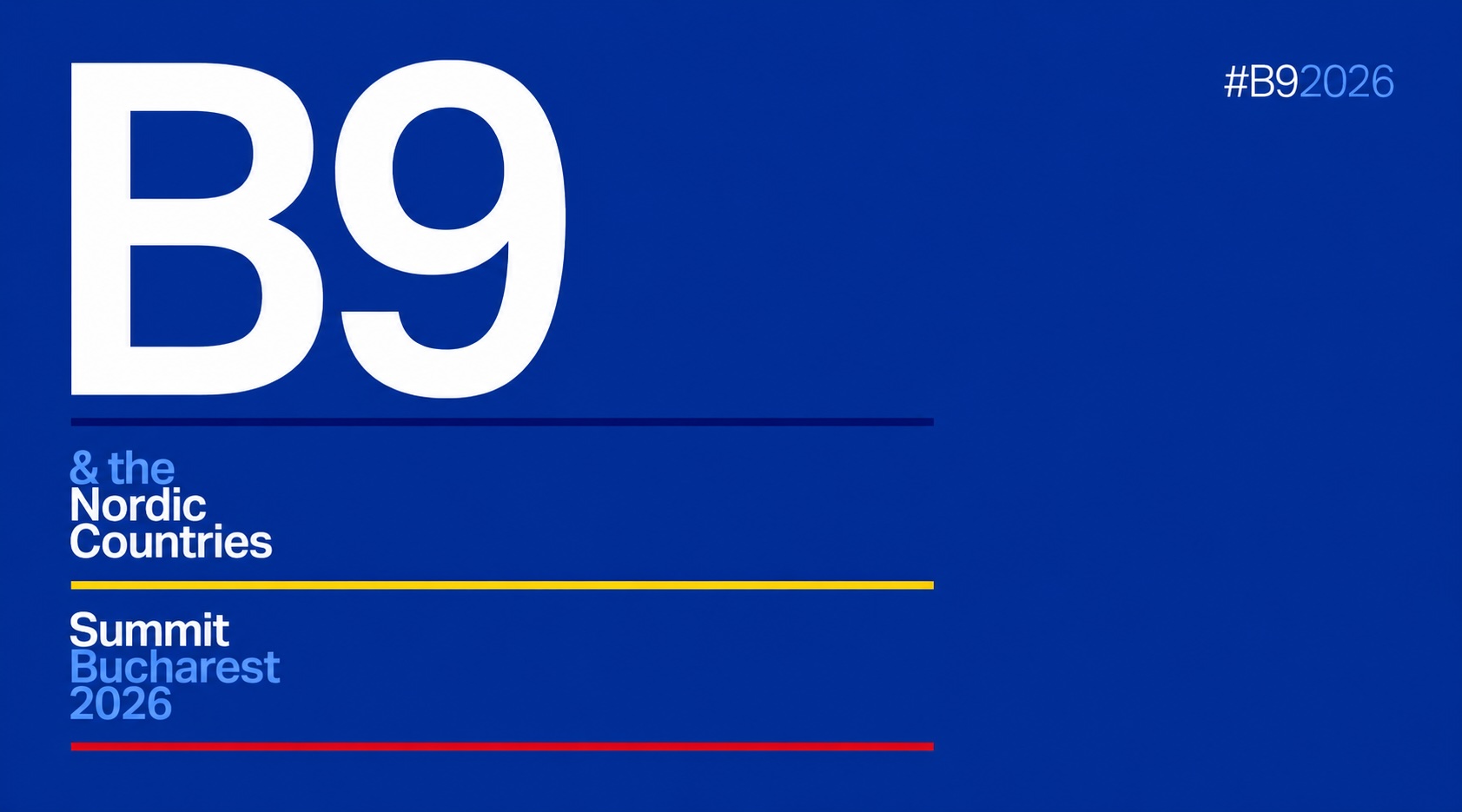
The Bucharest Nine summit was hosted by Romania and co-chaired by Poland under the theme “Delivering More for Transatlantic Security”. The meeting brought together the states of NATO’s eastern flank, with the participation of Nordic countries, Ukraine, the United States and NATO Secretary General Mark Rutte.
The summit took place at Cotroceni Palace on 13 May, less than two months before NATO leaders are due to meet in Ankara on 7–8 July. NATO confirmed that Rutte was visiting Bucharest on 12–13 May to attend the meeting, with joint press statements scheduled with the Romanian and Polish presidents at 16:00 CEST on Wednesday.
The Bucharest Nine format was launched in 2015 by Romania and Poland after Russia’s annexation of Crimea. It includes Bulgaria, the Czech Republic, Estonia, Hungary, Latvia, Lithuania, Poland, Romania and Slovakia. Its central purpose has been to give NATO’s eastern flank a more coordinated voice inside the Alliance, particularly on deterrence, forward defence, air defence, military mobility and allied presence from the Baltic Sea to the Black Sea.
This year’s meeting came at a point when the eastern flank is attempting to shape NATO’s priorities before the Ankara summit. The Romanian presidency described the Bucharest meeting as part of the preparations for the Alliance’s next decisions, with the focus on transatlantic security, defence investment and the coordination of regional positions.
Ukraine’s participation gave the summit a direct war-time dimension. President Volodymyr Zelenskyy was expected to address the meeting as Kyiv continued to face Russian drone and missile attacks, including renewed daytime drone waves reported on 13 May. For the eastern flank states, Ukraine’s defence is not treated as a separate theatre, but as a central element of their own security environment.
The presence of Nordic partners was also significant. Finland and Sweden have joined NATO since Russia’s full-scale invasion of Ukraine, changing the geography of allied defence planning in northern Europe. Their participation alongside the Bucharest Nine points to a wider eastern-flank concept, extending from the Arctic and Baltic regions to the Black Sea. This does not formally turn the B9 into a new NATO structure, but it gives the region a broader political platform before major Alliance decisions.
For Romania, the summit carries particular importance because of the Black Sea security environment. Romania borders Ukraine and Moldova, has seen repeated Russian drone incidents near the Danube area, and has become an important route for allied support, regional air defence coordination and Ukrainian export logistics. The Black Sea has also become a theatre where Russia’s war, maritime security, energy infrastructure and NATO deterrence overlap.
For Poland and the Baltic states, the priority remains the credibility of forward defence. These countries have consistently argued for larger allied forces, stronger air and missile defence, better military mobility and a clearer posture against Russian hybrid activity. Their concerns include sabotage, cyber operations, airspace violations, pressure on critical infrastructure and the risk that Russia could test NATO’s response below the threshold of open military confrontation.
The defence-spending issue is also central. NATO allies are under pressure to translate political commitments into capability, particularly in ammunition production, air defence, drones, long-range fires, logistics and readiness. Eastern flank countries have generally argued that higher spending must be matched by deployable forces, stockpiles and industrial output rather than headline targets alone.
The Bucharest summit therefore serves two functions. It allows regional leaders to coordinate positions before the Ankara summit, and it signals to Moscow that the countries closest to Russia’s war are seeking a more integrated approach to deterrence. The inclusion of Ukraine reinforces that message, while the Nordic participation broadens it beyond the original B9 group.
The meeting also underlines a wider shift inside NATO. Since 2022, the Alliance has moved from reassurance measures to more concrete defence planning on its eastern side. The debate is now less about whether NATO should strengthen the flank, and more about how quickly allies can build the forces, infrastructure and industry required to sustain deterrence over time.
No single summit can resolve those issues. But the Bucharest meeting provides a timely indication of where eastern flank governments will seek to push the Alliance before Ankara: continued support for Ukraine, stronger regional defence, credible spending, better military mobility and a NATO posture that treats the Baltic, Nordic and Black Sea areas as connected parts of the same security challenge.
First published on euglobal.news.