When a suspected case of hantavirus threatened the tiny South Atlantic community, Britain did not issue excuses, commission a committee or wait for the weather to improve. Instead, it sent paratroopers, military medics and desperately needed oxygen supplies hurtling from the sky into one of the most isolated places on Earth.
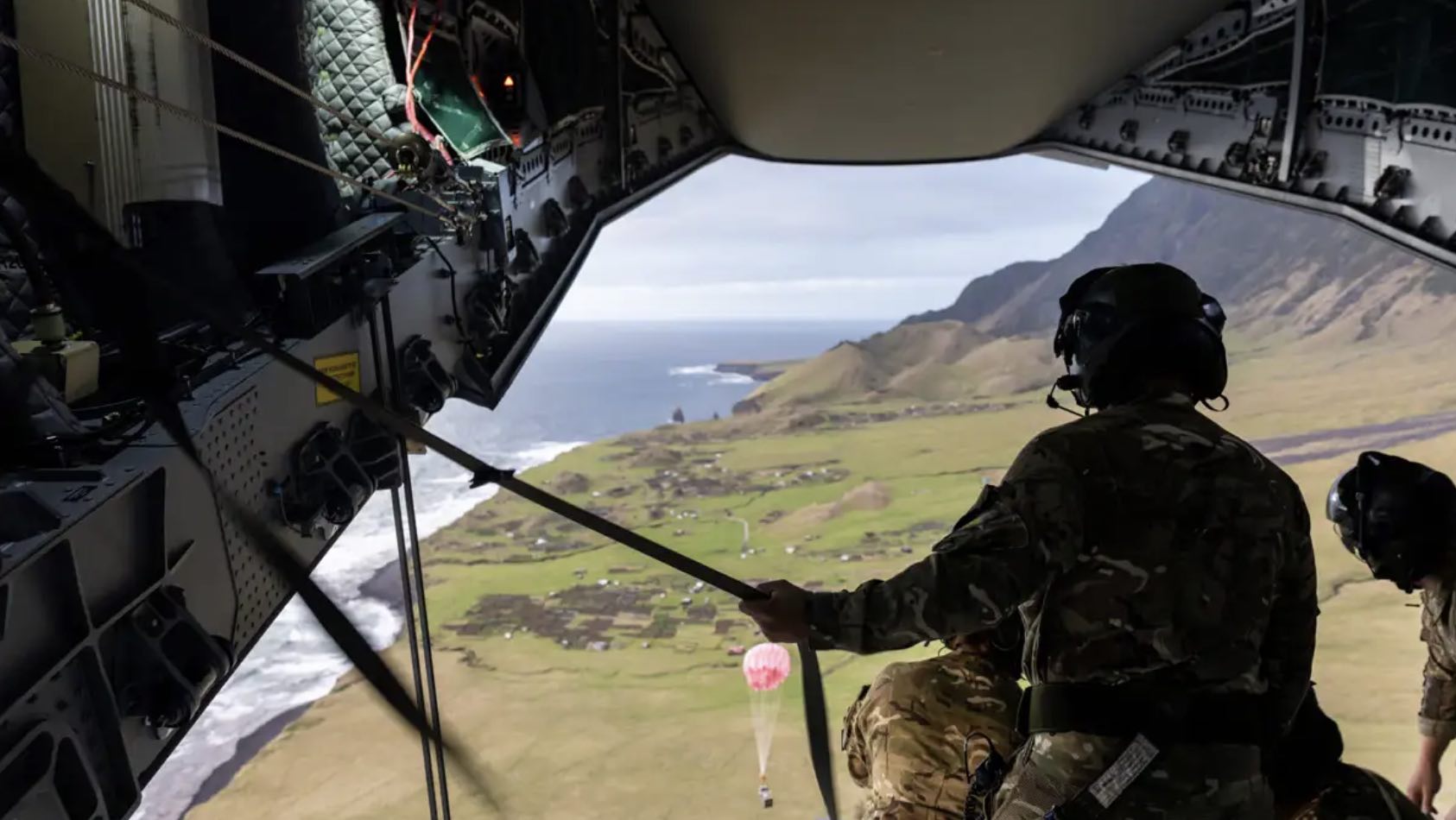
The images alone were enough to stir the blood. British Pathfinders descending over jagged volcanic terrain and battered Atlantic winds; RAF aircraft crossing nearly 10,000 kilometres from Britain via Ascension Island; medics strapped tandem to elite parachutists before plunging onto a windswept golf course that doubled as an improvised drop zone.
It sounded less like a modern military exercise and more like a scene from an old imperial adventure story. Yet this was not theatre. It was a life-saving humanitarian mission carried out under severe pressure and in brutal conditions.
The patient, a British national who had disembarked from the ill-fated cruise ship MV Hondius, was reportedly deteriorating rapidly while oxygen supplies on the island ran dangerously low. Tristan da Cunha has no airport, no runway and only a tiny medical facility staffed by two medics. Under normal circumstances the island is accessible only by sea — a journey measured in days rather than hours.
The British military therefore did what only serious armed forces can do: it improvised, adapted and moved at speed.
Six soldiers from the Pathfinder Platoon alongside military clinicians from 16 Air Assault Brigade jumped from an RAF A400M aircraft after a mammoth journey south across the Atlantic. At the same time, tonnes of oxygen cylinders and medical equipment were air-dropped to sustain the island’s tiny hospital.
According to the Ministry of Defence, it marked the first time British military medical personnel had parachuted into a humanitarian operation. That fact alone says something remarkable about the ambition and confidence behind the mission.
The operation also served as a timely rebuke to those who increasingly portray Britain as a fading middle-ranking power incapable of projecting strength beyond Europe. Whatever the fashionable declinists may claim, very few countries on Earth could organise such a mission at short notice. Fewer still could execute it successfully.
The logistical complexity was immense. Aircraft required mid-air refuelling. Weather conditions over Tristan da Cunha are notoriously hostile, with winds frequently exceeding 25mph. The island itself is tiny — a seven-mile volcanic outcrop in the middle of the South Atlantic.
Yet the mission succeeded because Britain retains something that cannot easily be manufactured: generations of accumulated military professionalism.
The Pathfinders involved are trained to parachute behind enemy lines in wartime conditions. Here, instead of combat, they brought reassurance and medical relief to frightened civilians thousands of miles from the mainland. It was a reminder that military capability is about far more than warfare. The same elite training that allows soldiers to fight also allows them to save lives when disaster strikes.
One suspects the people of Tristan da Cunha will not forget the sight anytime soon. In an era when many overseas territories fear being overlooked or forgotten, the arrival of British troops descending from the clouds carried enormous symbolic power. It said that however remote the island, however difficult the conditions, Britain still comes when called.
There is also something deeply reassuring about the competence displayed throughout the operation. Modern Britain often appears afflicted by hesitation and managerial paralysis. Infrastructure projects stall for decades. Public services creak. Political leaders talk endlessly of “lessons being learned”. Against that backdrop, the military’s swift and decisive response felt refreshingly old-fashioned.
No drama. No self-congratulation. Just professionals doing an extraordinarily difficult job with calm efficiency.
Brigadier Ed Cartwright, Officer Commanding 16 Air Assault Brigade, said “This was a joint effort with the Royal Air Force and highlights the speed, reach and utility of parachuting.
“The arrival of paratroopers, medical personnel and medical supplies from the sky has hopefully reassured the people of Tristan da Cunha.”
Foreign Secretary Yvette Cooper praised the mission as evidence of Britain’s “unwavering commitment” to its overseas territories. On this occasion at least, the phrase did not sound like hollow diplomatic boilerplate. It rang true.
Perhaps most importantly, the mission highlighted why airborne forces still matter. In recent years there has been endless debate over defence cuts, manpower reductions and whether elite parachute units remain relevant in an age dominated by drones and cyber warfare. Tristan da Cunha offered a compelling answer.
Technology matters, certainly. But sometimes there is no substitute for highly trained men and women willing to jump out of an aircraft into darkness, isolation and uncertainty because somebody needs help.
Britain’s paratroopers have long cultivated an aura of toughness bordering on myth. On a remote island in the South Atlantic this week, they demonstrated that beneath the legend lies something even more valuable: genuine courage, discipline and humanity.