Latvia’s Prime Minister Evika Siliņa has resigned, bringing down her centre-right coalition government after a dispute over defence accountability and the handling of recent drone incidents on Latvian territory.
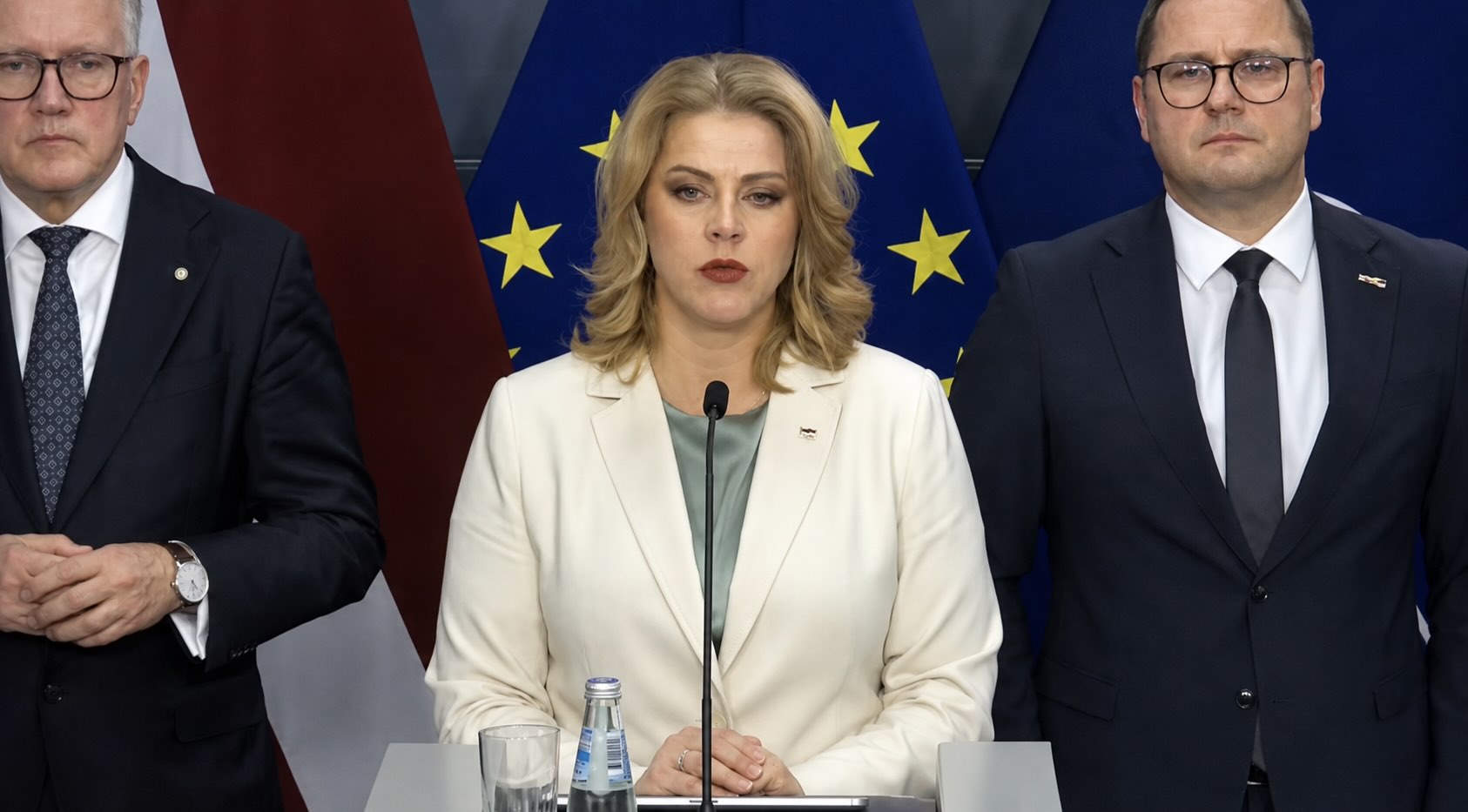
Siliņa’s decision was confirmed on Thursday by New Unity parliamentary faction leader Edmunds Jurēvics, while Latvian public media reported that the prime minister later announced the move herself at a media briefing. Her resignation means the fall of the government, although ministers are expected to continue in a caretaker capacity until a new administration is formed.
In her statement, Siliņa said she had taken “a difficult, but honest decision” to leave the post of prime minister. She thanked those who had trusted her, worked with her and criticised her “with reason”, adding: “I am resigning, but I am not giving up.” Current international reporting said the decision triggered the collapse of her coalition government only months before parliamentary elections due in October.
The immediate political crisis followed the withdrawal of support by the Progressives, the junior coalition partner. The party said on May 13 that it no longer saw a possibility of working in Siliņa’s government and called on President Edgars Rinkēvičs to begin consultations on forming a new cabinet. The move left Siliņa’s New Unity party without a governing majority in the Saeima, Latvia’s parliament.
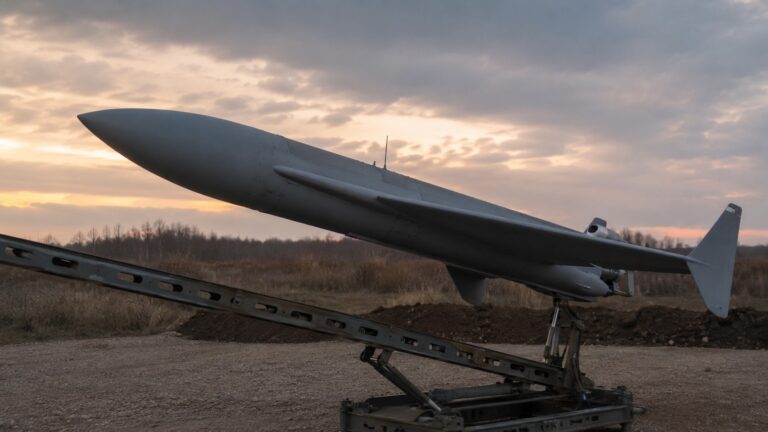
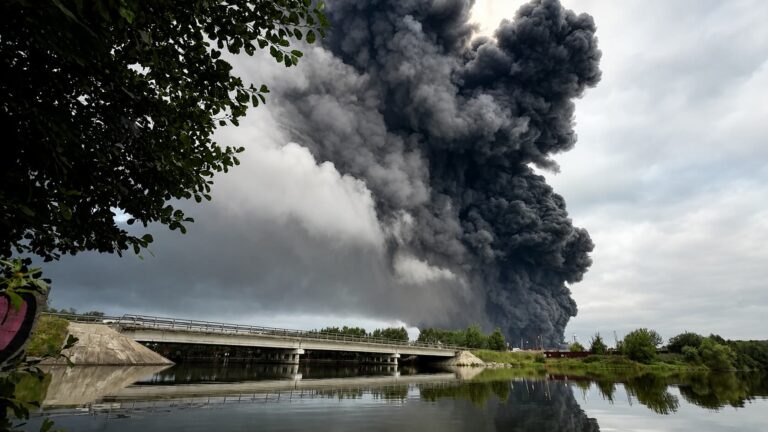
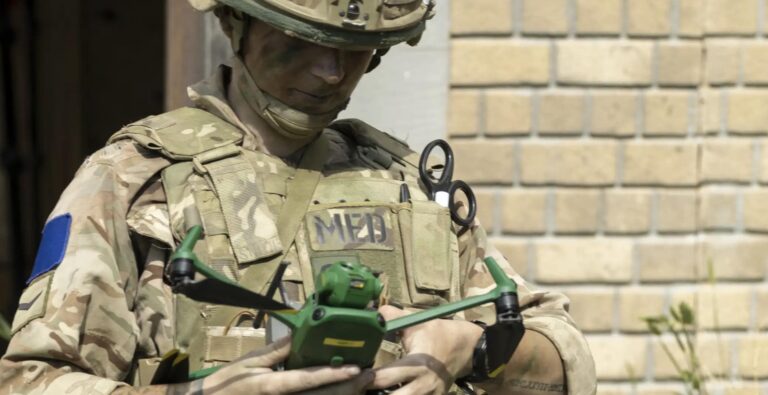
The dispute centred on the dismissal of Defence Minister Andris Sprūds, a member of the Progressives. Siliņa had demanded his resignation after drone incidents in eastern Latvia raised questions about airspace monitoring, civil warning procedures and the speed of the state’s response. According to reporting on the defence minister’s resignation, the incidents involved Ukrainian drones that crossed into Latvia from Russia after reportedly being affected by Russian electronic warfare.
The Progressives opposed the handling of Sprūds’ removal and objected to the loss of one of their ministerial portfolios. Siliņa temporarily assumed the duties of defence minister, while Colonel Raivis Melnis was proposed as a professional military candidate for the post. The dispute turned a defence-sector controversy into a coalition crisis.
On the morning of May 14, the Progressives’ parliamentary leader, Andris Šuvajevs, said that if a no-confidence vote against Siliņa were held that day, the government would fall. Opposition parties had been preparing to use a procedural route in the Saeima to accelerate a confidence vote without waiting the usual five-day period required after a standard motion is tabled.
Before the expected parliamentary confrontation, Siliņa requested a one-hour break in the Saeima sitting. When the sitting resumed, she did not address parliament. Instead, she held a press conference at the Cabinet of Ministers and announced her resignation.
The fall of the government comes at a politically sensitive moment for Latvia. The country borders Russia and Belarus, remains one of Ukraine’s firmest supporters in the EU and NATO, and has repeatedly called for stronger air defence on the alliance’s eastern flank. Recent coverage of the drone incidents said the Progressives’ withdrawal of support was directly linked to the government’s handling of the incursions and Sprūds’ dismissal.
The drone issue created a difficult distinction for Riga. Latvia has consistently backed Ukraine’s right to defend itself against Russia’s full-scale invasion, but any unmanned aircraft entering Latvian territory raises questions about national airspace protection, emergency warnings and political responsibility. The government’s handling of those questions became the point at which the coalition could no longer hold.
Siliņa became prime minister in 2023 after the resignation of Krišjānis Kariņš. Her government was based on a three-party coalition bringing together New Unity, the Union of Greens and Farmers, and the Progressives. The arrangement provided a working majority but depended on co-operation between parties with different priorities on defence, social policy and governance.
President Rinkēvičs is expected to hold consultations with parliamentary factions to determine whether a new majority can be formed. Under Latvia’s constitutional process, the president nominates a candidate for prime minister, who must then secure parliamentary support. A short-term government may be required if parties cannot agree on a durable coalition before the October election.
For Latvia’s partners, the central issue will be continuity. Riga has played an active role in support for Ukraine, regional defence planning and Baltic security co-operation. The next government will inherit the same policy pressures: maintaining assistance to Ukraine, strengthening Latvia’s own air defence and managing the domestic consequences of a war that continues to affect NATO’s eastern members directly.
Siliņa’s resignation ends her government, but not the dispute that brought it down. The incoming administration will have to address both the technical failures exposed by the drone incidents and the political question of how Latvia should balance support for Ukraine with the protection of its own territory.