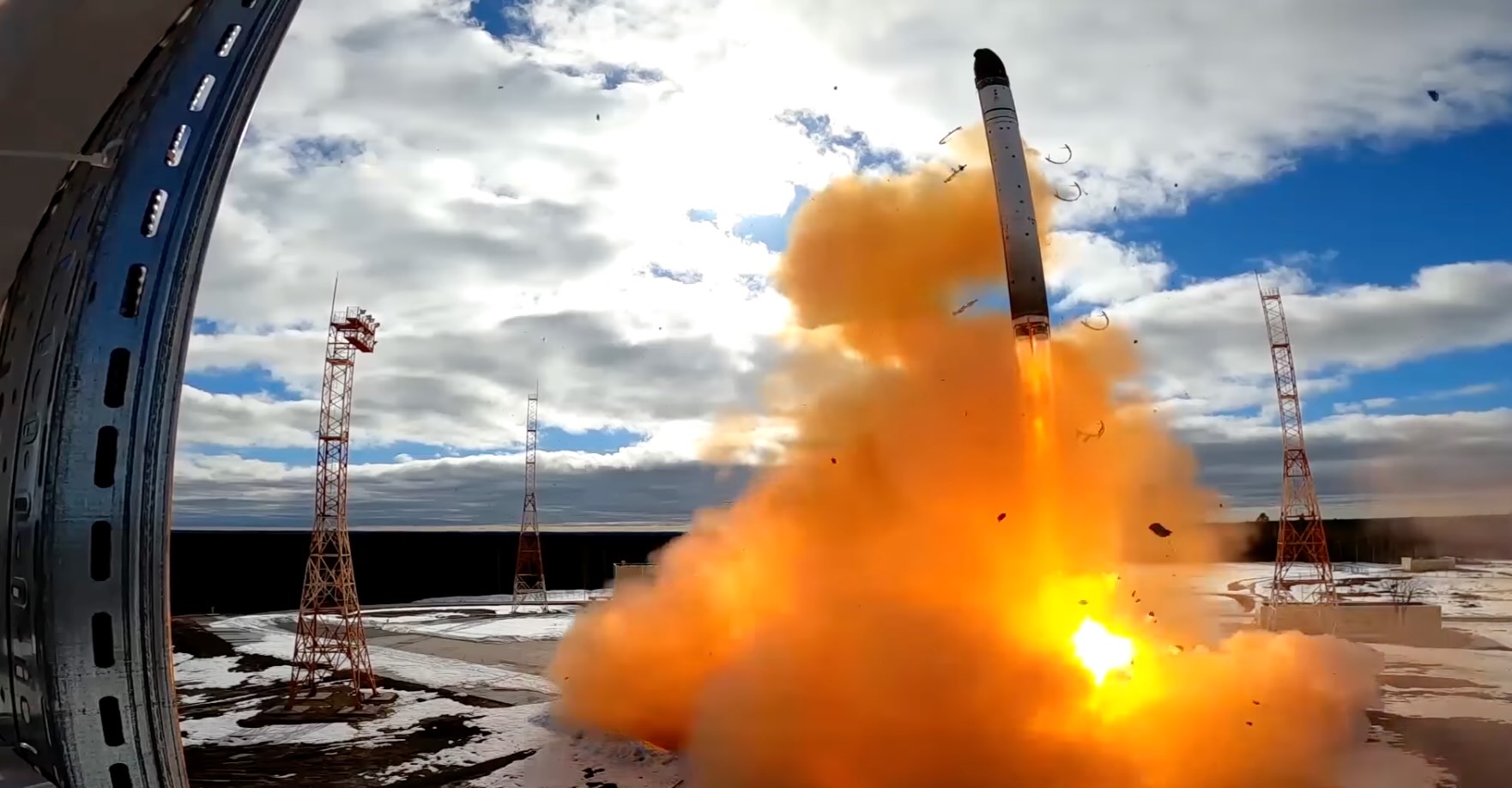
Russia has sought to present the latest test launch of its RS-28 Sarmat intercontinental ballistic missile as proof that one of its most important strategic weapons programmes is finally moving towards operational deployment. Vladimir Putin said the missile would enter combat service by the end of 2026 and described it as the most powerful missile system in the world, according to international reporting on the Kremlin announcement.
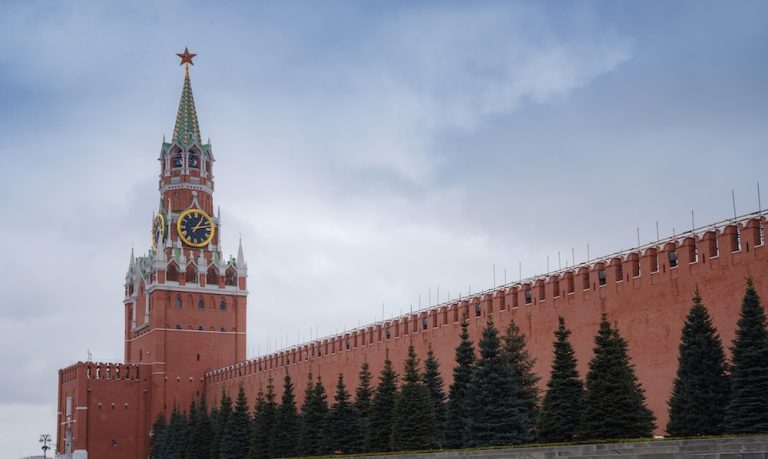
The announcement came shortly after Russia’s 9 May Victory Day events in Moscow, which were more limited than in previous years. The Red Square parade did not include heavy weapons, a detail noted in coverage of the event and in later reporting on the Sarmat test. Against the background of the war in Ukraine, the timing gave the missile announcement an obvious political function: to restore the image of military strength at a moment when the Kremlin’s public messaging needed a clear strategic success.
The Sarmat, known in the West as “Satan II”, is designed to replace the Soviet-built Voyevoda intercontinental ballistic missile. That older system, known by NATO as SS-18 Satan, was one of the core weapons of the Soviet strategic arsenal. The new Russian missile is intended to become a central part of the land-based component of Russia’s nuclear triad, alongside strategic submarines and long-range bombers. Moscow claims the Sarmat can carry multiple warheads and approach targets along routes intended to complicate missile defence planning.
The political importance of the missile explains why Putin personally highlighted the test. Since the start of Russia’s full-scale invasion of Ukraine, Moscow has repeatedly used nuclear messaging to deter deeper Western involvement and to reinforce Russia’s status as a major military power. The Sarmat is therefore not only a weapons programme. It is also a symbol used by the Kremlin to project strategic credibility.
However, the available public record leaves room for caution. Russian Strategic Missile Forces commander Sergei Karakayev reported to Putin that the launch had been successful. Russian state media showed footage supplied by the Defence Ministry of a missile leaving its silo. The central question is whether the test proved the full flight profile, including the successful delivery of training warheads to the intended target area.
That distinction matters. A launch can be successful in the narrow sense that the missile leaves the silo. A full intercontinental ballistic missile test is a more demanding event. It normally requires the correct operation of multiple stages, stable flight, separation of warheads and arrival of the test payload in the designated impact area. Some reporting stated that the missile struck its target at the Kura test range in Kamchatka, while also noting that there were no independent reports confirming the full claimed success. The Barents Observer reported that the launch was presented by Moscow as successful, but also placed it in the context of earlier failures.
Preparations before 9 May also point to a politically sensitive test window. On 6 May, authorities in Kamchatka announced restrictions around the Kura range, warning residents to avoid the area and prohibiting the movement of people and equipment near the site. United24 Media reported that the restrictions were in force through 10 May. Aviation warnings also indicated possible missile-related activity around the Victory Day period, including areas linked to Kura and Russian strategic missile facilities.
The public announcement was made only on 12 May. That delay does not prove a technical problem. It does, however, make the official narrative more difficult to assess. If the launch was intended as a direct Victory Day demonstration, the absence of an immediate announcement invites questions over whether all elements of the test proceeded as planned.
The Sarmat programme has already faced delays and reported failures. Its first known successful test took place in April 2022. Before the latest announcement, that remained the only confirmed successful launch. A later test was reported to have failed in 2024, causing a major explosion at a launch site. The Moscow Times noted that the programme has been affected by delays, while Reuters reported that Western analysts remain cautious about some of Putin’s claims.
This background makes the wording of the Russian announcement important. Putin and Karakayev emphasised the launch and the missile’s future deployment. What remains less clear from the public record is whether the test demonstrated the full reliability expected of a deployable strategic system. In military terms, the difference between a missile taking off and a missile completing its full test mission is substantial.
There is also a wider industrial context. The Soviet heavy missile programme relied heavily on facilities and expertise located in Ukraine, particularly in Dnipro. After Russia’s annexation of Crimea in 2014, military-industrial co-operation between Russia and Ukraine ended. Russia has since had to sustain and replace inherited Soviet strategic systems through its own defence-industrial base. The repeated difficulties surrounding Sarmat suggest that replacing the Soviet-era heavy missile legacy has been a complex and slow process.
For the Kremlin, the immediate political value of the announcement is clear. It allows Putin to claim that Russia’s strategic forces remain modernising despite sanctions, wartime pressure and doubts over advanced weapons programmes. It also gives Moscow a high-profile nuclear message at a time when the last remaining US-Russian nuclear arms control framework has expired and the war in Ukraine continues.
For outside observers, however, the appropriate conclusion is more cautious. Russia has shown a Sarmat launch and has declared it successful. It has not provided independently verifiable evidence that the missile completed the full sequence required to demonstrate operational reliability. Until such evidence is available, the announcement should be read as both a military claim and a political communication exercise.
The Sarmat may still become a deployed Russian strategic missile. But the latest announcement does not, on its own, settle the central question: whether Russia’s most important new heavy ICBM has overcome the technical problems that have followed the programme for years.