

German investigators have uncovered a sanctions evasion network that allegedly used a trading company in Lübeck to move European dual-use technology into Russia’s military-industrial supply chain.
The case, detailed in a fresh investigation by Politico and supported by earlier statements from Germany’s Federal Prosecutor’s Office, centres on Global Trade, a mid-sized German company that investigators allege was converted after Russia’s full-scale invasion of Ukraine into a procurement arm for Moscow-linked buyers.
At the centre of the case is Nikita S., a 39-year-old German-Russian businessman arrested in Lübeck after a long-running investigation involving police, customs officers and Germany’s foreign intelligence service, the BND. Prosecutors allege that he helped organise around 16,000 shipments to Russia with a total value of at least €30 million.
According to the case file cited by Politico, Global Trade had previously exported directly to Russia. After EU sanctions tightened in 2022, investigators say the company’s operations shifted to a more complex structure using intermediaries, false buyers and third-country transit routes.
The alleged controlling entity on the Russian side was Kolovrat, also operating under the name Siderius. The company has been sanctioned by the United States for activity in Russia’s manufacturing sector. German investigators allege that Kolovrat was not merely a customer, but part of the operational core of the procurement network.
The files reviewed by Politico suggest that Kolovrat employees accessed Global Trade email accounts and posed as German staff when contacting suppliers across Europe. To suppliers, the transactions appeared to originate from a German commercial buyer. Investigators say the Russian side was effectively directing parts of the business from within.
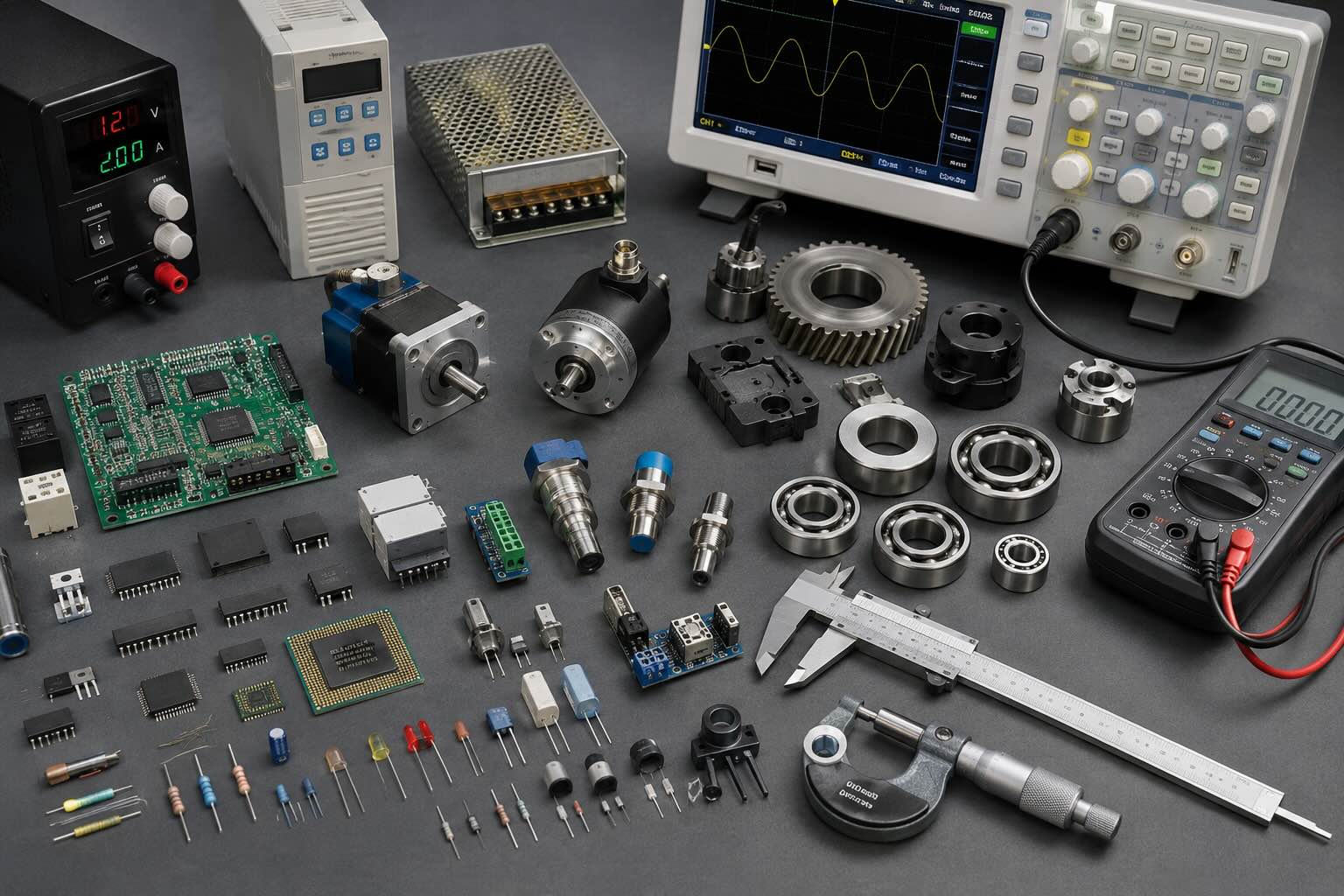
The goods listed in customs records and intelligence reports included microcontrollers, electronic components, sensors, converters, ball bearings, mechanical parts, oscilloscopes and other measuring equipment. Many such products have civilian uses. They can also be used in military systems, defence production, nuclear-related research and advanced industrial applications.
Investigators traced some deliveries to Russian end users linked to defence and nuclear research. One identified recipient was the All-Russian Scientific Research Institute of Automatics, an institution associated with Russia’s nuclear weapons programme.
As direct exports to Russia became more difficult, the network allegedly routed goods through other countries, particularly Turkey. Politico reports that investigators found the time between export from the EU and import into Russia was often only five to ten days.
A Turkish company, MR Global, is suspected of acting as a formal consignee while functioning as a transit point. German front companies, including ER Industriebedarf GmbH and Amtech Solutions, were allegedly used to obscure the real destination of shipments. Some had limited staff or shared premises with Global Trade.
Internal communications cited in the files point to deliberate concealment. In one message, Nikita S. allegedly instructed an associate to ensure there was no reference to Russia. In another, shipment documents were to be removed from boxes before dispatch. A further message stated that Turkey could be used as an alternative consignee.
The German authorities say the network extended beyond one businessman. Prosecutors believe it involved logistics staff, accountants, sales managers and Russian-based contacts. Some allegedly sourced suppliers, prepared invoices, handled payments and arranged transport. One message cited by investigators stated that the goods were needed in a sanctioned country.
The BND’s role appears central. According to the case files, German intelligence gained access to internal material from Kolovrat, including orders, invoices and correspondence. Because intelligence material cannot automatically be used in criminal proceedings, the BND formally passed its findings to prosecutors and customs investigators, allowing them to build the criminal case.
The authorities then compared European export records with Russian import data, tracked payments through intermediaries and mapped the roles of the German, Turkish and Russian companies involved.
Several suspects are now in custody, including Nikita S., Eugen R., Daniel A. and Boris M. Prosecutors allege systematic violations of export controls, large-scale sanctions evasion and participation in a criminal network. Under Germany’s Foreign Trade Act, serious offences can carry prison sentences of up to ten years.
The case underlines a persistent weakness in the Western sanctions regime. EU restrictions have complicated direct exports to Russia, but investigators say procurement networks continue to exploit commercial paperwork, shell companies and transit jurisdictions to obtain restricted technology.
For Brussels and EU capitals, the issue is no longer only the adoption of sanctions, but their enforcement. The Lübeck case suggests that Russian-linked procurement structures can still operate inside the EU, using legitimate suppliers and routine transactions to move components into Russia’s defence sector.
The investigation also raises questions for European exporters. Dual-use goods may appear ordinary when sold individually, but repeated orders, unusual routing, unclear end users and rapid onward movement to Russia are indicators that compliance systems are expected to detect.
German customs authorities have said that sanctions circumvention through exports via third countries has been a particular focus since the tightening of EU measures after Russia’s full-scale invasion of Ukraine.
The Lübeck case is therefore likely to add pressure for stricter end-user checks, closer scrutiny of transit routes and stronger information-sharing between customs, intelligence agencies and private suppliers.
It also illustrates why Russia’s access to Western components remains a central issue in the Ukraine war. Even where weapons are produced inside Russia, the supply chains behind electronics, sensors and industrial equipment often remain international.
Russian Missiles Used in Kyiv Strike Contained More Than 100 Western Components, Report Says


Cuba drone claims sharpen fears of a new US confrontation in the Caribbean