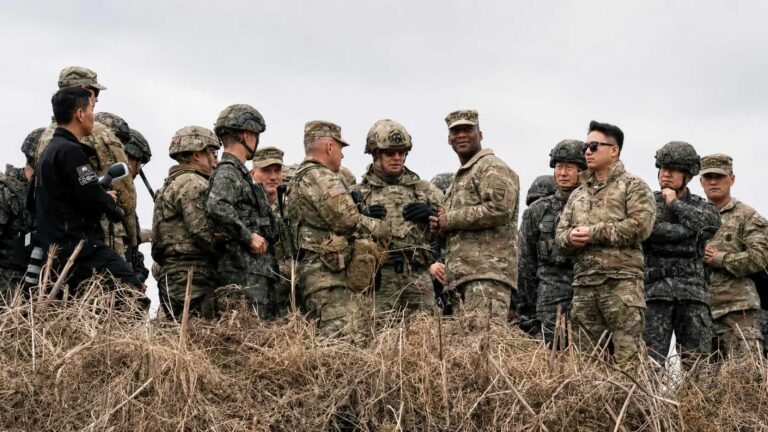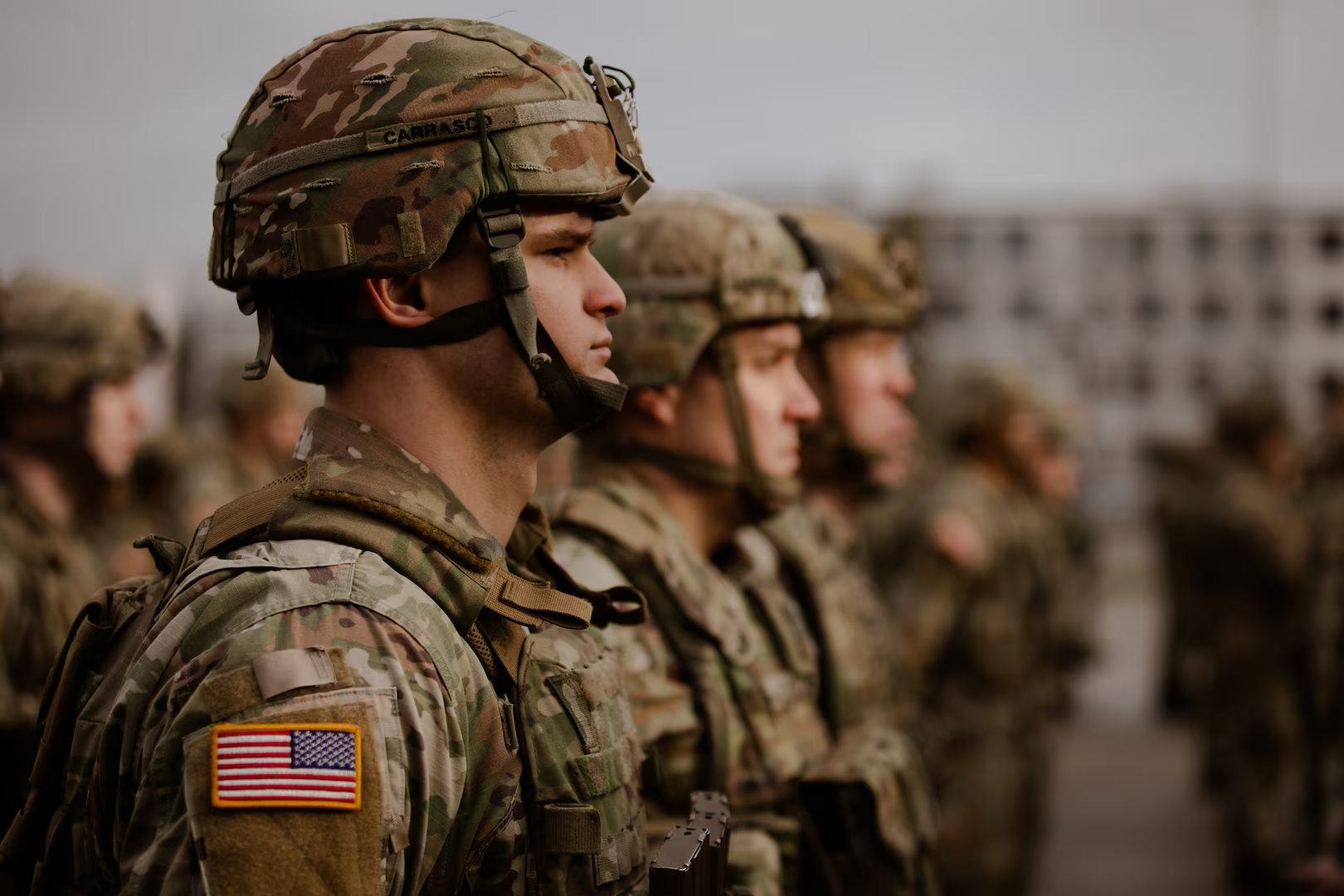
The Pentagon has confirmed that the United States is reducing the number of American brigade combat teams assigned to Europe from four to three, a decision that has temporarily delayed a planned US deployment to Poland and raised new questions over Washington’s military posture on NATO’s eastern flank.
Pentagon spokesman Sean Parnell said the reduction would return the number of US brigade combat teams in Europe to the level recorded in 2021, before Russia’s full-scale invasion of Ukraine. In a statement, he said the decision followed a “comprehensive, multilayered process” focused on reviewing the disposition of American forces in Europe. The same statement said the review had caused a temporary delay in the deployment of US forces to Poland, which Washington described as a “model US ally”.
STATEMENT:
The Department of War has reduced the total number of Brigade Combat Teams (BCTs) assigned to Europe from four to three. This returns us to the levels of BCTs in Europe in 2021. This decision was the result of a comprehensive, multilayered process focused on U.S.…
— Sean Parnell (@SeanParnellASW) May 19, 2026
The announcement follows earlier reporting that the Pentagon had scrapped plans to deploy around 4,000 US-based troops to Poland, a decision that prompted concern in Warsaw and among members of Congress in Washington. US Vice President JD Vance later said the planned deployment had been delayed rather than cancelled, adding that it was not accurate to describe the move as a withdrawal of American forces from Europe.
Trump Administration Halts Planned US Brigade Deployment to Poland Amid Wider European Troop Cuts
Polish Defence Minister Władysław Kosiniak-Kamysz has also sought to limit concern over the decision. Speaking after discussions with US officials, he said the deployment had been temporarily delayed and that no decision had been made to reduce American military capability in Poland. He said Warsaw remained in contact with Washington and that the security relationship between the two countries remained in place.
The Pentagon said the final placement of US forces in Europe would be determined after further analysis of American strategic and operational requirements, as well as the ability of European allies to contribute to their own defence. Parnell said the review was intended to advance President Donald Trump’s “America First” policy by encouraging NATO allies to assume primary responsibility for European security.
That language reflects a longstanding demand from Washington that European NATO members increase defence spending and carry a greater share of the burden for continental defence. At NATO’s summit in The Hague last year, allies agreed a new defence investment pledge amounting to 5 per cent of GDP by 2035, including 3.5 per cent for core defence requirements and 1.5 per cent for related security and infrastructure expenditure, according to the alliance’s summit declaration.
For Poland, the issue is particularly sensitive. Since Russia’s invasion of Ukraine in February 2022, Poland has become one of the most important locations for US and NATO military activity in Europe. It hosts American forces, serves as a logistics hub for support to Ukraine, and has pursued extensive defence procurement from the United States, including air defence, armoured vehicles and artillery systems.
The Pentagon statement praised Poland’s defence posture, saying the country had demonstrated both the ability and the determination to defend itself. It added that other NATO allies should follow Poland’s example. That formulation is likely to be read in Europe as both reassurance to Warsaw and a signal that Washington expects more from allies whose defence spending and military readiness remain below US expectations.
The decision also comes amid wider reporting on possible changes to America’s role in NATO planning. According to Reuters, Washington is expected to inform allies of a reduced US commitment under NATO arrangements for forces made available during a major crisis. The details of that change remain unclear, but the reporting has added to concerns that the Trump administration is moving towards a smaller conventional military footprint in Europe.
The immediate practical effect is a delay in a planned rotation to Poland, not a confirmed withdrawal of existing US forces from Polish territory. However, the reduction from four brigade combat teams to three marks a significant adjustment in American force planning. It suggests that Washington is seeking to rebalance its European commitments while placing more responsibility on European allies.
For NATO’s eastern members, the timing is sensitive. Russia’s war against Ukraine continues to shape the security calculations of Poland, the Baltic states and other countries closest to Russia and Belarus. In that context, even a temporary rotation delay can carry political weight, particularly if it is seen as part of a broader reduction in the US conventional presence in Europe.
The Pentagon has said it will provide further information “at the appropriate time and in the appropriate format”. Until then, the central question for European allies is whether the move represents a limited adjustment in troop rotation or the start of a more substantial restructuring of America’s role in European defence.