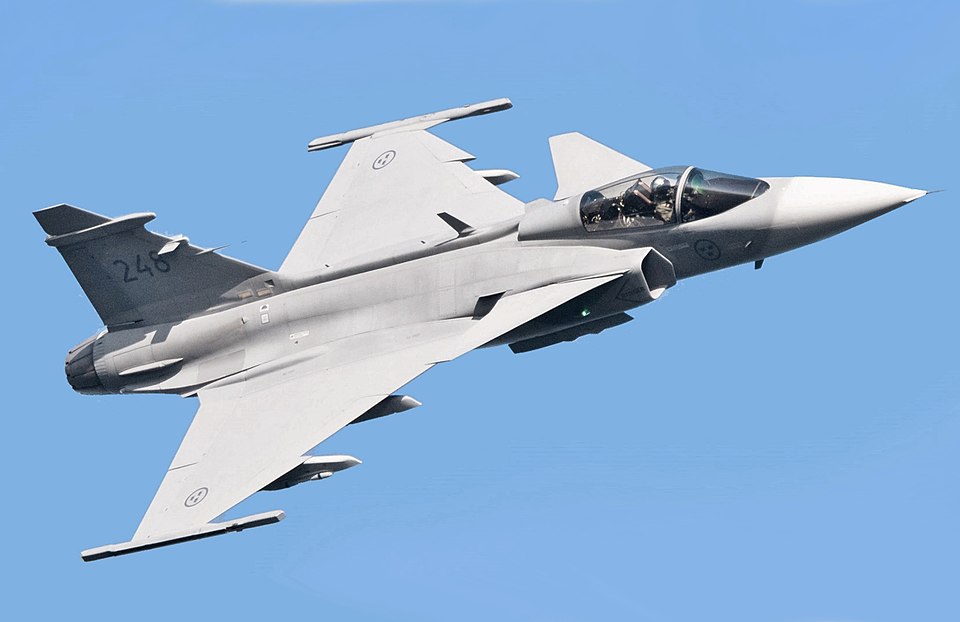
Sweden is expected to move closer to supplying Ukraine with JAS 39 Gripen fighter aircraft, in what would mark a significant step in Kyiv’s effort to rebuild its combat aviation capacity with Western aircraft.
According to Swedish daily Aftonbladet, Prime Minister Ulf Kristersson is preparing to announce the transfer of Gripen C/D aircraft to Ukraine during a visit to the Uppland Air Wing in Uppsala. The visit is expected to include a press conference on international aviation cooperation.
The reported package would involve older Gripen C/D aircraft, while Sweden and Ukraine are also expected to open negotiations on the purchase of the more modern Gripen E. Ukrainian outlet European Pravda reported, citing Aftonbladet, that the newer aircraft could be financed through an EU-backed loan mechanism.
The announcement comes as President Volodymyr Zelenskyy visits Sweden for talks with Kristersson. Reuters reported that the visit was linked to a defence announcement involving Gripen fighter jets, with discussions focused both on possible transfers of existing C/D models and a longer-term purchase of Gripen E aircraft.
The potential move follows a letter of intent signed by Kristersson and Zelenskyy in October 2025. In a statement at the time, the Swedish government said the agreement could lead to a possible export deal involving between 100 and 150 Gripen fighter jets for Ukraine.
For Ukraine, the Gripen is regarded as a possible complement to the F-16s already being introduced into its air force. Ukrainian officials have repeatedly argued that the Swedish aircraft is well suited to the conditions of the war, including the need for flexible operations, lower maintenance requirements and compatibility with Ukraine’s broader transition to Western systems.
The aircraft is built by Saab and designed as a multirole fighter for air-to-air, air-to-ground and reconnaissance missions. Saab describes the Gripen C-series as a “swing-role” fighter capable of carrying a range of weapons from different suppliers, while also highlighting its comparatively low flight-hour costs.
The aircraft’s relevance to Ukraine lies partly in its design philosophy. Sweden developed the Gripen for national defence, including dispersed operations and the ability to function from shorter runways and road bases. Such characteristics are important for Ukraine, whose airfields have repeatedly been targeted by Russian missile and drone strikes.
The immediate military effect would depend on the number of aircraft transferred, pilot training, maintenance arrangements, weapons integration and the availability of ground crews. Even if Sweden confirms the transfer, operational deployment would not be automatic. Ukraine would need to integrate the aircraft into an air force that is already operating Soviet-designed platforms and transitioning to Western aircraft.
A transfer of Gripen C/D jets would nevertheless carry political and strategic significance. Sweden had previously paused discussion of Gripen deliveries while allies prioritised the F-16 programme. A move now would indicate that Stockholm sees scope for broadening Ukraine’s Western fighter fleet beyond the American-designed aircraft.
The possible sale of Gripen E fighters would be a longer-term matter. Reuters reported earlier this month that talks on a Gripen deal were progressing, but that first deliveries of new aircraft could take several years after any agreement is finalised. That would make the Gripen E component part of Ukraine’s future air force planning rather than an immediate battlefield measure.
The financing issue remains central. Ukraine has been seeking long-term European support for air defence, combat aviation and strike capabilities, while European governments are assessing how to structure military aid over several years. If EU-backed financing is used, the Gripen deal would sit within the broader effort to connect European defence industry with Ukraine’s long-term security requirements.
For Sweden, the issue involves both military assistance and defence-industrial policy. Saab’s Gripen programme is one of Europe’s main fighter aircraft production lines outside the larger multinational combat aircraft projects. A major Ukrainian order would be among the most important export deals in the programme’s history.
If confirmed, Sweden’s decision would not transform Ukraine’s air war immediately. It would, however, broaden the range of Western aircraft available to Kyiv and establish a framework for a future Ukrainian fighter fleet built around both current operational needs and longer-term European defence cooperation.