Officials in Stockholm and Kyiv said this week that discussions over a potential deal for up to 150 JAS 39 Gripen aircraft were progressing positively, raising the prospect that an agreement could be signed before the end of the year.
The talks reflect a broader shift in Europe’s defence landscape, where the war in Ukraine has accelerated military industrial co-operation, increased defence spending and elevated Nordic defence manufacturers into strategic suppliers for the continent’s eastern flank.
Ukraine’s defence minister, Mykhailo Fedorov, said during a visit to Stockholm that financing questions surrounding the purchase had largely been addressed and suggested that an announcement could come within months. Swedish defence minister Pål Jonson separately confirmed that negotiations were “going well” and declined to rule out a formal agreement this year.
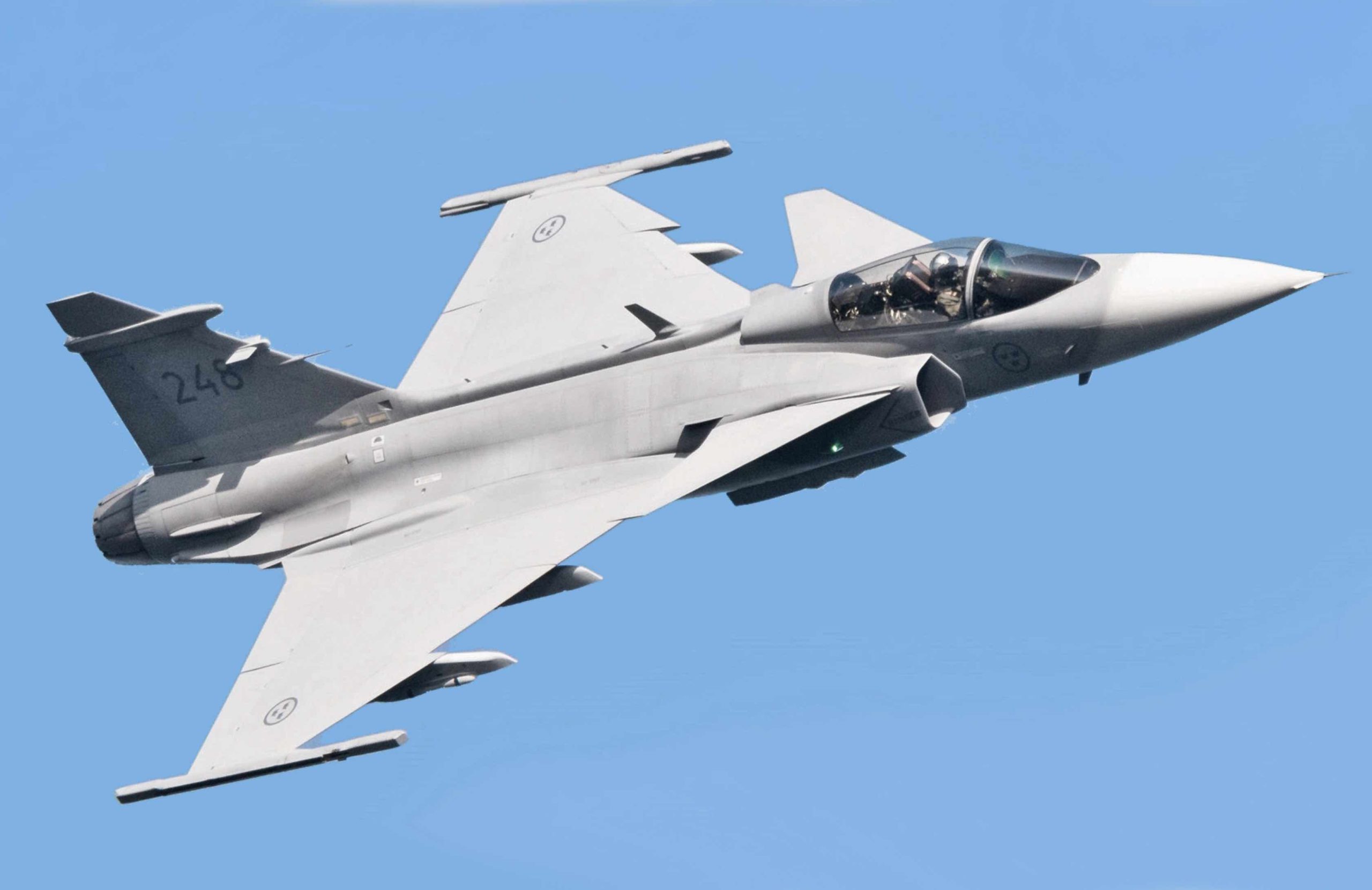
For Sweden, the potential agreement would represent the largest arms export deal in the country’s history and a defining moment for Saab’s Gripen programme, which has long struggled to compete against larger US defence groups in the global fighter market. The aircraft, designed during the Cold War to operate from dispersed bases under hostile conditions, has gained renewed relevance as European governments rethink assumptions about air warfare, resilience and operating costs.
The Gripen has often occupied an awkward middle ground in international competitions: cheaper and easier to maintain than Lockheed Martin’s F-35, but lacking the stealth capabilities that have become central to NATO procurement strategies. Yet the conflict in Ukraine has altered the calculus. Military planners increasingly value survivability, rapid turnaround times and affordability alongside high-end technological sophistication.
Analysts say the Swedish aircraft is particularly suited to Ukraine’s operational environment. The Gripen was designed for austere conditions, requiring relatively small ground crews and short runways, while remaining interoperable with NATO systems. It can also deploy a wide range of Western missiles and electronic warfare systems.
The prospective agreement follows a letter of intent signed last year between Stockholm and Kyiv covering the possible transfer of between 100 and 150 aircraft.
Any deal, however, would unfold over years rather than months. Ukrainian officials acknowledged that first deliveries of newly built Gripen aircraft would likely not occur until roughly three years after a final agreement is concluded.
That timetable has prompted parallel discussions over whether Sweden could accelerate deliveries by loaning, selling or donating older Gripen C/D aircraft already in service with the Swedish air force. Jonson said those talks were also advancing.
The financing structure remains central to the negotiations. Sweden has earmarked SKr80bn ($8.7bn) in aid for Ukraine across this year and next, and part of those funds could be used to support the aircraft acquisition. Stockholm is also discussing burden-sharing arrangements with other European countries that could contribute training, logistics or weapons packages.
The timing is politically notable. Sweden formally joined NATO only last year after decades of military non-alignment, a decision driven directly by Russia’s invasion of Ukraine. Since then, Stockholm has moved rapidly to position itself as a key contributor to Europe’s evolving defence architecture.
For Saab, the agreement would reinforce the company’s transformation from a regional aerospace group into a strategically important European defence supplier benefiting from a continent-wide rearmament cycle. The company has already expanded production capacity in anticipation of rising demand for fighter aircraft, surveillance systems and air defence technologies. Reuters reported last year that Saab believed it could meet demand even if the Ukraine agreement proceeded.
The negotiations also carry symbolic weight. Ukraine has spent much of the war reliant on ageing Soviet-designed aircraft while gradually integrating Western systems into its armed forces. Securing a long-term fleet of Western fighter jets would deepen Kyiv’s military integration with NATO standards regardless of the eventual shape of any ceasefire or settlement with Moscow.
The prospective Gripen acquisition would complement existing Western aircraft commitments, including deliveries of F-16s from European allies. But defence analysts note that Kyiv is unlikely to rely on a single aircraft type in the future, instead building a mixed fleet designed to maximise operational flexibility and diversify supply chains.
The talks come as European defence companies face mounting pressure to increase production capacity after years of underinvestment. The Ukraine war has exposed shortages in ammunition, air defence systems and industrial scale across the continent, prompting governments to reconsider procurement models built around small peacetime orders.
Whether the Gripen ultimately becomes a cornerstone of Ukraine’s future air force may depend less on battlefield requirements than on politics, industrial financing and the ability of European governments to sustain long-term military support.
For now, however, the trajectory is unmistakable: Ukraine’s defence future is becoming steadily more European.
By Tuomo Salonen / SIMFinnish Aviation Museum – commons file, CC BY-SA 4.0, https://commons.wikimedia.org/w/index.php?curid=61459095