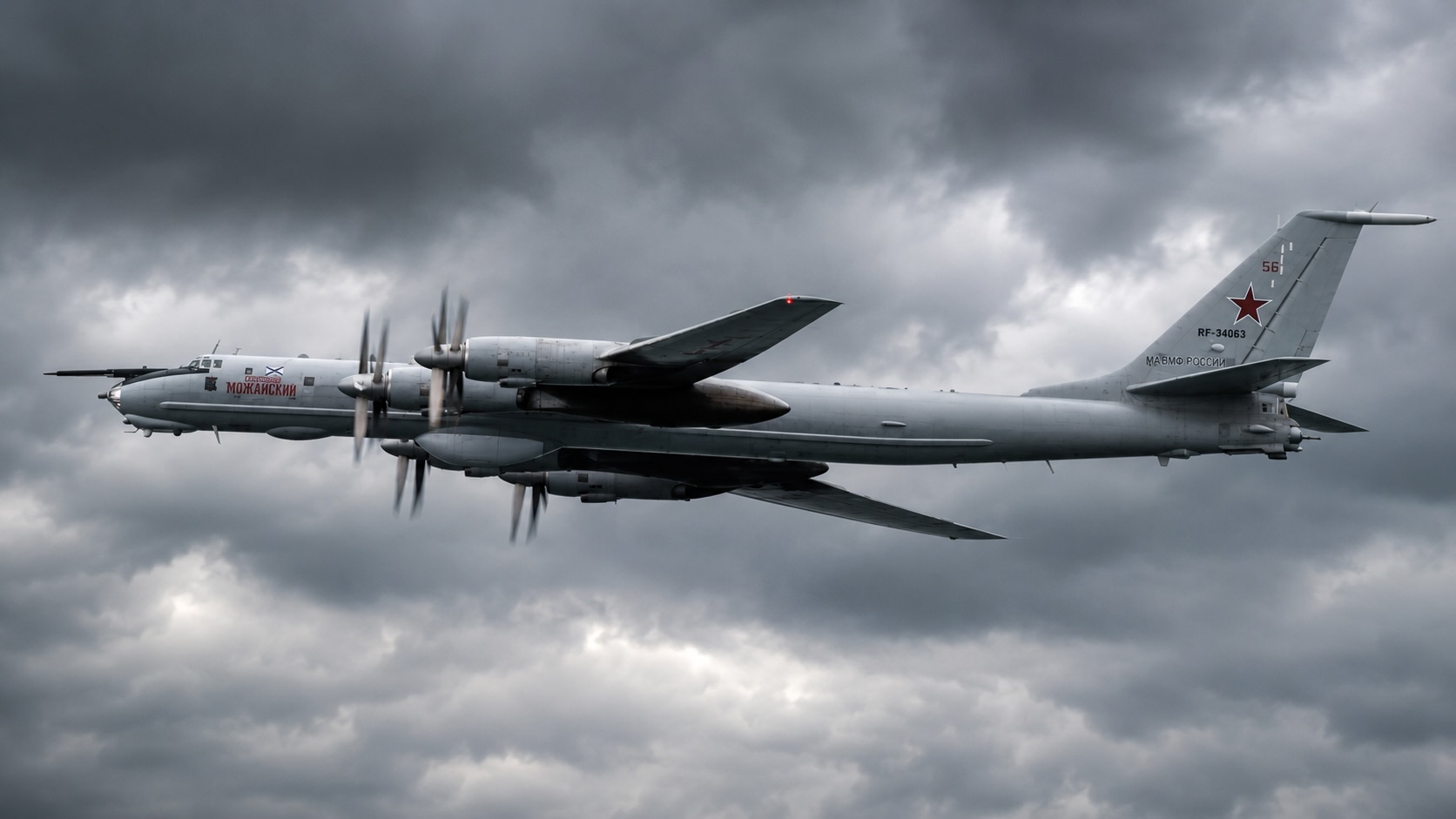
According to Ukrainska Pravda, Ukraine’s Unmanned Systems Forces said they destroyed two Russian Tu-142 maritime reconnaissance and anti-submarine aircraft, as well as a launcher vehicle for an Iskander missile system, at a military airfield in the Russian city of Taganrog overnight on 29–30 May. The claim was attributed to Major Robert “Magyar” Brovdi, commander of Ukraine’s Unmanned Systems Forces.
The reported strike has not been independently verified in full. However, footage released by Ukrainian military channels and reported by the Kyiv Independent showed drones striking aircraft on the ground and an Iskander system.
The Tu-142, known under the NATO reporting name Bear-F or Bear-J depending on the variant, is a Soviet-designed maritime reconnaissance and anti-submarine aircraft derived from the Tu-95 strategic bomber. Its role differs from that of ordinary combat aircraft. It is designed to locate and track submarines over long distances, particularly in the North Atlantic and Arctic theatres, and some variants are used to maintain communications with submarines operating at depth.
This is why the reported loss of two such aircraft may have relevance beyond the immediate battlefield in Ukraine. The Barents Observer reported that at least one of the aircraft hit may have been a Tu-142MR, a rare communications-relay variant used to maintain contact with Russia’s nuclear-powered submarines. If that assessment is correct, the strike would affect a category of aircraft linked not only to maritime patrol, but also to Russia’s wider strategic command-and-control architecture.
The Taganrog site is also important. The Beriev aircraft facility has long been associated with the maintenance and repair of specialist Russian aircraft. A previous UK Defence Intelligence assessment described the facility as having broader strategic significance for Russia because it services strategic bombers, transport aircraft and other specialised aviation systems, and operates as a testing centre for next-generation airborne early-warning aircraft.
Russia’s ability to replace Tu-142 aircraft is limited. The type dates from the Soviet period, and new production is not understood to be available. That makes the condition of the aircraft before the strike important. United24 Media later reported that the two Tu-142 aircraft struck at Taganrog may previously have been in storage for more than a decade and were not known to be in active service. If so, the immediate operational impact may be more limited than if fully active aircraft had been destroyed.
Even with that caveat, the strike demonstrated Ukraine’s ability to reach protected Russian military aviation sites far from the front line. Defence Blog reported that the drones struck the aircraft on the ground at Taganrog military airfield, describing the attack as part of Ukraine’s wider campaign to destroy Russian aviation assets deep inside Russia.
The reported destruction of an Iskander launcher would also be significant if confirmed. Russia has used Iskander ballistic missiles extensively against Ukrainian targets. The system is mobile, expensive and difficult to intercept. Its loss near Taganrog would suggest that Ukraine is improving its ability to identify and strike high-value ground systems, not only fixed infrastructure.
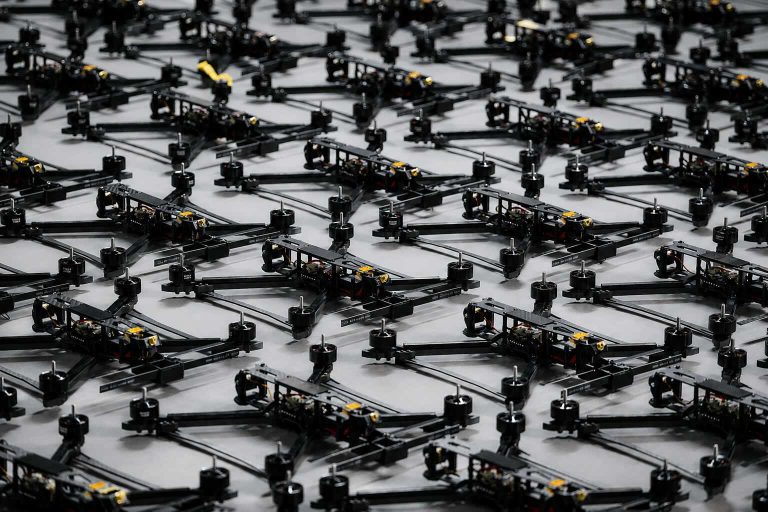
The operation fits a broader pattern. Over the past two years, Kyiv has increasingly used long-range drones to attack Russian military, logistics, energy and industrial targets far from the front line. These attacks are intended to destroy equipment, impose costs on Russia’s war economy, complicate air-defence planning and force Moscow to protect a wider range of sites across its own territory.
For NATO countries, the incident has wider relevance. Russia’s Tu-142 fleet is connected to maritime surveillance and anti-submarine operations in areas where NATO navies operate. The North Atlantic and Arctic remain central to the nuclear deterrence posture of the United States, Britain and France, whose ballistic missile submarines depend on concealment at sea. Any degradation of Russia’s ability to monitor or communicate across those regions would be of interest to NATO planners.
That does not mean Ukraine carried out the strike on behalf of NATO. Kyiv’s immediate objective remains the defence of Ukraine and the degradation of Russia’s capacity to wage war. But the choice of targets illustrates how the war is affecting Russian capabilities that extend beyond the Ukrainian theatre. Systems used against Ukraine are often part of the same military infrastructure that Russia maintains for confrontation with Europe and NATO.
The strike also demonstrates the growing sophistication of Ukraine’s unmanned forces. Russian airfields, ports and defence-industry facilities are protected by air-defence and electronic-warfare systems. A successful drone attack against aircraft parked at a defended site suggests careful route planning, intelligence preparation and coordination between multiple unmanned platforms.
The cost imbalance is central to the operation’s significance. Long-range drones are not cost-free, but they are far cheaper than rare aircraft or ballistic missile launchers. If relatively low-cost unmanned systems can repeatedly destroy or disable assets Russia cannot quickly replace, Ukraine gains a strategic advantage that is not measured solely by changes on the front line.
Moscow has presented Ukrainian strikes inside Russia as escalation. Kyiv argues that military sites supporting Russia’s invasion are legitimate targets. The Taganrog attack falls into a category of operations aimed at Russia’s war-making infrastructure rather than symbolic targets.
Ukraine’s drone campaign is no longer confined to tactical disruption. It is increasingly aimed at the aircraft, missile systems, repair facilities and industrial assets that sustain Russia’s long-range war effort. In Taganrog, that campaign appears to have reached targets with implications not only for Ukraine, but for Russia’s broader military posture at sea and in the air.