 Byadmin
Ukraine has extended its campaign against Russian military logistics into the Caspian Sea, striking vessels and infrastructure associated with the maritime route between Russia and Iran.
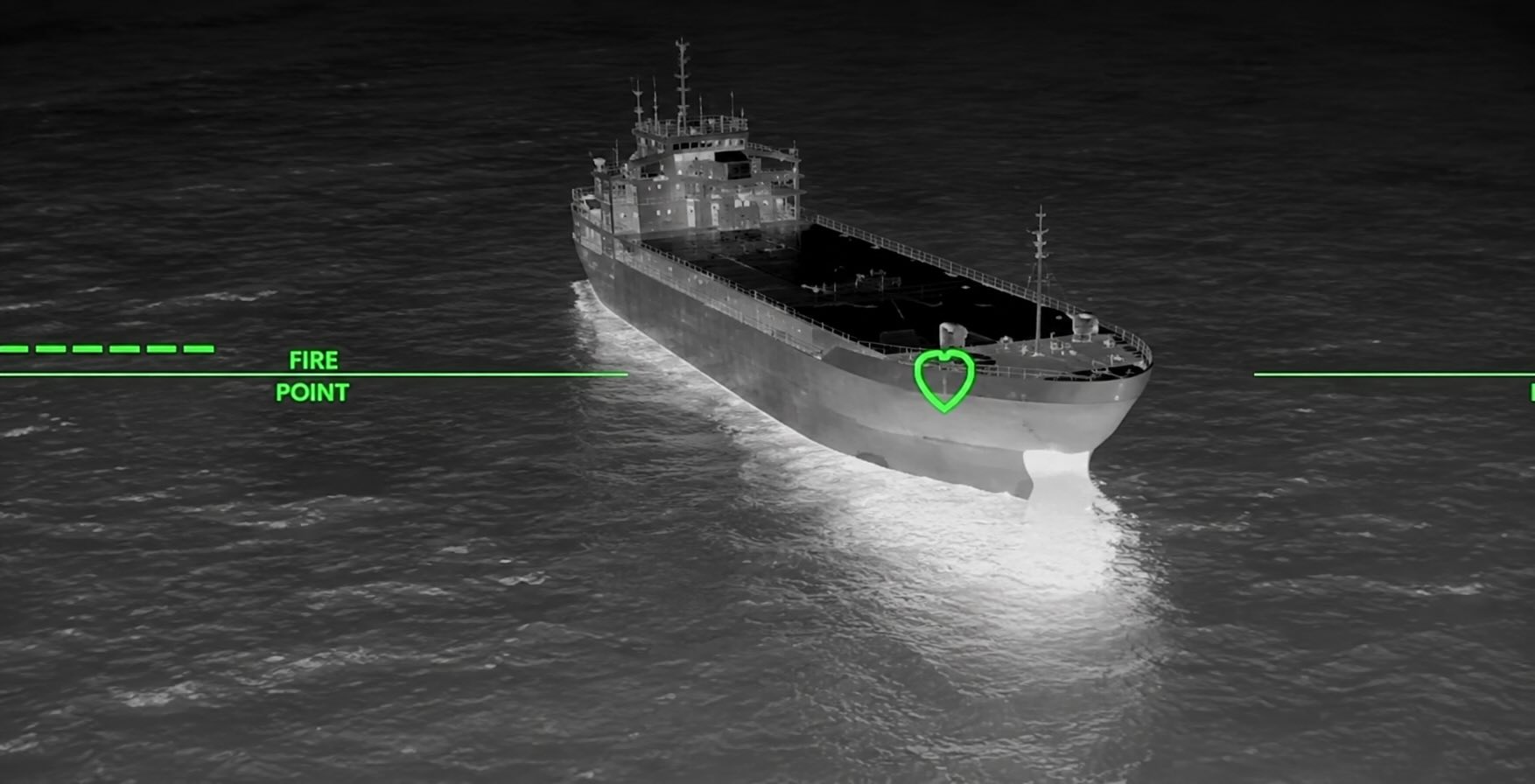
The Security Service of Ukraine, the SBU, said its long-range drones attacked the Russian-flagged cargo vessels Port Olya 2 and Begey, a Project 12418 Molniya missile boat and an offshore platform at Lukoil’s Filanovsky oilfield during the night of 24–25 July. According to the initial Ukrainian account of the operation, the cargo ships had been used to transport military supplies between Russia and Iran.
President Volodymyr Zelenskyy said Ukrainian forces had achieved “very strong results” with long-range strikes in the Caspian, including attacks on vessels used in military cargo shipments involving Iran and on a Russian warship. He did not identify the ships or disclose where the drones were launched, the route they followed or the extent of the damage.
The full results remain difficult to verify independently. Ukraine has not released sufficient imagery to confirm that either cargo vessel was disabled, while Moscow has not provided a detailed public account of the attack.
Iran has confirmed that an Iranian commercial vessel was struck in the Caspian, causing an explosion that killed one sailor and injured another. Tehran summoned Ukraine’s chargé d’affaires and described the incident as a hostile act intended to expand the geographical scope of the war.
Iranian Foreign Minister Abbas Araqchi subsequently said the attack “cannot go unanswered” after discussing the incident with EU foreign policy chief Kaja Kallas and Russian Foreign Minister Sergei Lavrov. However, the Iranian account of the casualties and diplomatic protest did not identify the vessel concerned or establish whether it was one of the two Russian-flagged ships named by the SBU.
That distinction is important. Both vessels identified by Ukraine are formally registered as general cargo ships, but both have previously been linked to military transport operations.
Ukraine’s military intelligence database identifies Port Olya 2, IMO number 9481881, as a vessel involved in supplying military goods from Iran to Russia. The ship is owned by MG-Flot, formerly TransMorFlot, a Russian shipping company sanctioned by the United States.
The vessel regularly visited Iranian and Russian Caspian ports, including Bandar Anzali, Amirabad, Astrakhan and Olya. Ukrainian intelligence also recorded instances in which its Automatic Identification System was switched off, making its movements more difficult to track.
The US Treasury’s sanctions notice concerning MG-Flot states that vessels controlled by the company regularly transported cargo between Iran and Russia. Washington said the network had supported transfers of lethal Iranian assistance and that at least one company-controlled vessel had carried close-range ballistic missiles from Iran to Russia.
Ukraine’s intelligence service also lists Begey, IMO number 8943210, as a vessel involved in carrying ammunition, artillery shells, body armour and helmets from Iran to Russia.
The database records 11 calls at Iranian ports between July 2022 and June 2023, including visits to Amirabad, Nowshahr, Astara and Anzali. These records demonstrate a sustained shipping pattern, although they do not by themselves establish what the vessel was carrying when it was attacked.
The United Kingdom sanctioned Begey in September 2024 over its reported role in transporting military supplies from Iran to Russia. Canada later added the vessel to its own sanctions list.
The Caspian route offers Moscow and Tehran an important logistical advantage. It connects Iranian ports directly with Russia’s Astrakhan region without requiring passage through the Turkish Straits or waters controlled by Nato members. It also forms part of the wider International North–South Transport Corridor linking Russia with Iran and markets farther south.
The route carries legitimate commercial cargo, but sanctions records and intelligence assessments indicate that it has also been used by vessels associated with military shipments. Ukraine’s operation suggests that Kyiv now regards selected parts of this maritime network as extensions of Russia’s wartime logistics system rather than as a protected rear area.
Operationally, the attacks raise questions about Russian air-defence coverage across the northern Caspian. Ukrainian drones would have had to travel hundreds of kilometres through or around Russian-controlled airspace before reaching moving vessels and offshore infrastructure.
Russia may now have to assign additional radar, electronic-warfare equipment and short-range air-defence systems to ports, oil facilities and Caspian Flotilla bases. Any such redeployment would compete with requirements around Moscow, the Black Sea, occupied Crimea and military-industrial sites elsewhere in Russia.
Even if the physical damage proves limited, the operation could therefore impose wider costs by forcing Russia to protect an additional region that had previously been regarded as comparatively secure.
The legal status of the cargo vessels depends on their use at the time of the attack. Under the customary international humanitarian-law definition of a military objective, an otherwise civilian object may lose its protection when its nature, location, purpose or use makes an effective contribution to military action and its destruction offers a definite military advantage.
Previous sanctions and intelligence assessments may support Ukraine’s argument that the ships formed part of a military supply network. They do not, however, establish conclusively what each vessel was carrying at the moment it was struck. Any legal assessment would also have to consider proportionality and the precautions taken to reduce the risk to civilian crews.
The strategic effect is clearer. The Caspian can no longer be treated automatically as a secure maritime corridor for Russian and Iranian military co-operation. Ukraine has demonstrated that targets in the region are within the reach of its long-range strike capability.
Whether Kyiv can repeat such operations, and whether Russia can strengthen its Caspian defences without weakening other sectors, will determine whether the attack remains an isolated raid or develops into a sustained interdiction campaign.