A temporary air and maritime restriction off Finland’s southern coast shows how drone activity can disrupt a NATO member even before the origin or intent of an aircraft is established.
Finland’s armed forces have temporarily closed an area of airspace off the country’s southern coast near Russia and imposed restrictions on maritime traffic because of the risk posed by stray drones.
The Finnish military confirmed the measures on Tuesday, according to Reuters. Officials did not initially attribute a particular aircraft to Russia, identify a launch site or describe a deliberate incursion.
That restraint matters. The closure is an operational precaution, not evidence that Moscow ordered an attack on Finland. Yet it is also more consequential than a general warning. Civilian and maritime movement has been restricted because the authorities judged the immediate risk sufficient to act.
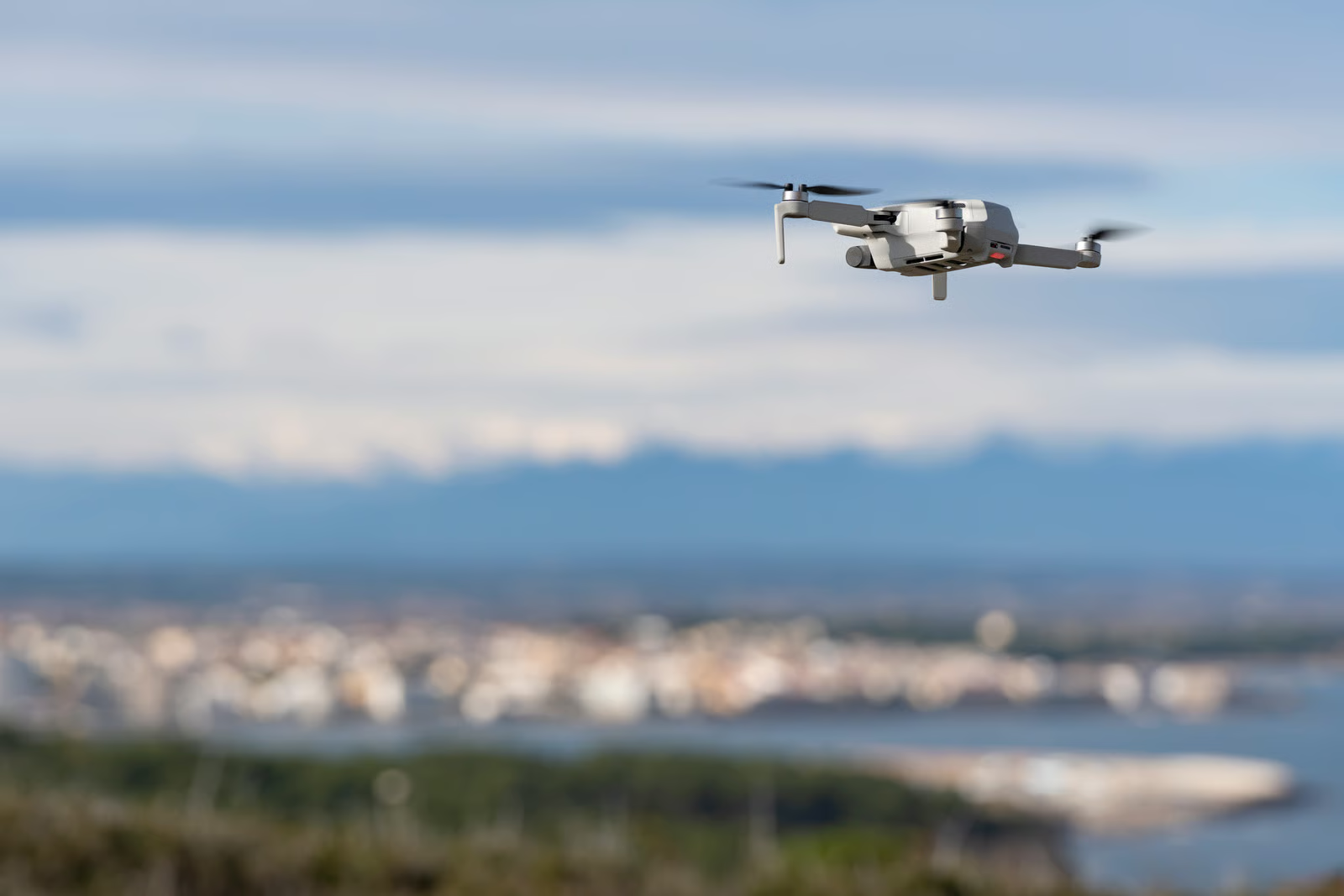
For a NATO country sharing a 1,340-kilometre land border with Russia and facing the Gulf of Finland, even a small unmanned aircraft can create a difficult decision. It may be a military drone that has lost navigation, a reconnaissance platform, a decoy, a civilian device or a deliberate probe of Finnish reactions. Its identity may not become clear until after it has crossed a boundary—or been recovered.
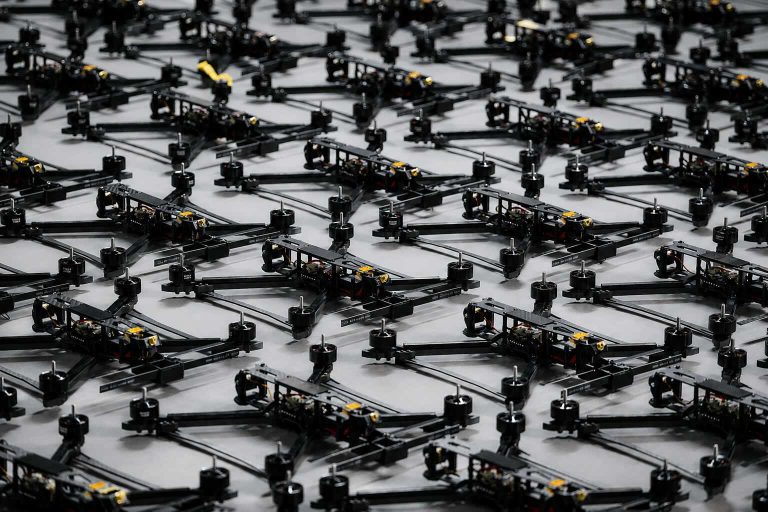
Uncertainty is itself operationally useful to an adversary. A cheap drone can force defenders to activate radars, divert aircraft, close routes and place personnel on alert. Those responses consume time and reveal procedures even when the drone carries no weapon.
Finland must also account for the danger of debris. Intercepting an aircraft over busy sea lanes or populated coastal areas may create a hazard different from allowing it to continue. Air-defence commanders need enough information to assess direction, altitude, speed and likely impact before selecting a response.
The temporary closure creates space for that assessment. It reduces the number of civilian aircraft and vessels that military sensors and operators must distinguish from a suspect contact. It also gives authorities greater freedom to act if an unidentified drone approaches sensitive territory.
Restrictions are nevertheless disruptive. Southern Finland contains important ports, commercial routes and air connections. Repeated closures could impose economic costs and produce public anxiety even if every incident ends without damage.
That is one reason NATO states have sought cheaper ways to detect and defeat small drones. A fast combat aircraft or advanced surface-to-air missile may be capable of destroying a drone, but the exchange can be financially absurd and equipment stocks are finite.
The war in Ukraine has repeatedly spilled across neighbouring airspace. Romania, Poland and the Baltic states have tracked or recovered drones and missile debris, while airports and military facilities across Europe have faced unexplained drone activity.
The Finnish incident differs in important respects. There is no public confirmation that the aircraft crossed the border or was launched as part of a Russian strike on Ukraine. Finland is much farther from the principal southern Ukrainian drone corridors that have affected Romania.
But the operational question is common: how should an alliance respond to an airborne object whose origin and intent are uncertain?
Defence Matters recently examined how repeated drone incursions led Romania to conduct a second shootdown inside NATO airspace. Finland’s closure represents a more precautionary stage of the same problem. Authorities are attempting to manage the battlespace before an interception becomes necessary.
Finland joined NATO in 2023 after Russia’s full-scale invasion of Ukraine overturned decades of military non-alignment. The country already possessed a strong territorial-defence tradition, large trained reserve and close familiarity with its eastern frontier.
Membership added collective-defence guarantees and deeper integration with allied air surveillance. It also made Finnish territory more explicitly part of NATO’s northern deterrence system.
The Gulf of Finland is particularly sensitive. It links Russian ports around St Petersburg to the Baltic Sea and lies between Finland and Estonia. Commercial shipping, military activity and critical undersea infrastructure occupy a confined maritime space.
A temporary restriction there therefore has alliance relevance even when it is taken under Finnish authority. Surveillance information may need to be shared quickly with Estonia and NATO commands, particularly if a contact changes course or disappears from one sensor picture.
The political temptation after any drone alert near Russia is to assume hostile intent. That would be premature without recovered wreckage, electronic data or a clear track.
Finland’s public communication should distinguish three questions: whether a drone was detected, whether it entered restricted or sovereign airspace, and whether there is evidence connecting it to a state actor. Combining them risks turning a safety measure into an unsupported accusation.
Moscow, for its part, may exploit ambiguity by denying responsibility or alleging provocation. Clear timelines and technical evidence are the best answer. Where security permits, authorities should explain when restrictions began, what area was affected and what ended the alert.
One incident does not establish a campaign. The more serious concern is repetition. An adversary able to trigger closures cheaply could test response times and impose a continuing burden without crossing the threshold of a conventional attack.
Finland and its allies therefore need layered detection and response: military radar, civilian air-traffic data, coastal surveillance, electronic sensors and the ability to use guns, jammers or interceptor drones where appropriate.
Rules of engagement must be clear enough for rapid decisions but cautious enough to protect civilian aircraft and shipping. Local commanders also need authority proportionate to the speed of the threat.
Tuesday’s restrictions may end as a minor precaution. They still demonstrate a broader change in European security. The effects of drone warfare are no longer confined to the battlefield or to states directly bordering Ukraine.
An unidentified object need not strike a target to alter activity inside NATO territory. It need only create sufficient doubt that authorities cannot safely continue as normal. Finland’s closure is the price of that doubt—and a warning that the northern flank will need to manage it repeatedly.