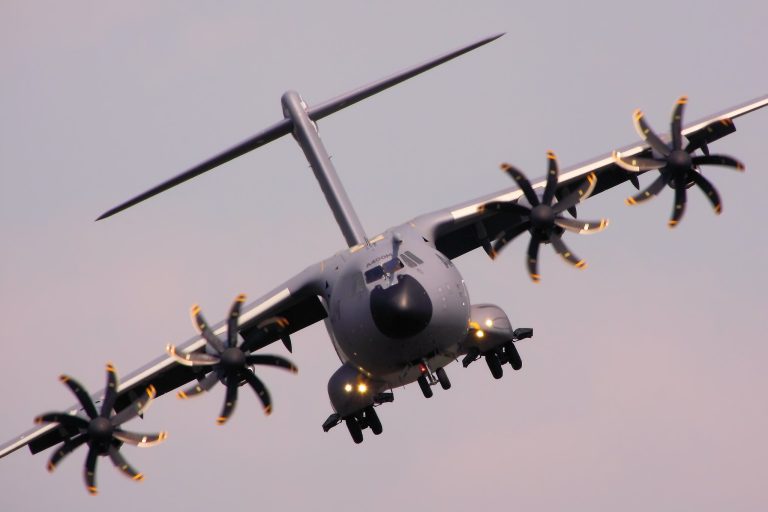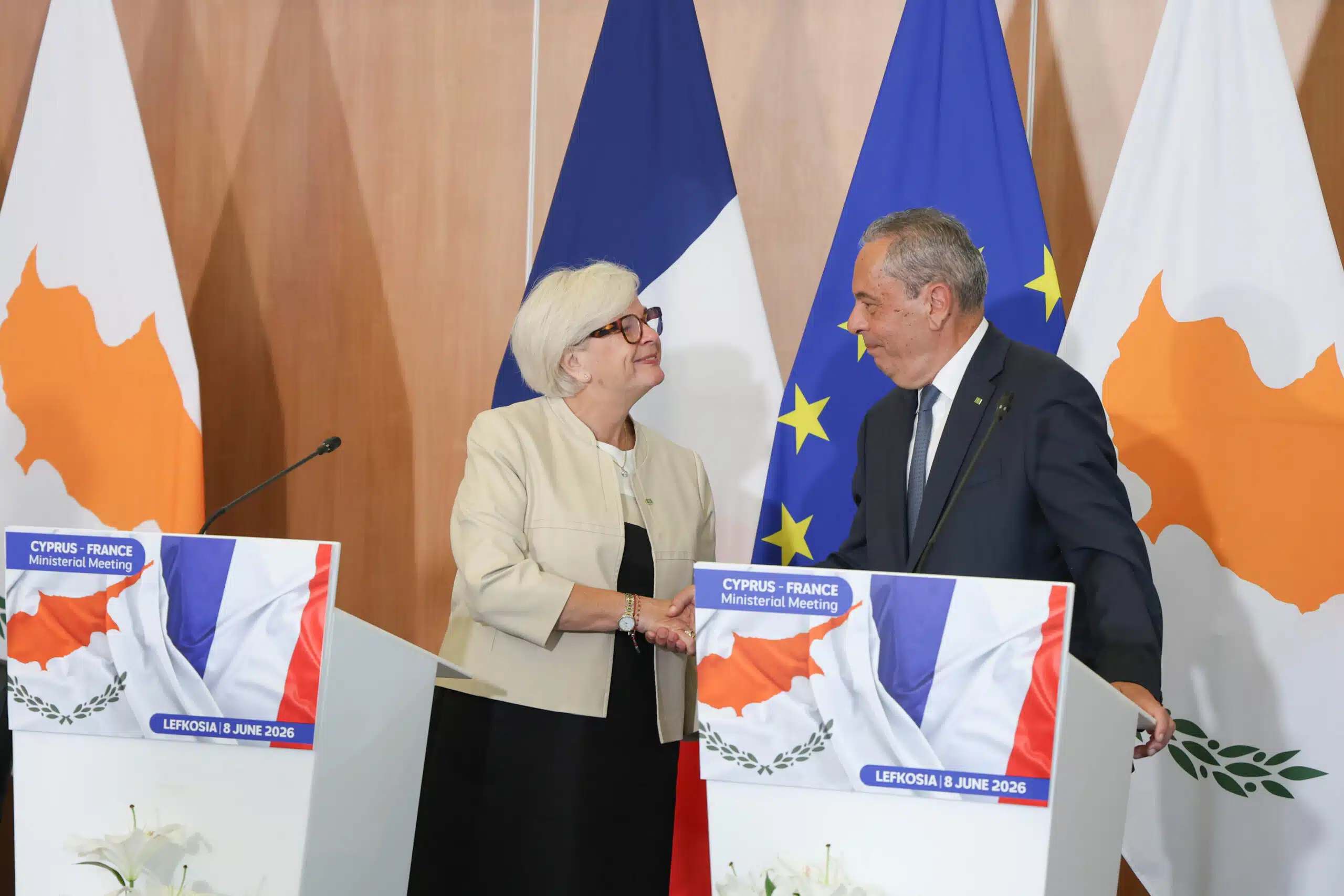
President Recep Tayyip Erdoğan said Turkey would give a “very clear” and “very strong” response to any move that threatened the rights of Turkey or Turkish Cypriots in the Eastern Mediterranean. His statement followed the signing of a Status of Forces Agreement between France and Cyprus, creating the legal framework for the presence and activities of French military personnel on the island.
For Nicosia and Paris, the agreement is presented as a defensive response to a deteriorating regional environment. Cyprus is no longer only a divided island at the edge of the European Union. It is increasingly exposed to the consequences of conflict in the Middle East, particularly because of the British sovereign base areas at Akrotiri and Dhekelia and the island’s proximity to Israel, Lebanon, Syria and the eastern Mediterranean theatre.
That exposure became clearer during the recent escalation involving Iran, Israel and the United States. The use of British-linked military infrastructure in the region, and the possibility that bases connected to Western operations could become targets, has forced Cyprus to reassess its own vulnerability. France has responded by positioning itself as a European security actor in the eastern Mediterranean, with President Emmanuel Macron arguing that an attack on Cyprus should be understood as an attack on Europe.
The French-Cypriot agreement therefore has two meanings. Formally, it strengthens bilateral defence co-operation between two EU member states. Politically, it signals that Paris wants to convert regional instability into a more visible French security role. This is where Ankara sees a direct challenge.
Turkey does not recognise the Republic of Cyprus as representing the whole island and remains the only state to recognise the Turkish Republic of Northern Cyprus. The United Nations Security Council has rejected the validity of the separate Turkish Cypriot state and called on other states not to recognise it. For Ankara, however, northern Cyprus remains a strategic foothold, a security commitment and a symbol of Turkish influence in the eastern Mediterranean.
The timing is also important. In October 2025, Turkish Cypriot voters elected Tufan Erhürman, a moderate figure associated with renewed interest in federal reunification talks. That result weakened the position of those advocating permanent partition and a two-state settlement, the formula favoured by Erdoğan. Turkey continues to insist that any future settlement must recognise Turkish Cypriot sovereignty and equality. A revived reunification process would reduce Ankara’s room for manoeuvre and could eventually undermine its military and political position on the island.
Seen from Ankara, the French move is not an isolated Cypriot matter. It forms part of a broader pattern in which France has attempted to project influence in regions where Turkey also seeks to act as a decisive power. The same rivalry is visible in the South Caucasus, where France has deepened its political and defence relationship with Armenia at a time when Yerevan is reducing dependence on Russia. That development has irritated both Azerbaijan and Turkey, whose strategic partnership has become a central element in the regional balance after the 2020 and 2023 conflicts over Nagorno-Karabakh.
France presents its engagement with Armenia as support for sovereignty and regional stability. Turkey and Azerbaijan view it differently: as an attempt by Paris to insert itself into a post-Russian security order in the South Caucasus and constrain Turkish-Azerbaijani leverage over the future of Armenia-Azerbaijan normalisation.
Cyprus now adds another layer to that competition. France’s presence on the island would strengthen the Paris-Nicosia-Athens axis and give the EU a more direct military-political stake in eastern Mediterranean security. For Turkey, this risks narrowing the space in which it has traditionally used naval power, energy claims, security guarantees and the Cyprus question to assert regional influence.
The crisis also intersects with Turkey’s worsening relations with Israel. Erdoğan has become one of Israel’s most outspoken critics, while Israel has sought to limit Turkish influence in the region, including over Gaza and wider eastern Mediterranean politics. Turkey’s position has been shaped in part by Ankara’s continued political engagement with Hamas, which remains designated as a terrorist organisation by the United Kingdom, the European Union and the United States.
The United States remains the external actor to whom all sides are compelled to look. Erdoğan, Macron and Benjamin Netanyahu each maintain their own relationship with President Donald Trump. Washington’s position on Iran, Israel and regional bases will affect the security calculations of every state involved. If US-Iran tensions continue to fluctuate between military confrontation and attempted diplomacy, Cyprus will remain exposed to risks that originate far beyond the island itself.
The result is a difficult diplomatic equation. Cyprus wants stronger protection. France wants a larger strategic role. Turkey wants to prevent any weakening of its position in northern Cyprus. Israel wants to limit hostile regional networks. Iran has shown that Western-linked military facilities can become part of its threat calculations. The United States remains central but unpredictable.
For Cyprus, this means that the island’s security is no longer defined only by the frozen conflict between Greek Cypriots and Turkish Cypriots. It is now tied to the future of European defence policy, Turkey’s regional ambitions, Iran’s confrontation with the West, Israel’s security doctrine and the declining ability of older diplomatic formulas to contain new military risks.
Erdoğan’s warning should therefore be read less as a reaction to one agreement than as a signal that Turkey sees the balance around Cyprus shifting. Whether that shift leads to deterrence, renewed diplomacy or another cycle of confrontation will depend on whether France, Turkey and the United States can prevent the island from becoming an arena for their wider rivalries.