The figure has not yet been confirmed in a formal Ukrainian government request, but the reported plan comes as Kyiv is placing drones, air defence, interceptor production and long-range strike capabilities at the centre of its military requirements. It also comes as European governments are being asked to increase their own defence spending while maintaining the flow of weapons, ammunition and financing to Ukraine.
The military logic is straightforward. Russia continues to use missiles, glide bombs and mass drone attacks against Ukrainian cities, infrastructure and frontline positions. Ukraine, in turn, has expanded its own drone and long-range strike campaign against Russian logistics, air defence, fuel infrastructure and military-industrial targets. The result is a war in which comparatively low-cost systems can impose high costs on the opponent, but only if they are produced and supplied in sufficient numbers.
President Volodymyr Zelenskyy has presented Ukraine’s unmanned systems as a permanent part of the country’s defence posture. On 11 June, he established an annual Day of the Unmanned Systems Forces, marking the role of Ukraine’s drone units in the war. He also said that Ukrainian unmanned systems had inflicted nearly $40bn in damage on Russian targets over the past year. That figure cannot be independently verified in full, but it shows how Kyiv now frames unmanned warfare: not as a supporting capability, but as a strategic instrument.
The funding issue is therefore not simply about replacing lost equipment. Ukraine needs money for air defence interceptors, drones, electronic warfare, long-range strike systems, spare parts, ammunition, repair capacity and co-production with allies. The scale of the requirement shows how military assistance has moved from emergency deliveries of existing stockpiles to a longer-term test of allied industrial capacity.
That shift is already visible in the available data. The Kiel Institute’s latest Ukraine Support Tracker, updated in June, found that European states had maintained military support at a high level and had expanded drone-related aid allocations in particular. Financial and humanitarian commitments, by contrast, slowed in the first four months of 2026, partly because of delayed EU funding.
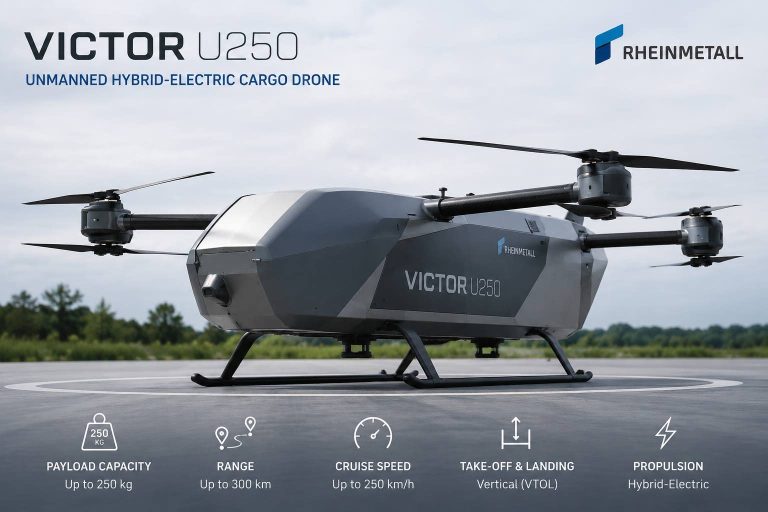
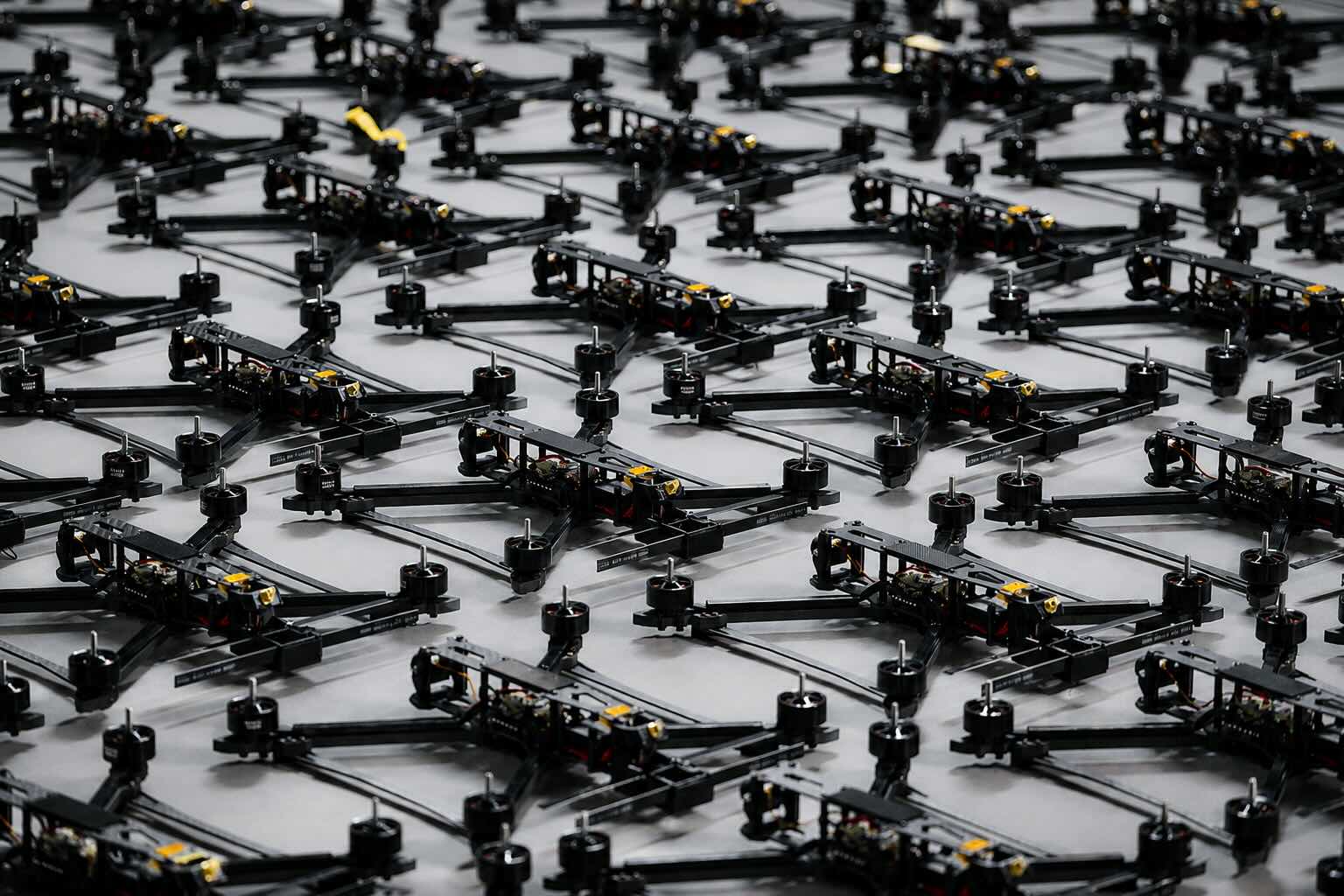
The same trend points to a broader conclusion. Ukraine’s partners increasingly understand drones as one of the most cost-effective ways to sustain Kyiv’s battlefield position. But drone warfare is not cheap when conducted at scale. It requires components, software, operators, secure production sites, launch systems, testing capacity and rapid adaptation to Russian electronic warfare.
The United States remains part of the calculation, although its role has become less predictable. On 11 June, the US Senate Armed Services Committee approved a provision in its version of the National Defense Authorization Act to authorise $750m for the Ukraine Security Assistance Initiative. The measure would fund weapons for Ukraine through US industry and would also bar the use of authorised funds for any activity recognising Russian sovereignty over Ukraine’s internationally recognised territory.
The bill is not yet law. It still has to pass through Congress and be reconciled with the House version before reaching the White House. But the provision indicates that congressional support for Ukraine has not disappeared, even as the pace and profile of American military assistance have changed.
For Europe, a further Ukrainian funding request would sharpen an existing dilemma. European capitals want to reduce dependence on US weapons and rebuild their own defence-industrial base. At the same time, Ukraine still needs systems that Europe either cannot produce quickly enough or cannot produce in adequate numbers. Patriot interceptors, advanced air defence components, precision munitions and some aircraft-related supplies remain areas where US capacity is difficult to replace.
That dependency matters politically. If Europe promises Ukraine long-term security support but cannot provide the systems Kyiv needs most urgently, the credibility of European defence policy will suffer. If it relies too heavily on US equipment, it remains exposed to changes in Washington. The issue is not simply how much money is pledged, but whether that money can be converted into usable capability at the required speed.
The recent London meeting between Zelenskyy, Keir Starmer, Emmanuel Macron and Friedrich Merz showed where the allied debate is heading. The leaders discussed the need to expand air defence, interceptor production and deep-strike capabilities. That agenda is likely to feed into G7 and NATO discussions, where Kyiv will seek not only political declarations but firm commitments.
Ukraine’s own drone campaign is also changing the argument. Its commander, Robert Brovdi, known as “Madyar”, has described efforts to use drones to isolate Crimea by targeting Russian military routes and infrastructure. His approach reflects a wider shift in the war: drones are now being used not only to hit individual targets, but to pressure logistics, air defence networks and Russian military movement across occupied territory.
The challenge for Kyiv is that the war has become both more technological and more industrial. Ukrainian drones can reach targets once considered beyond the range of conventional battlefield weapons. They can disrupt logistics, damage oil infrastructure and force Russia to divert resources to air defence. But the same trend also creates constant demand for components, software, operators and secure supply chains.
For allies, the choice is increasingly practical. Ukraine does not need symbolic pledges or another general declaration of support. It needs air defence systems that can protect cities, interceptors that can be replaced faster than they are fired, drones that can be produced at scale, and financing that allows procurement to be planned months ahead.
A further $20bn request, if formally confirmed, would therefore be more than another entry in the military aid ledger. It would test whether Ukraine’s partners can turn continuous political and military support into sustained defence production at the scale required. In a war now shaped by drones, missiles, air defence and logistics pressure, the central question is no longer only whether allies support Ukraine. It is whether they can supply it at the speed the war now demands.