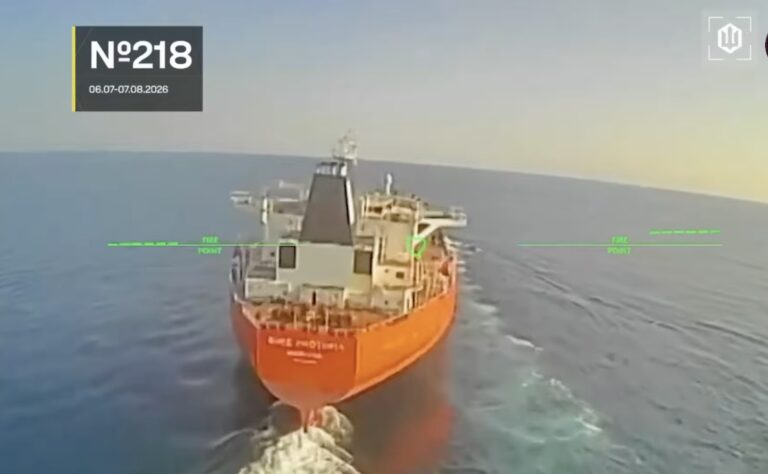
Russian-installed authorities in Crimea have suspended civilian fuel sales after Ukrainian attacks on supply routes and energy facilities, suggesting Kyiv's strike campaign is producing visible logistics effects in the peninsula.
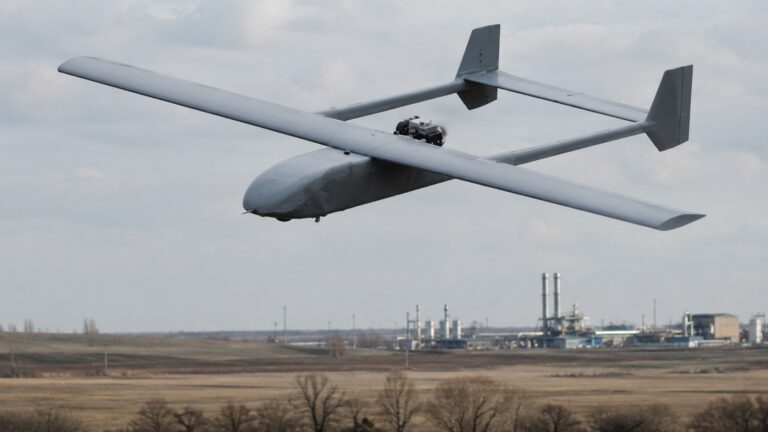
Russian-installed authorities in occupied Crimea have suspended fuel sales to the public and businesses after Ukrainian attacks on supply routes and energy facilities, turning Kyiv’s drone campaign from a sequence of strikes into a visible logistics problem for Moscow.
EU Global reported on 21 June that authorities in Russian-occupied Crimea had halted civilian gasoline sales, limiting fuel to government agencies after Ukrainian attacks on fuel infrastructure.
The new restriction matters because it shows effect, not only impact. A drone strike can be disputed, downplayed or absorbed. A fuel halt across Crimea is harder to dismiss. It signals that Ukraine’s campaign against energy nodes, ferry routes, road links and logistics infrastructure is beginning to impose practical disruption on the peninsula.
Ukraine has repeatedly targeted Russian-controlled Crimea because the peninsula remains central to Moscow’s southern military posture. It supports the Black Sea Fleet, air-defence networks, logistics to occupied southern Ukraine, and supply lines toward Zaporizhzhia and Kherson.
The fuel halt shows why that geography matters. Crimea is not self-sufficient. It depends on supply routes across the Kerch Strait and through occupied southern Ukraine. When those routes are hit, the effect is not limited to a damaged depot or a temporary bridge closure. Fuel availability, transport, public services and military logistics all become connected.
Business Insider reported that the fuel cuts follow earlier rationing and come as Ukraine uses mid-range drones to disrupt roads, bridges and ports. Le Monde described a broader Ukrainian effort to isolate Crimea through strikes on fuel depots, railway hubs, bridges and transport routes.
That is the operational significance. Ukraine is not only hitting targets. It is trying to change the daily logistics equation for Russian-controlled Crimea.
Fuel is the most visible logistics commodity because it touches almost everything. Military convoys, air-defence patrols, emergency services, port operations, generators, civilian transport and construction all require it.
If fuel is restricted to government agencies, Russian-installed authorities are implicitly prioritising official and security needs over civilian and business demand. That does not prove a complete military fuel crisis. It does show that available supply is tight enough for the occupation administration to impose emergency control.
For Russia, the problem is not only the quantity of fuel. It is predictability. If fuel deliveries become uncertain, commanders and administrators must hold larger reserves, slow non-essential movement and protect convoys more heavily. That makes every movement more expensive and more visible.
Crimea’s strategic value has always rested on access. The peninsula gives Russia a Black Sea naval base, airfields, ports and a southern bridgehead. But its vulnerability is that access can be narrowed.
Ukraine has targeted the Kerch Bridge before, and recent attacks have again placed pressure on transport routes around the strait. The overland route through occupied southern Ukraine is also vulnerable to strikes on bridges, roads, ferries and fuel convoys.
Defence Matters recently examined how Ukraine’s Tyumen refinery strike extended pressure on Russia’s energy depth. The Crimea fuel halt is the other side of the same campaign. Tyumen is about reach deep inside Russia. Crimea is about turning strikes into a local supply squeeze around a militarily vital territory.
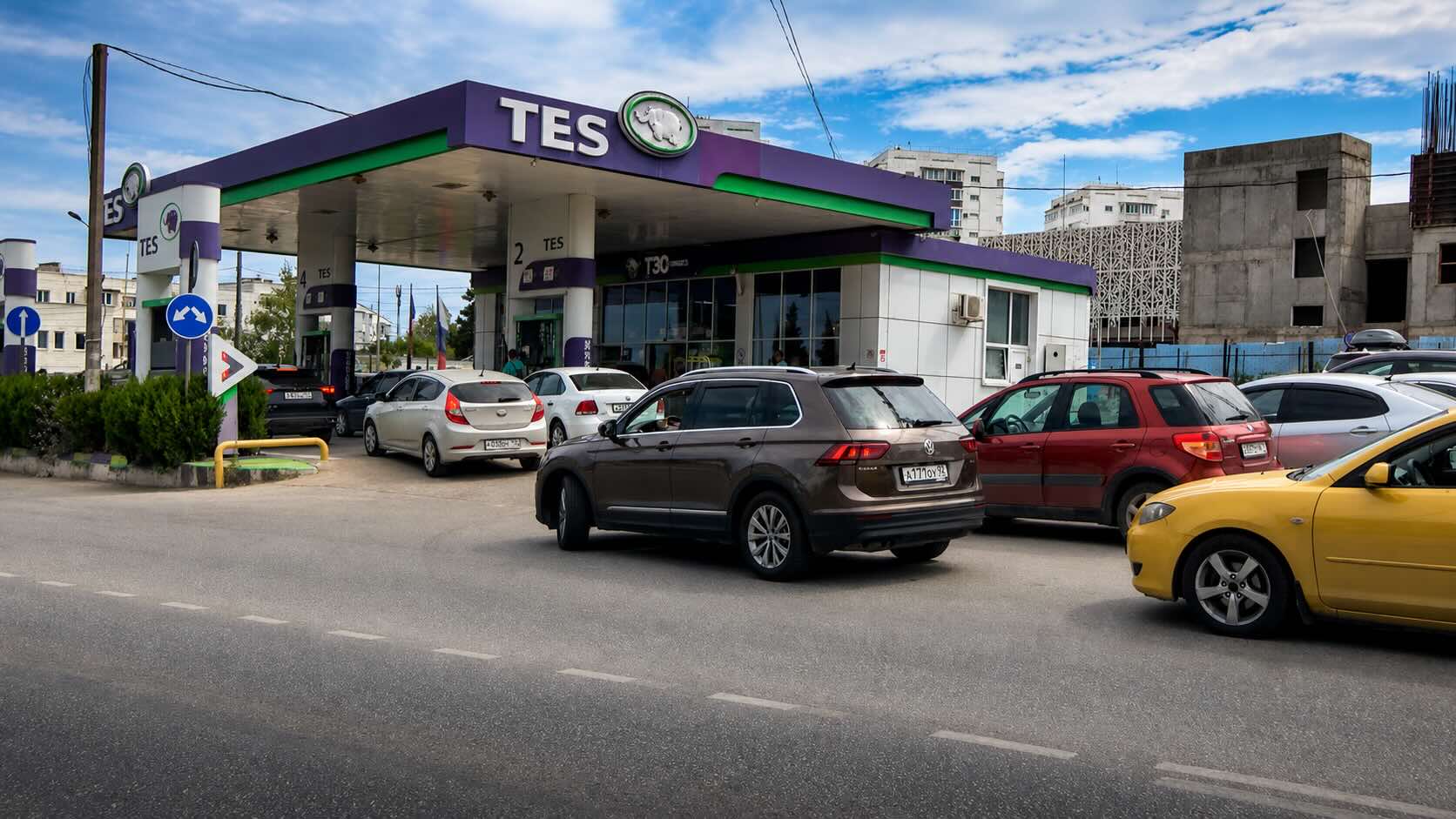
The civilian consequences are politically sensitive. Fuel restrictions affect residents, businesses, tourists and services inside occupied Crimea. The measure followed earlier rationing, queues and panic buying. The Guardian’s Ukraine war briefing noted social-media requests for fuel and reports of fuel being sold at high prices.
For Ukraine, the campaign is framed as pressure on Russia’s war infrastructure and logistics. President Volodymyr Zelenskyy has described strikes on Russian energy infrastructure as “long-range sanctions”. The military logic is clear: make occupied Crimea harder and more expensive for Russia to sustain.
But the civilian layer will be used by Moscow in information operations. Russia will present the fuel crisis as Ukrainian attacks on civilians. Kyiv will argue that the occupation and militarisation of Crimea created the target environment. That contest over narrative will run alongside the practical logistics contest.
Fuel restrictions also affect public confidence. When authorities suspend civilian fuel sales, cancel events, reduce services or ask residents to rely on official information, they signal that the situation is no longer routine.
That matters in occupied territory. Crimea has been presented by Moscow as a secure and permanently integrated part of Russia since the 2014 annexation. Repeated fuel disruptions undermine that image. They show residents and Russian domestic audiences that the peninsula remains part of the war zone.
For Russian forces, morale and administrative stability are not separate from logistics. A territory under constant drone pressure, fuel scarcity and transport disruption is harder to use as a stable rear area.
The next indicators will be practical. Do fuel sales resume quickly, or remain restricted? Are government agencies the only priority customers? Do convoys require heavier air-defence protection? Are ferry services, bridge crossings or rail movements repeatedly interrupted? Do shortages spread from fuel to food, electricity and port operations?
Those indicators will show whether Ukraine’s campaign is creating temporary inconvenience or sustained operational pressure.
The Crimea fuel halt does not mean Russian logistics are collapsing. Moscow can reroute supplies, deploy repairs, use military reserves and impose stricter controls. But each workaround has a cost.
That is why the fuel suspension matters. It is a visible sign that Ukraine’s drone campaign is no longer measured only by explosions. It is being measured by what Russia-controlled Crimea can no longer do normally.