The detentions followed arrest orders issued by prosecutors for 241 suspects. The operation targeted people alleged to have links to extremist organisations, including Islamic State and the Revolutionary People’s Liberation Party/Front, known in Turkey as DHKP-C. According to details of the Ankara operation, raids were continuing after the initial arrests as authorities sought the remaining suspects.
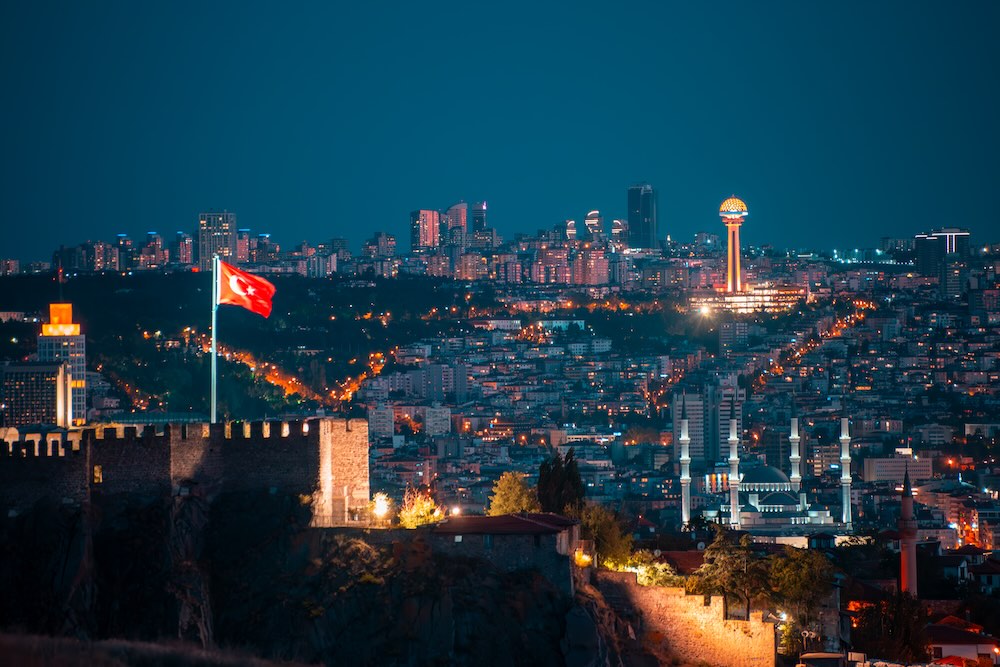
Among those detained were 56 suspected Islamic State members and 35 alleged members of DHKP-C. The timing gives the operation wider significance. NATO leaders are due to meet in Ankara on 7 and 8 July, with the summit scheduled to take place at the Beştepe Presidential Compound. The event is expected to bring the leaders of all 32 allies to the Turkish capital, including US President Donald Trump.
The raids do not in themselves indicate an identified plot against the summit. Turkish authorities regularly conduct counter-terrorism operations, and large events routinely lead host governments to increase security sweeps, movement restrictions and surveillance. But the scale of the detentions, and their proximity to the summit, mean the security environment around the meeting will now form part of the wider political context in which the alliance gathers.
Turkey had already prepared extensive protective measures for the summit. Demonstrations are expected to be banned in key areas, access to some roads leading to airports will be restricted, and parts of the city around summit venues and hotels used by delegations will be sealed off. NATO has also advised accredited media that many roads in Ankara will be closed for security reasons on 7 and 8 July, with access to the international media centre available only through official shuttles.
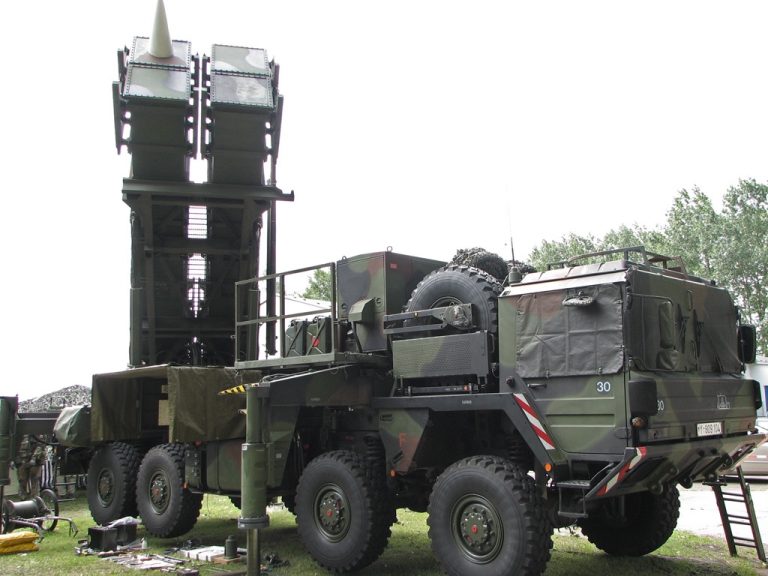
Additional security planning has included airspace and road controls, with Turkish reporting citing air-defence systems, F-16 patrols and restrictions across parts of the capital during the two-day meeting. Such measures are not unusual for a high-level summit, but they underline the operational burden facing the host country.
For NATO, the summit comes at a sensitive point. The alliance is under pressure to show unity on Ukraine, defence readiness and the distribution of military responsibility between the United States and European allies. Turkey’s role as host is also politically significant. Ankara remains one of NATO’s most important but often difficult members, combining a central position on the Black Sea, close relations with Ukraine, working channels with Russia, and recurring disputes with several Western allies.
The immediate security issue therefore sits inside a broader NATO problem. Summit security is not only a matter of protecting leaders during a two-day meeting. It is also about the alliance’s ability to project control, coordination and political coherence at a time when hostile states and non-state actors have incentives to exploit disruption, embarrassment or division.
Large multilateral summits create particular vulnerabilities. They concentrate heads of government, senior military officials, diplomatic delegations, intelligence services, journalists and protest activity in one city. They also create predictable movement patterns, known hotel zones, media compounds and transport corridors. Even when no specific threat is publicly confirmed, the security burden on the host country is substantial.
The Ankara operation also highlights Turkey’s continuing exposure to multiple internal security threats. Islamic State has carried out deadly attacks in Turkey in the past, including the 2017 Istanbul nightclub shooting. DHKP-C has also been linked to armed attacks and assassinations. Ankara’s counter-terrorism posture is therefore shaped not only by the summit, but by a long-running domestic security environment.
That context matters for NATO because Turkey’s security position is central to the alliance’s southern flank. The country borders Syria and Iraq, controls access to the Black Sea through the Turkish Straits, hosts important NATO-related infrastructure, and remains a key actor in migration, counter-terrorism and regional diplomacy. Instability in Turkey is not a peripheral concern for the alliance; it directly affects NATO’s operating environment.
The summit itself is expected to focus heavily on defence readiness and alliance burden-sharing. European members face continuing pressure to increase military spending, expand production capacity and reduce dependence on US capabilities. Ukraine will also remain central to discussions, particularly as allied governments consider how to sustain long-term support while managing domestic budget pressures.
Against that backdrop, the Ankara raids introduce a different but related question: whether NATO’s political agenda can proceed without being overshadowed by security risks in the host city. That does not mean the summit is under threat. It does mean the Turkish authorities will face close scrutiny over how they manage access, public order and counter-terrorism measures while hosting one of the most visible diplomatic events of the year.
There is also a political sensitivity for Turkey. Ankara will want the summit to reinforce its status as an indispensable NATO member. A smooth event would allow President Recep Tayyip Erdoğan’s government to present Turkey as a central security actor at a time when Europe is reassessing defence, deterrence and regional resilience. A security incident, by contrast, would carry reputational consequences beyond Turkey’s domestic politics.
For allies arriving in Ankara, the raids are unlikely to change the formal summit agenda. They will, however, sharpen attention on the practical security arrangements around the meeting. The key test for Turkey will be whether it can manage the summit without disruption while balancing high security with the visibility expected of a major NATO gathering.
The arrests also underline a wider point about the alliance’s current operating environment. NATO summits are no longer only diplomatic set pieces. They are potential targets for political pressure, hostile messaging, cyber activity, protest mobilisation and physical security threats. That reality makes host-nation preparation part of the strategic picture.
The Ankara summit was already expected to test NATO unity. The latest raids show that it will also test Turkey’s ability to secure the alliance’s most important annual gathering at a time when the boundary between domestic security and collective defence is increasingly difficult to separate.