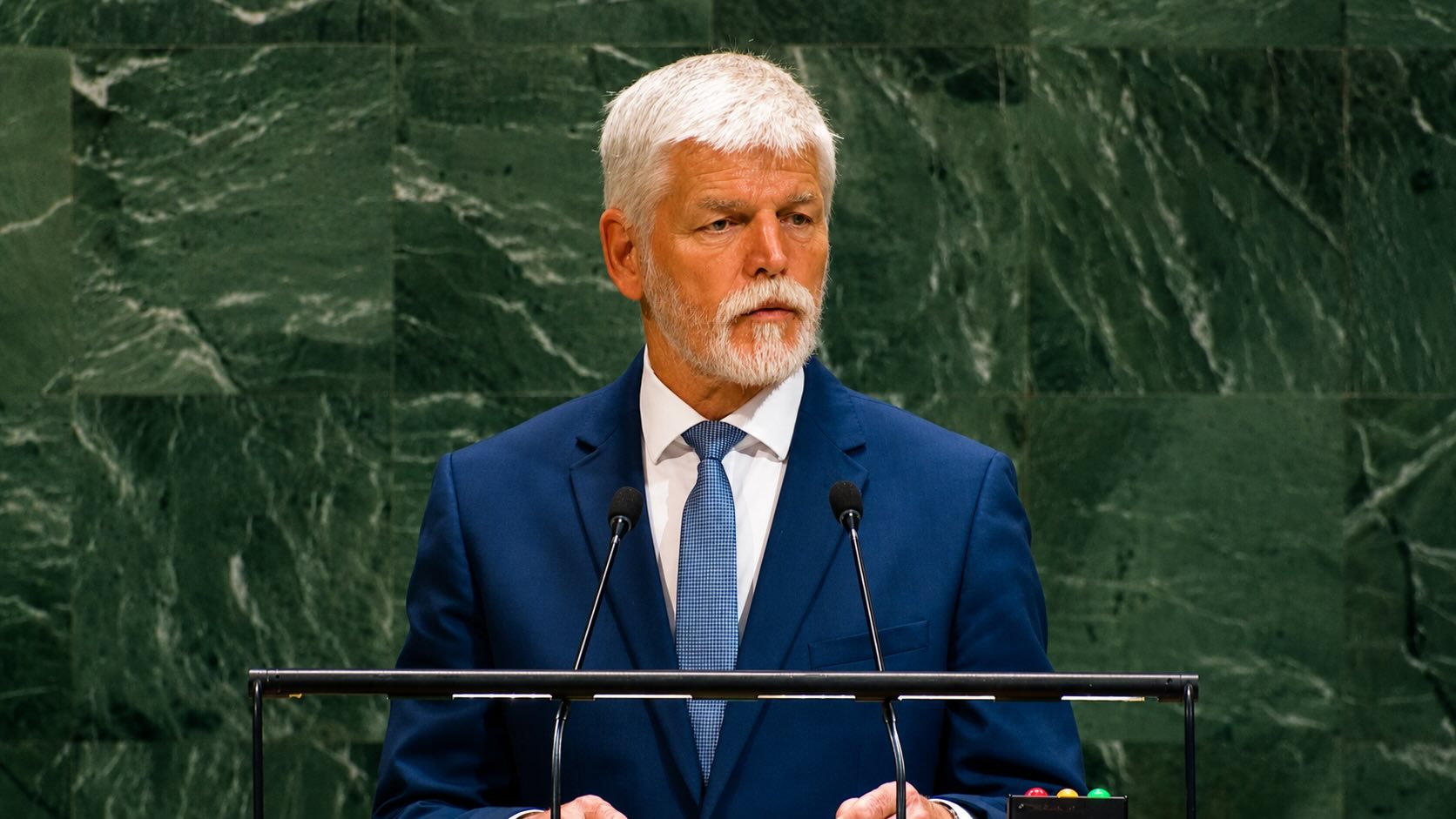
The case concerns the Czech delegation to the NATO summit in Ankara on 7–8 July. Pavel, a former chief of the Czech general staff and former chairman of NATO’s Military Committee, had sought to lead the delegation. The government of Prime Minister Andrej Babiš decided instead that the delegation would be led by the cabinet, excluding the president.
The presidential office said on Tuesday that Pavel had turned to the Constitutional Court in a dispute over the scope of his authority. The court has confirmed receipt of the complaint, but it is not clear whether it will rule before the summit takes place.
The immediate question is procedural: whether the Czech head of state or the government should represent the country at a NATO summit. The wider issue is more consequential. The dispute comes at a time when NATO members are under renewed pressure over defence spending, long-term support for Ukraine and the distribution of responsibility between European allies and the United States.
Pavel has argued that his exclusion breaks with established practice. Czech presidents have traditionally represented the country at NATO summits, with only limited exceptions. The government maintains that foreign and defence policy falls within its constitutional authority and that the cabinet must be able to defend its own position at the summit, including on defence expenditure.
That distinction matters because Prague is not entering the Ankara meeting with a settled defence-policy position. The Czech Republic has already come under scrutiny after the government acknowledged that it would again miss NATO’s two per cent defence-spending target, while aiming to meet it from 2027. The issue is politically sensitive because NATO allies have been moving towards higher spending commitments after Russia’s full-scale invasion of Ukraine and amid uncertainty over future US force posture in Europe.
Pavel has been one of the clearest Czech advocates of military support for Ukraine. His presidency has been associated with Prague’s artillery ammunition initiative, designed to source shells for Kyiv from outside Europe. Babiš’s government has taken a more cautious line on some Ukraine-related commitments and has faced criticism over defence budget choices.
The result is that the NATO delegation dispute is not simply a contest over protocol. It reflects a deeper argument about who speaks for the Czech Republic on security policy, how strongly Prague should align itself with Ukraine’s war effort, and how it should respond to alliance pressure on defence spending.
The timing gives the dispute additional weight. NATO summits are used by heads of state and government to set political direction for the Alliance. The Ankara meeting is expected to address burden-sharing, deterrence, defence-industrial capacity and support for Ukraine. A constitutional argument inside an eastern-flank member state therefore has relevance beyond Prague.
For allies, the practical issue is clarity. NATO functions through national commitments made by governments, but presidents and heads of state often play a central role in representing strategic continuity. In the Czech case, the president has military and alliance credentials that are unusually strong. Pavel chaired NATO’s Military Committee from 2015 to 2018, giving him a profile inside the alliance that extends beyond domestic Czech politics.
The government’s position is also not without constitutional logic. Cabinets are politically accountable for budgets, procurement, international commitments and the implementation of alliance obligations. If the government must defend its spending plans and policy line, it can argue that it should lead the delegation.
The court case will therefore test an unresolved boundary in Czech foreign-policy practice. A ruling before the Ankara summit would clarify who has the authority to represent the country in the immediate term. A delayed ruling would leave the dispute politically unresolved while the summit proceeds.
Either outcome carries risk. If the president is excluded, allies will see a visible split between Prague’s head of state and government before a major NATO meeting. If the court intervenes quickly, the legal ruling itself could become part of the summit’s political context.
For the Czech Republic, the dispute is also a question of credibility. At a time when NATO is asking members to raise defence capacity and sustain support for Ukraine, internal disagreement over representation can obscure the country’s strategic message. The issue is not whether Prague remains inside the alliance consensus. It is whether its national position is presented with the clarity expected at a summit dealing with war, deterrence and future defence spending.
The constitutional complaint may appear narrow. In practice, it exposes a wider problem facing several European allies: domestic political conflict is increasingly intersecting with NATO planning, Ukraine policy and defence-budget commitments. In Prague, that intersection has now reached the country’s highest court.