KNDS's planned Frankfurt-Paris listing would turn Europe's rearmament cycle into a capital-markets test, exposing how far governments are willing to mix private money with state control over strategic defence manufacturers.
KNDS’s planned Frankfurt-Paris listing would turn Europe’s rearmament cycle into a capital-markets test, exposing how far governments are willing to mix private money with state control over strategic defence manufacturers.
KNDS’s planned dual listing in Frankfurt and Paris is set to turn Franco-German rearmament into a market test, moving Europe’s defence debate from budget pledges into ownership, valuation and control of strategic manufacturers.
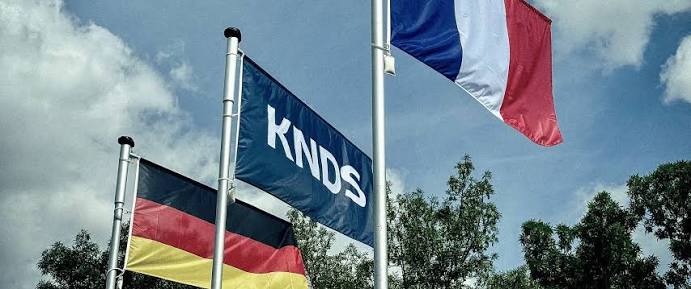
Reuters reported on 24 June that KNDS, the maker of the Leopard 2 tank and Caesar howitzer, is preparing an initial public offering expected to value the group at about €15 billion. The listing would take place across Frankfurt and Paris, reflecting the company’s Franco-German structure and the political sensitivity of any shift in control.
The significance is not simply that another defence company may go public during a rearmament cycle. KNDS sits at the centre of European land warfare capability. Its products are tied to Ukraine support, NATO eastern-flank readiness, artillery demand, tank modernisation and the future of Franco-German defence cooperation.
That makes the proposed IPO a test of whether Europe can use capital markets to strengthen defence production without losing political control over companies now treated as strategic assets.
Europe’s defence spending surge has created a new financial environment for manufacturers. Governments are increasing procurement budgets, NATO allies are under pressure to meet higher spending targets, and the war in Ukraine has exposed shortages in ammunition, artillery, armoured vehicles and air defence.
For companies such as KNDS, that environment creates demand certainty but also investment pressure. Expanding production lines, hiring skilled workers, securing supply chains and developing new platforms require capital. A public listing can provide access to money at scale, while giving investors exposure to Europe’s rearmament cycle.
But defence is not a normal industrial sector. A company that builds main battle tanks and artillery systems cannot be treated like a consumer manufacturer. Its ownership structure, export approvals, production priorities and technology partnerships are inseparable from state policy.
That is why the KNDS IPO matters. It asks whether Europe can mobilise private capital for defence while preserving the government influence needed to protect national security interests.
The proposed valuation reflects how sharply investor expectations around European defence have changed since 2022. Land systems, once seen as slow-growth and politically constrained, are now central to NATO planning. Ukraine’s battlefield has shown that tanks remain vulnerable but not obsolete, while artillery and ammunition demand have returned to the centre of military procurement.
The Financial Times has reported on KNDS’s planned listing and ownership questions. Those details matter because the IPO is more than a fundraising exercise. It is also a control question.
Governments want production capacity, surge ability and export influence. Investors want growth, margins and predictability. Those interests can align during a defence boom, but they are not identical. If demand later slows, if exports become politically sensitive, or if governments demand rapid output at constrained prices, tensions may emerge.
For France and Germany, those tensions are especially acute. KNDS was created by combining France’s Nexter with Germany’s Krauss-Maffei Wegmann, making it a symbol of Franco-German defence-industrial cooperation. Any listing has to balance Paris, Berlin, private shareholders and market expectations.
Reuters reported that the IPO process may require political and parliamentary approval. That is not a formality. Defence ownership is now part of Europe’s sovereignty debate, and governments are unlikely to let strategic manufacturers shift structure without scrutiny.
Germany’s planned role is particularly important. Defence Matters has previously noted that Germany’s interest in a KNDS stake signalled a new phase in Europe’s rearmament debate, where governments are not only buying equipment but also seeking leverage over the companies that build it. The IPO would take that logic further by adding public investors to a sector in which state influence remains decisive.
Germany’s KNDS Stake Signals a New Phase in Europe’s Rearmament Debate
This is the difference between defence spending and defence power. Announcing higher budgets is one thing. Controlling production capacity, industrial priorities and export pathways is another.
KNDS is also linked to wider European procurement politics. The Leopard 2 remains one of Europe’s most important tank platforms, while the Caesar has become a key symbol of mobile artillery demand after Ukraine’s battlefield experience. Future land warfare planning will depend on whether European manufacturers can produce at speed and scale.
The IPO would arrive at a delicate moment for Franco-German defence cooperation. Europe has already seen strains in major joint projects, including the Main Ground Combat System and future combat aircraft programmes. Defence Matters recently examined how France may quit the Franco-German tank project as Europe’s defence cooperation strains further, a warning that industrial rivalry and national control disputes remain unresolved.
KNDS therefore occupies an uncomfortable position. It is both a company seeking capital and a political instrument expected to support European strategic autonomy. The IPO may strengthen it financially, but it will also expose the group to investor scrutiny, market volatility and questions over how much control governments should retain.
For European defence planners, that is the larger lesson. Rearmament is no longer only a matter of defence ministries placing orders. It is becoming a question of industrial balance sheets, shareholder structures, state stakes and capital allocation.
If the KNDS listing succeeds, it could become a model for using public markets to finance defence expansion while keeping strategic control anchored in Europe. If it stalls over valuation, parliamentary concerns or state-control disputes, it will show how difficult that balance remains.
Either way, the IPO would mark a shift in Europe’s rearmament cycle. The debate is moving from whether governments will spend more to who owns the companies that turn that spending into military capability.