A disposal could attract strategic buyers to a scarce portfolio of naval and weapons-related manufacturing, while placing ownership, security and programme continuity under close British scrutiny.
The discussions come as European governments expand military spending and defence suppliers command stronger valuations. Goodwin has not announced an agreed transaction, named a buyer or confirmed a formal sale process in a regulatory filing. Any outcome, including retaining the operation, therefore remains possible.
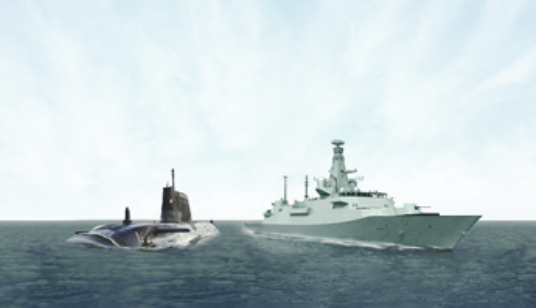
The attraction is clear. Goodwin’s specialised foundry, machining and engineering capabilities serve programmes with demanding technical specifications and long production cycles. Its own disclosures have identified exposure to the UK’s Dreadnought and Astute-class submarines, the US Virginia and Columbia-class submarines, Type 26 and DDG frigates, and the Ford-class aircraft-carrier programme.
That programme list also explains why a sale would be more than an ordinary industrial divestment. A change of control could be examined for its consequences for classified work, export controls, supply resilience and the delivery of equipment central to British and allied naval planning.
Defence manufacturers have spent years increasing capacity after Russia’s invasion of Ukraine exposed depleted inventories and production bottlenecks. Governments now want more missiles, ships, armoured vehicles and ammunition, but adding qualified suppliers to tightly controlled programmes takes time.
Goodwin’s value lies partly in those barriers to entry. Components for nuclear-powered submarines and advanced surface ships must meet exacting material, traceability and quality requirements. Customers cannot necessarily replace a proven supplier quickly, even where another company possesses broadly similar machinery.
The group describes its defence operation as producing high-integrity castings, machined products and systems for naval, land and air applications. Its official defence overview presents the business as a long-established supplier rather than a recent entrant seeking to benefit from the spending cycle.
That position may interest larger defence primes, specialist engineering groups and private-equity investors seeking exposure to funded programmes. It does not guarantee a premium sale. Prospective buyers would have to assess capital requirements, customer approvals, contractual restrictions and the risk that governments change schedules or budgets.
The experience of other European suppliers shows how rapidly strategic manufacturing assets have become more valuable. Defence Matters recently examined the planned acquisition of Czech explosives producer Explosia amid Europe’s defence expansion, another case in which industrial capacity matters as much as near-term earnings.
Goodwin’s previous official results connected its products with some of the most politically sensitive procurement programmes in the UK and United States. The Dreadnought class will carry Britain’s nuclear deterrent, while Astute boats form the Royal Navy’s nuclear-powered attack-submarine fleet. Columbia-class submarines will perform the equivalent strategic role for the United States.
Those references do not establish the value or precise contractual status of every current order. Defence supply chains can contain several tiers, and a company may provide parts to a prime contractor rather than contract directly with a ministry. They do establish why customers would want assurance that capacity, personnel and intellectual property remained available after any transaction.
Programme continuity would be central to due diligence. A buyer may inherit long delivery schedules, qualification duties and liabilities that cannot be separated easily from the people and facilities that support them. Customers may also possess consent rights or require a supplier to repeat approvals following a change in ownership.
The commercial case will therefore depend on more than the current defence boom. Buyers must judge the durability of order books, achievable margins, working-capital needs and the cost of expanding output without compromising quality.
A proposed acquisition could fall within the scope of the UK’s National Security and Investment Act, particularly if the target activities involve defence, military and dual-use technologies or other specified sectors. The law allows ministers to examine qualifying transactions and, where necessary, impose conditions or block a deal.
Whether notification would be mandatory, and what conditions might follow, would depend on the structure of the sale, the activities transferred and the identity of the buyer. No public evidence indicates that the government has opened a review, and it would be premature to describe intervention as certain.
A foreign purchaser would probably draw the most political attention, but nationality alone would not settle the assessment. Ministers would consider control, access to sensitive information, the security of facilities and the buyer’s connections. A British buyer could also face scrutiny if a transaction created a supply-chain vulnerability or raised other national-security concerns.
Separately, US programme exposure could bring American export-control, security or customer-consent requirements into the process. These are not necessarily barriers to a sale; international defence groups routinely operate under such restrictions. They can, however, narrow the pool of credible bidders and lengthen a timetable.
Goodwin is a diversified engineering group. Selling one operation requires a clear boundary around assets, employees, contracts, intellectual property and shared services. Defence and civil work may use common foundry or machining capabilities, making a clean separation more complicated than the description “defence business” suggests.
A strategic acquirer might accept those links and purchase a broader collection of assets. A financial buyer might prefer a self-contained unit with independent management and accounts. The eventual perimeter, if a process advances, will help determine both valuation and regulatory treatment.
Investors should also distinguish press reporting about exploratory work from a board-approved disposal. The Financial Times report is the original account of the potential sale, but Goodwin’s public regulatory announcements have not disclosed a transaction.
For the moment, the strategic logic is easier to see than the deal itself. Governments want greater defence output, qualified manufacturing capacity is scarce, and Goodwin supplies programmes at the heart of allied naval power. Those features could produce serious buyer interest.
They also ensure that price will not be the only consideration. Any credible proposal would have to preserve delivery, protect sensitive knowledge and satisfy governments on both sides of the Atlantic. Until Goodwin announces a formal process or agreement, the possible sale remains an exploration rather than a concluded corporate event.