Italy's signal that Canada, Germany and Saudi Arabia could join GCAP shows that Europe's next-generation fighter politics are shifting after Franco-German cooperation faltered.
Italy’s suggestion that more countries could join the Global Combat Air Programme has turned the UK-Italy-Japan fighter project into a test of Europe’s changing defence-industrial alliances.
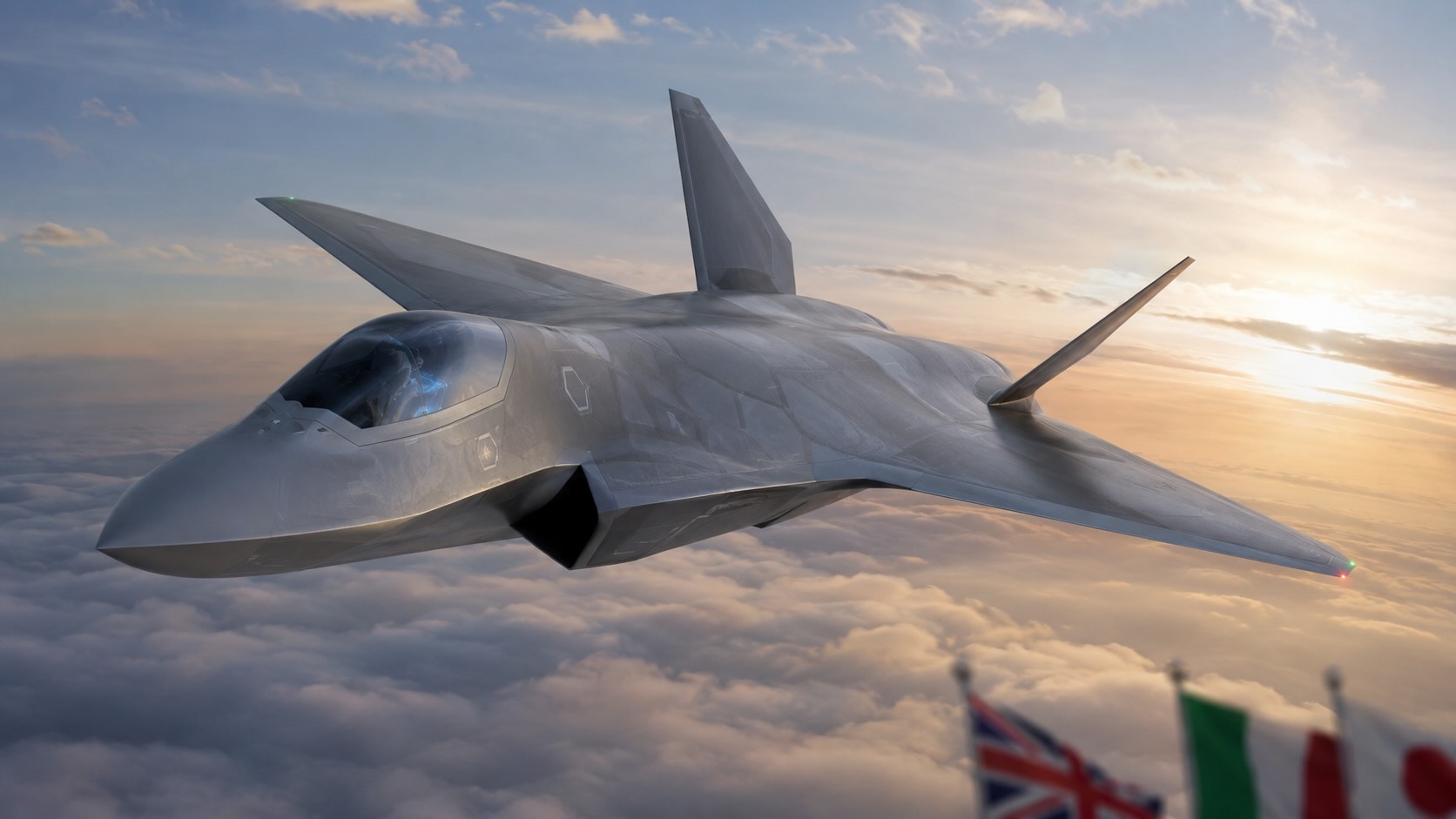
Italian officials see room for additional partners, including Canada, Germany and Saudi Arabia, to join GCAP, the sixth-generation fighter programme led by Britain, Italy and Japan. The programme is intended to deliver a future combat aircraft around 2035 and replace the Eurofighter Typhoon in UK and Italian service and Japan’s Mitsubishi F-2.
GCAP is now positioning itself as a flexible platform at the same time as Europe’s rival fighter cooperation has been weakened by political and industrial disputes.
GCAP already has a formal three-country structure. Britain, Italy and Japan announced the programme in 2022, and the industrial partners later created a joint venture to oversee development. AP reported in 2024 that BAE Systems, Leonardo and Japan Aircraft Industrial Enhancement would each hold a third of the new GCAP venture, with headquarters in the UK and operations across the three partner countries.
That structure matters. It gives GCAP a clearer industrial framework than many European collaborative projects have enjoyed. It also makes enlargement politically easier to discuss, because the programme already has defined leadership and a schedule.
Italy’s signal that Germany or Canada could enter the project should therefore be read as a strategic offer. GCAP is not only competing for technology and money. It is competing for industrial influence at a moment when European air-combat cooperation is being reshuffled.
The backdrop is the strain around Franco-German fighter cooperation. Europe’s Future Combat Air System was meant to become the flagship programme for France, Germany and Spain. Instead, disputes over leadership, workshare, technology control and national priorities have repeatedly raised doubts over whether the project can deliver at the pace required.
Defence Matters has already examined how European defence cooperation is being weakened by industrial rivalry and national control disputes. Fighter programmes expose that problem more sharply than almost any other capability area because they bind countries together for decades.
An aircraft expected to enter service in the 2030s will shape industrial employment, export policy, software control, weapons integration and operational sovereignty well into the second half of the century. Governments that join late will want influence. Founding partners will want discipline. That is where GCAP’s expansion offer becomes politically sensitive.
Canada and Saudi Arabia would both matter. Canada would bring a NATO and Indo-Pacific dimension, while Saudi Arabia would bring funding potential and a major export-market signal. But Germany is the most consequential possible entrant because of what it would say about Europe’s fighter-jet realignment.
If Berlin were to move seriously towards GCAP, the signal would be unmistakable: Germany would be hedging against uncertainty in the Franco-German-Spanish track and looking for a more flexible industrial model. That would not merely affect one aircraft. It would alter Europe’s future combat-air map.
The question is whether GCAP can absorb new partners without reproducing the governance problems that have slowed other programmes. More members mean more money, more orders and a wider technology base. They also mean more export rules, more national expectations and more bargaining over workshare.
For European air forces, the strategic issue is capability. Russia’s war against Ukraine has reinforced the importance of air defence, electronic warfare, long-range strike and survivable aircraft able to operate inside dense threat environments. Future fighters will also need to function as nodes in a wider system of drones, sensors, satellites and precision weapons.
That is why GCAP is not simply an industrial trophy. It is part of the long-term answer to whether European and allied air forces can keep pace with US developments in next-generation air combat.
The Financial Times reported that the GCAP industrial venture was designed to deliver the aircraft by 2035. That date is ambitious. Expanding the project could strengthen it financially, but only if new partners accelerate rather than complicate delivery.
Italy’s offer therefore exposes the central question in European fighter development: can a programme be open enough to attract partners, but disciplined enough to build an aircraft?
If GCAP succeeds, it may become the more adaptable model for next-generation air combat. If it becomes overloaded with national demands, it will confirm the same lesson that has dogged Europe’s other defence projects: cooperation is easy to announce, but hard to govern.