Eleven NATO allies have moved from studying alternatives to jointly selecting Saab’s GlobalEye for NATO’s next airborne warning and control capability, strengthening a European supplier while beginning the difficult replacement of part of the Alliance’s ageing E-3 fleet.
Eleven NATO allies have announced the joint procurement of Saab GlobalEye aircraft to form the Alliance’s next airborne warning and control system, turning a closely watched capability contest into a major European defence-industrial decision.
The participating countries are Belgium, Canada, Denmark, Germany, Latvia, Lithuania, Luxembourg, the Netherlands, Norway, Romania and Sweden. According to NATO’s announcement, the aircraft will replace part of the Alliance’s ageing Boeing E-3 fleet and provide surveillance across the air, land and maritime domains.
Saab said NATO would begin formal negotiations for as many as ten aircraft through the NATO Support and Procurement Agency. The company stressed that no contract has yet been signed and no order booked, an important qualification for a programme that still has to settle price, configuration, delivery and support arrangements.
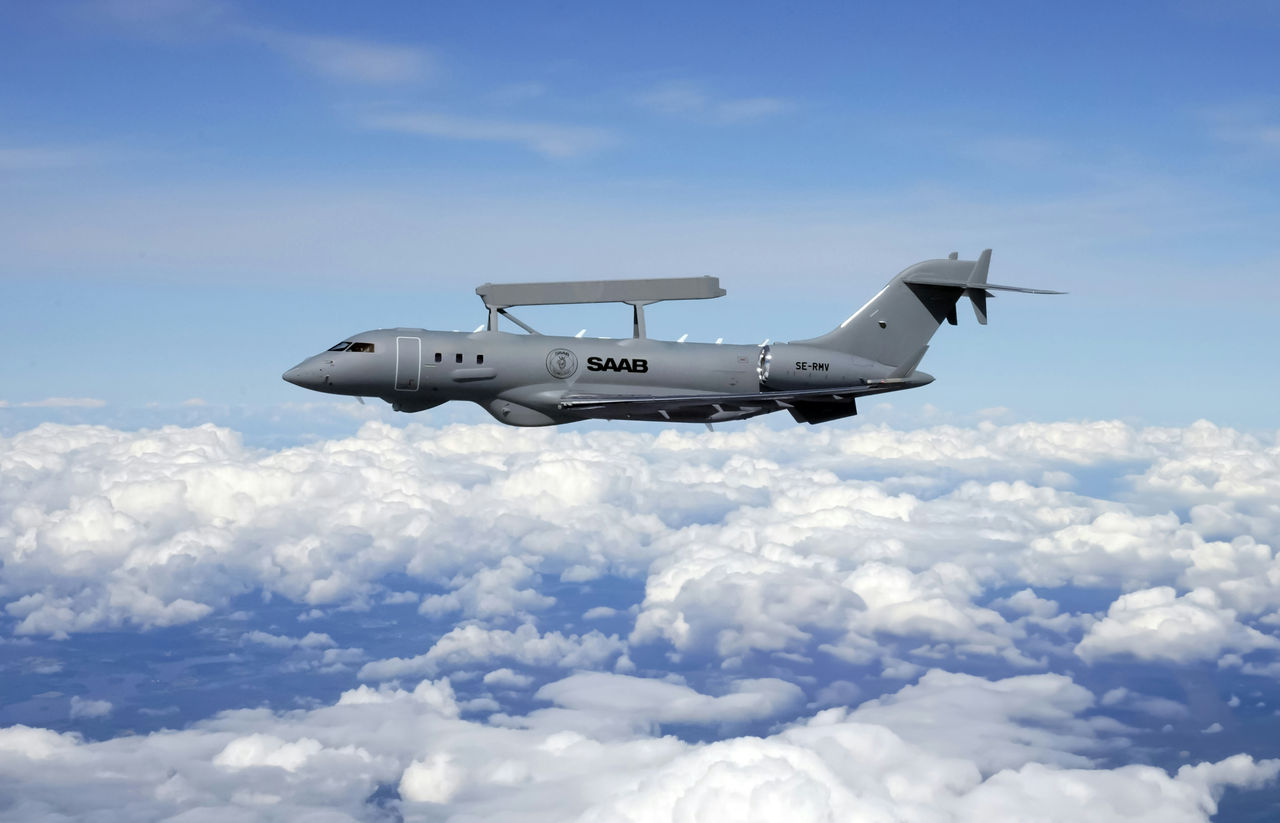
The decision is industrially significant because NATO has selected a Swedish-led system rather than defaulting to another US prime contractor for one of its most sensitive command-and-control capabilities. GlobalEye combines Saab’s Erieye Extended Range radar and mission system with Bombardier’s Canadian-built Global 6500 business jet.
That makes the choice European and Canadian at its core, though NATO described the project as an example of transatlantic industrial cooperation with US firms contributing to the wider system. The distinction matters. European governments have promised to spend more on defence, but the political value of higher budgets depends partly on whether they produce sovereign capability, resilient supply chains and maintainable fleets.
Defence Matters previously examined why NATO’s anticipated move towards GlobalEye was about more than replacing AWACS. The confirmed eleven-country procurement now gives that argument concrete form: this is an alliance-level decision about who supplies the sensors, software and operational architecture through which NATO will understand a future battlespace.
Airborne early-warning aircraft are not simply flying radars. They extend detection beyond the limits of ground-based sensors, build a common operational picture and help direct fighters, air-defence systems and other assets.
Saab says GlobalEye can detect low-observable aircraft, drones, cruise missiles, ballistic missiles and hypersonic threats in cluttered or heavily jammed environments. Those claims will be tested against NATO’s demanding integration requirements, but they reflect the threat set driving the procurement.
Russia’s war against Ukraine has shown how cheap drones can be combined with cruise and ballistic missiles to complicate defence. It has also demonstrated the importance of tracking low-flying targets, sharing data rapidly and preserving command networks under electronic attack.
GlobalEye’s use of a business-jet platform also promises lower operating costs and longer endurance than a large airliner-based solution. Yet NATO will need more than aircraft. Ground stations, secure communications, trained multinational crews, software support and access to mission data will determine whether the fleet becomes an operational system rather than a procurement headline.
The present E-3 fleet remains central to NATO operations despite its age. Transition therefore has to be managed without creating a surveillance gap while new aircraft are produced, crews trained and certification completed.
Deliveries have been discussed for the early 2030s, but the detailed timetable will emerge only through negotiations. NATO must also decide how the new fleet interacts with national early-warning aircraft and space, ground and maritime sensors.
The GlobalEye selection is therefore a beginning, not an endpoint. It gives Saab an exceptional position in the European market and gives participating allies a common platform around which to organise future surveillance. The harder work will be converting that political and industrial choice into an available, protected and fully networked wartime capability.