The EU and Ukraine have agreed to expand joint drone production, but the arrangement also exposes an uncomfortable dependency: European-financed procurement may still need Chinese motors, electronics and other components where alternatives cannot be obtained quickly enough.
The agreement was announced during high-level EU engagement in Kyiv, where European Commission President Ursula von der Leyen reaffirmed support for Ukraine and the two sides highlighted a defence-industrial partnership. Coverage of the visit noted a new multilateral drone-production deal involving EU-based and Ukrainian companies, placing drones at the centre of Europe’s Ukraine support strategy.
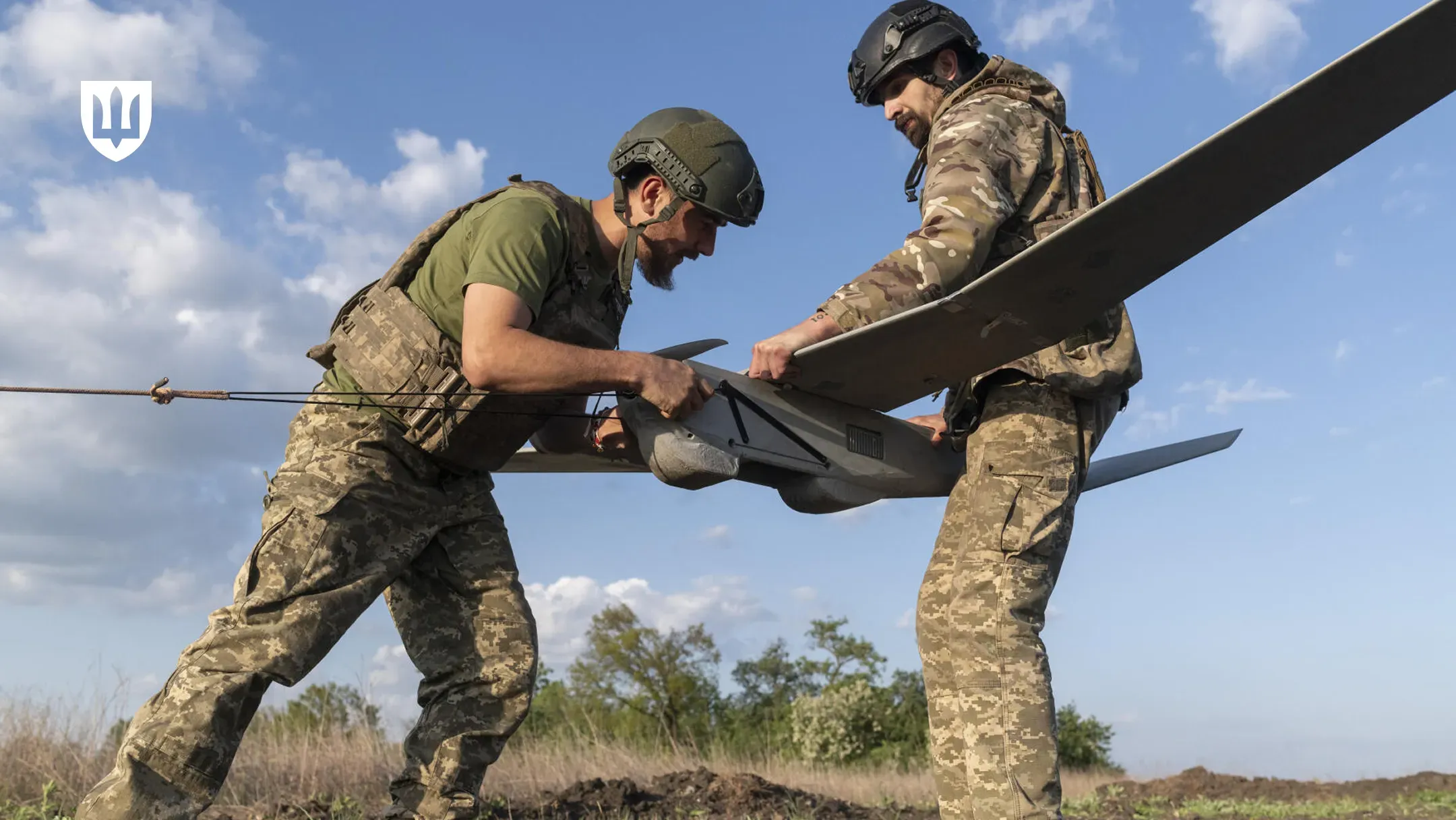
The logic is clear. Ukraine uses drones at enormous scale for reconnaissance, strike, artillery correction, maritime attack and air-defence support. Europe wants to learn from that battlefield experience while building production capacity closer to the front. Joint production can shorten feedback loops between Ukrainian operators and European factories.
The contradiction is the supply chain. Small drones and loitering systems rely on motors, batteries, radio modules, cameras, chips, connectors and navigation components that are often sourced from China or through Chinese-linked distributors. Europe can assemble platforms, but many subcomponents are not yet available at wartime scale from trusted suppliers.
Defence Matters recently analysed how Europe’s missile-defence ambitions still have to move from consortium language to production. The drone case is more immediate. The problem is not only developing a sovereign design; it is producing thousands of systems fast enough while avoiding a supply chain that Beijing could restrict.
The reported exemption for Chinese components under an EU-financed procurement facility is therefore not a footnote. It is a recognition that preference rules can collide with battlefield urgency. If Ukraine needs drones now, strict European-origin requirements may reduce volumes. If Europe relies too heavily on Chinese parts, it weakens the credibility of sovereign defence production.
Industrial security is the next issue. Components sourced through opaque supply chains can create risks around quality control, hidden dependencies, data security and export restrictions. That does not mean every Chinese-origin part is compromised. It does mean procurement authorities need visibility into where critical components come from and whether alternatives can be qualified.
The policy answer is likely to be transitional. Ukraine may receive flexibility for urgent procurement while Europe invests in motors, batteries, optics, chips and electronic warfare-resistant communications. The goal should be to reduce dependency over time without cutting current production.
The drone agreement is therefore both progress and warning. Europe is moving closer to Ukraine’s defence-industrial base, but it has not yet built the supply chain needed to support that ambition independently.